




25 October 2026, 08:20
Loading...
Top 10 energy stories from the past week
oEnergetice.cz
16 June 2024, 21:00

1. European Commission announces tariffs on electric vehicles made in China; response is swift
The European Commission plans to impose import tariffs on electric vehicles manufactured in China with state support there. The tariffs vary by automaker and group, ranging from 17.4% to 38.1%. The Commission officially announced its preliminary findings on Wednesday, 12 June. China’s response was swift. Paradoxically, European automakers had warned against import tariffs in the EU, as the Chinese market is important to them and many also have production plants there.
In September last year, the Commission announced that it was launching an investigation into Chinese state subsidies for electric vehicles. At the time, it argued that subsidies there allowed—and continue to allow—locally manufactured vehicles to be kept artificially cheap, distorting the market and creating a competitive advantage. Paradoxically, European automakers had warned against the tariffs and were surprised that the plan had not been sufficiently discussed with them.
2. Chinese solar panel manufacturers struggle with fierce competition, call for government intervention
As production capacity grows, solar panel prices continue to fall, particularly in China, which dominates the global market. This is a positive development for consumers, but the situation may not be sustainable for manufacturers. A number of planned new production facilities have been cancelled over the past year, and some Chinese manufacturers are even calling for central government intervention.
In recent years, China has rapidly expanded its industrial capacity to manufacture solar panels, helping to push prices down. The sharp fall in prices, however, is making new production capacity less profitable, and some projects have already been cancelled.
3. US microreactor could enter operation as early as 2028
The US Department of Energy has reviewed and approved the safety design strategy for the Kaleidos microreactor developed by startup Radiant Industries. The reactor is located at a test facility at Idaho National Laboratory. World Nuclear News reports.
Radiant is one of three microreactor designs selected last October as eligible to receive USD 3.9 million in Department of Energy (DOE) funding to develop and test their designs at the new National Reactor Innovation Center’s Demonstration of Microreactor Experiments (DOME) test facility. Testing is scheduled to begin in 2026.
4. Europe’s largest electrolyser for green hydrogen now operating in Norway
Fertiliser producer Yara International has started producing green hydrogen and ammonia at its plant in Norway. According to S&P Global, it is currently the largest electrolyser in Europe. Other projects are under construction or planned, although many are facing delays.
The facility, with an installed capacity of 24 MW, has a rated production capacity of 10 tonnes of green hydrogen per day. This volume should be enough to produce more than 20 thousand tonnes of ammonia a year. Renewable hydrogen will thus partially replace hydrogen production from ethane, which, according to the company, should cut emissions by 41 thousand tonnes of CO2 a year.
5. Sweden rejects construction of subsea electricity link to Germany
The Swedish government has rejected an application to build a new subsea electricity link between Sweden and Germany. Stockholm said today, according to Reuters, that the German electricity market is not efficient enough.
“We cannot connect southern Sweden, which has a large electricity generation deficit, to Germany, where the electricity market is not functioning efficiently today,” Swedish Energy Minister Ebba Busch said.
6. TASS: Russian court bars NET4GAS from pursuing arbitration against Gazprom abroad
The Arbitration Court of the Russian Northwestern District has upheld an earlier court ruling barring Czech gas transmission network operator NET4GAS from continuing proceedings against Russian company Gazprom Export abroad, Russia’s state news agency TASS reported today. The Czech company referred to its earlier statements on the case in response. It said it would not comply with the ban, as the Russian courts’ ruling violates international law.
NET4GAS said early last year that it had not received the latest monthly payments due to it under its contracts from its Russian partner. It did not name the Russian company at the time. The Czech gas transmission operator also said that talks with the Russian company had been unsuccessful and that it had therefore decided to initiate arbitration, TASS noted.
7. Czechia could become a net electricity importer around 2027, or next year in a critical scenario
Czechia will become a net electricity importer in the coming years if coal-fired power plants are phased out. Under the critical scenario drawn up by the Ministry of Industry and Trade, this could happen next year, although the ministry considers 2027 more likely. Representatives of the ministry and transmission system operator ČEPS told journalists today that electricity imports would not have a negative impact on customers. Czechia currently imports around 15 terawatt-hours (TWh) of electricity a year from abroad, while also exporting up to 30 TWh annually.
The projections are based on the ministry’s analyses of various possible future scenarios for the Czech energy sector. The modelled critical scenario, which ministry representatives say is not very likely, assumes that the coal-fired power plants operated by energy groups Sev.en and SUAS Group will close in 2025, followed two years later by the closure of ČEZ coal-fired power plants. The ministry has also factored in several so-called stress factors, such as slower renewable energy deployment, an unplanned outage at a nuclear unit, or an outage of a power line from Germany.
8. Construction of Finnish modular reactor prototype for district heating to begin next year
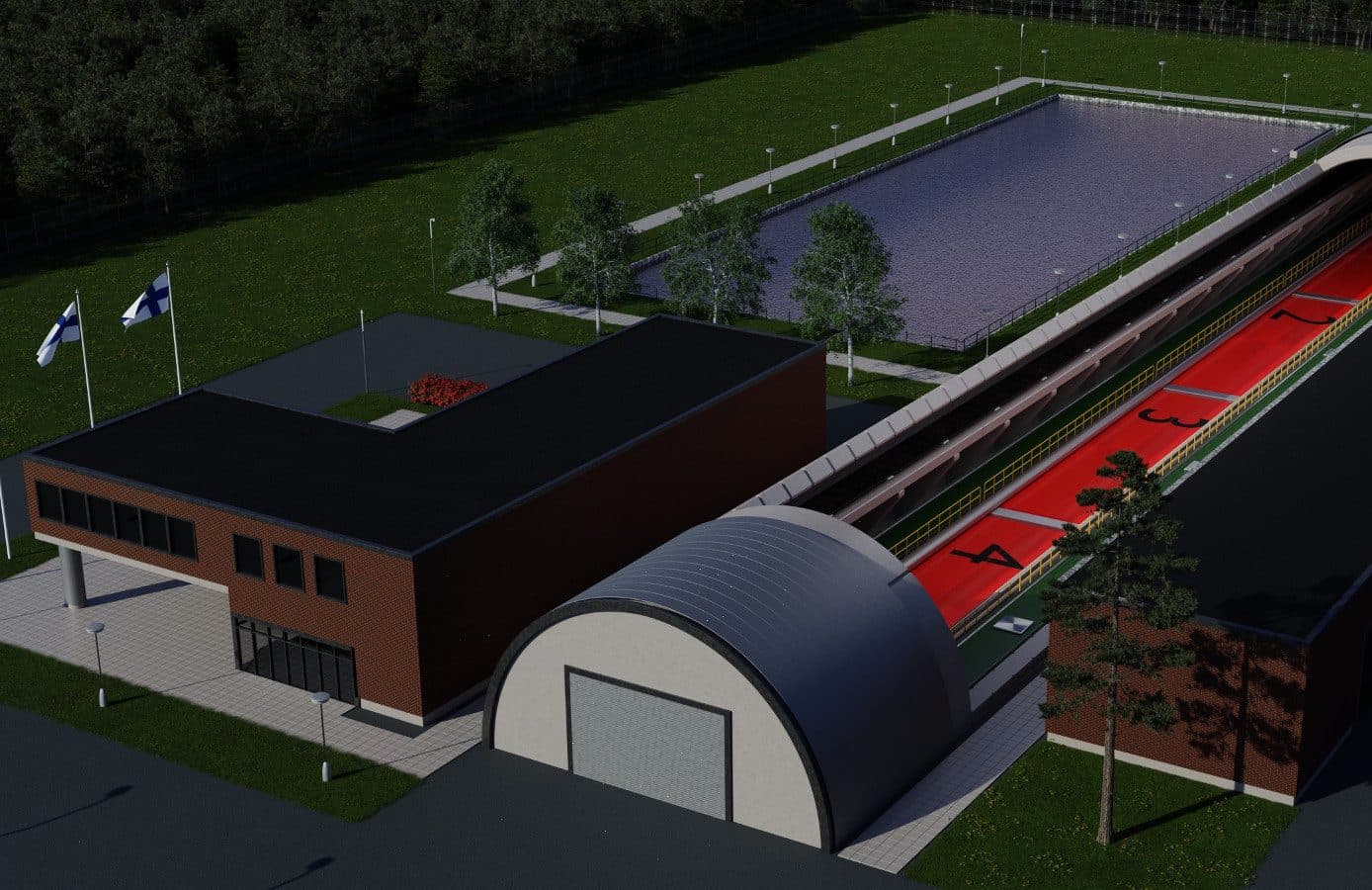
Next year will mark an important milestone for Finland’s LDR-50 small modular reactor, designed for district heating. Steady Energy will begin building a prototype at one of three shortlisted sites. Unlike the actual reactor, the prototype will be powered by electricity rather than nuclear fuel. Construction of the actual small reactor, with a thermal capacity of 50 MW, is scheduled to begin in 2028, with completion expected in 2030.
Finnish company Steady Energy said it will begin construction next year on the first prototype of its modular reactor designed for district heating. The functional LDR-50 prototype will be built at one of three Finnish sites, with the capital, Helsinki, among the candidates.
9. Old boiler harms air quality more than fuel type; cost is the main barrier to replacement
Researchers from Masaryk University used sensors to monitor air quality during the heating season and investigate how homes are heated in small municipalities. In the AirSENS project, they assessed conditions in six municipalities in South Moravia and two districts of Brno to establish the extent of air pollution and identify its possible causes.
“Air pollution in municipalities across the Czech Republic, especially particulate matter, has long been caused primarily by local heating, and in some areas by transport and industry. Tackling this widespread problem is difficult and requires methods of measuring air pollution that go beyond the traditional approach,” says Ondřej Mikeš, a researcher at the RECETOX institute at the Faculty of Science.
10. Australia changes its stance on nuclear power
Australians’ views on energy sources have changed significantly. The 20th annual Lowy Institute poll found that six in ten Australians now support using nuclear power to generate electricity.
Asked, “Do you support or oppose the use of nuclear energy to generate electricity in Australia alongside other energy sources?”, 61% of respondents said they were “somewhat” or “strongly” in favour. By contrast, 37% said they were opposed. Only 2% of respondents were unsure.
Energostat: electricity generation in Czechia
Energostat: electricity generation in Germany
Translation disclaimer
This article is a machine translation of the Czech original and has not yet been fully reviewed. In case of any doubt, please refer to the Czech version.
Sdílejte článek prostřednictvím:
Topics:Energy Weekly
You might also like




23 October 2026, 14:38