
25 October 2026, 08:20
Loading...
Top 10 energy stories of the past week
oEnergetice.cz
26 August 2024, 10:12

This week, we once again bring you a carefully selected list of the ten most important articles published on oEnergetice.cz. If you missed any of them, here is a selection of the stories that attracted the most interest from our readers. Best of luck in the new week!
1. First Chinese turbines for German offshore wind farm face criticism in Europe
China has long dominated not only the European but also the global market for solar panels and other photovoltaic components. In recent years, however, it has also stepped up its activities in wind power. The first Chinese wind turbines are set to be used in the construction of an offshore wind farm in German waters. Concerns over unfair competition and security risks are worrying European manufacturers and local associations.
The planned Waterkant offshore wind farm in the North Sea is set to be the first in Germany to use Chinese turbines. It is expected to comprise 16 turbines made by Ming Yang Smart Energy, each with an installed capacity of 18.5 MW. The wind farm is expected to begin operating in 2028.
Read the full article HERE.
2. Europe’s gas surplus almost wiped out by slow storage refilling
The record gas surplus in Europe at the end of last year’s mild winter has almost disappeared because gas storage facilities have been refilled at an unusually slow pace this summer. Reuters reported.
Gas stocks in European storage facilities rose by just 336 TWh between 31 March 2024 and mid-August. That is more than 100 TWh below the average for the past 10 years.
Read the full article HERE.
3. Electricity prices for next year top EUR 100/MWh again

Wholesale electricity prices for next year have once again exceeded EUR 100/MWh in response to rising natural gas prices, which surged in the first half of the month. Rising emissions allowance prices have also pushed electricity prices higher. However, European gas storage levels are healthy, and Europe has been able to secure new cargoes of liquefied natural gas (LNG).
The price of baseload electricity for 2025 on the PXE exchange has topped EUR 100/MWh. On Friday, the market closed at EUR 103.57/MWh. The main reason for the increase in electricity prices is the rise in gas prices.
Read the full article HERE.
4. Ethical hacking: Solar panels can be hacked, potentially damaging the grid
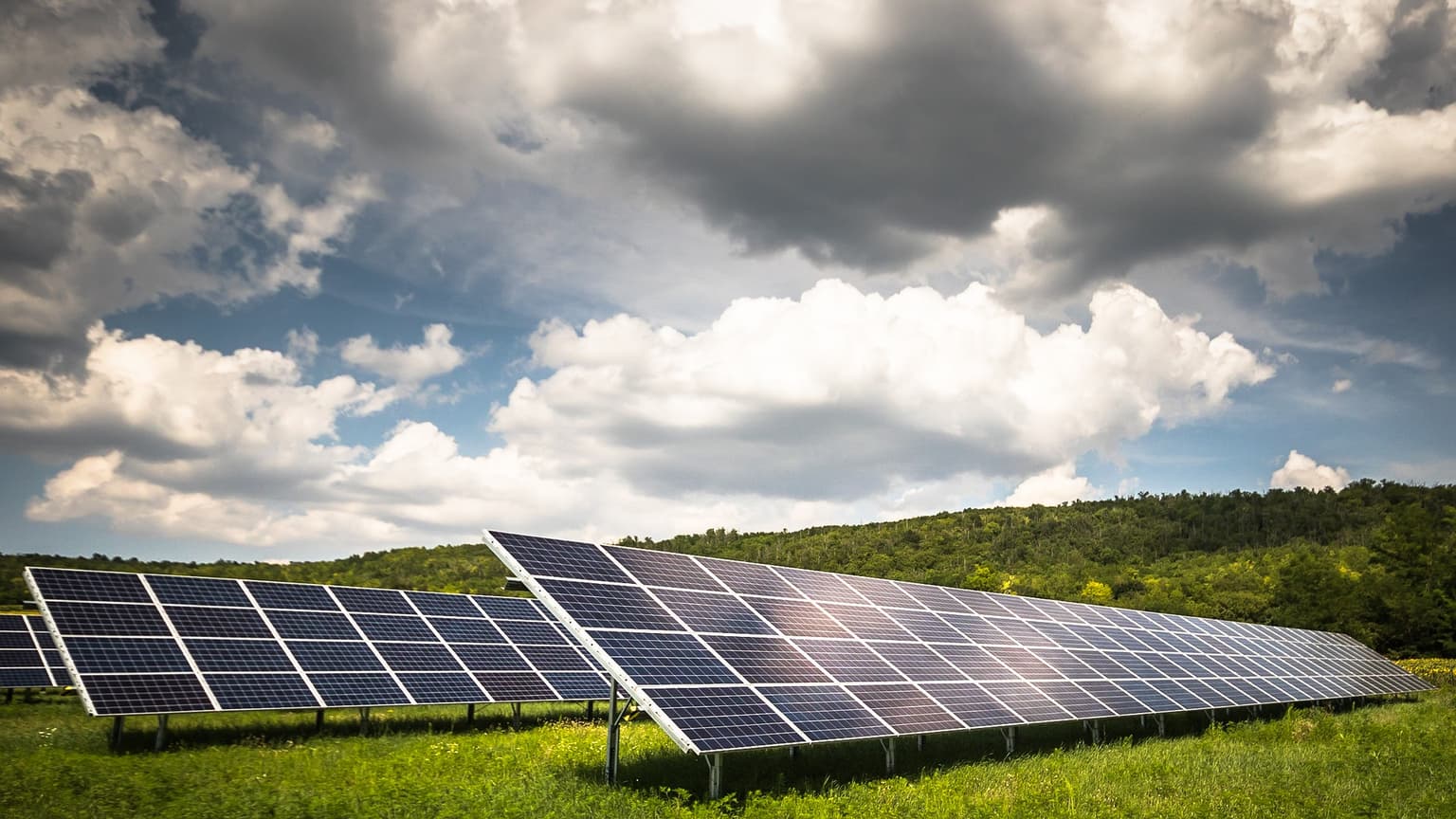
Ethical hacking of solar panels in the Netherlands has exposed their vulnerability to cyberattacks, prompting calls from industry for stricter security assessments.
While wind turbines, which are highly interconnected and equipped with hundreds of sensors, are traditionally considered more vulnerable to external interference than solar panels, a Dutch hacker has shown that solar panels are also susceptible to certain types of attack. The Euractiv website reports.
Read the full article HERE.
5. Economist: Germany will need twice the expected funding to support renewables
Low wholesale electricity prices during periods of renewable energy generation in Germany are significantly increasing the funds needed in 2024 to pay operators the support amounts set by law. According to calculations by economist Manuel Frondel of the Leibniz Institute for Economic Research (RWI), Germany will need twice the amount originally projected.
Frondel said the state will have to pay out around 23 billion euros over the full year 2024, more than double the amount initially projected. The government allocated around 11 billion euros from the federal budget to support renewable energy sources in 2024.
Read the full article HERE.
6. Czechia saves energy and invests in the future: Solar power grows by 28%

In the first half of 2024, the Czech Republic significantly reduced its consumption of electricity and gas, according to the latest data published by the Czech Energy Regulatory Office (ERÚ). At the same time, electricity generation from solar power plants rose significantly, producing 28% more energy than in the previous year. This development offers positive signs for Czech energy and its efforts to become more self-sufficient and decarbonise.
Electricity and gas savings
According to the ERÚ report, electricity consumption in the Czech Republic fell by 5% year on year, while gas consumption saw an even sharper decline of 14%. These savings are partly a result of the energy crisis. Czech households and businesses have taken a range of measures to reduce consumption, including improving energy efficiency, changing heating systems and adopting more energy-saving habits.
Read the full article HERE.
7. China approves construction of 11 nuclear reactors worth around Kč 700 billion

The Chinese government has approved the construction of 11 new nuclear reactors, requiring investment of at least 220 billion yuan (around Kč 700 billion). The German newspaper Handelsblatt reported the news, citing Chinese media. China is seeking to curb carbon dioxide emissions through nuclear power plants and could become the world’s leading producer of nuclear energy in a few years, the newspaper said.
The Chinese government approved the construction of 11 nuclear reactors in the provinces of Jiangsu, Shandong, Guangdong and Zhejiang, and in the Guangxi autonomous region on Monday. Construction is expected to take around five years. BloombergNEF recently forecast that China would overtake France and the United States in nuclear power capacity by 2030, becoming the market leader.
Read the full article HERE.
8. Will Sweden’s nuclear plans disrupt the country’s electricity market?
In the coming years, Sweden could join the list of European countries pursuing the construction of new nuclear units. According to a recent study published by the Swedish government, building the units could cost several tens of billions of euros. To ensure they are financially viable, the report recommends a guaranteed price in the form of a contract for difference, but this has raised concerns among some participants in the country’s market.
Like other countries, Sweden is addressing its energy security—in other words, ensuring an adequate supply of electricity for the years ahead. Nuclear power could continue to play a role in the country’s energy mix, as it does today.
Read the full article HERE.
9. Norway plans record investment in extraction infrastructure
Norwegian investment in oil and gas is set to reach a record high this year, Reuters reports. Investment will remain elevated through 2025, driven by the ongoing development of fields and rising inflation.
In recent years, Norway has approved a number of field development projects, with companies led by Equinor taking advantage of tax breaks introduced during the Covid pandemic. A record NOK 257 billion (CZK 555 billion) is expected to be invested this year, surpassing the previous all-time high of NOK 224 billion set in 2014.
Read the full article HERE.
10. State to prepare power purchase agreement for Dukovany under government decree

The government will prepare a power purchase agreement for the construction of new nuclear units at Dukovany. The agreement will be a key part of state support for the project. This is provided for in a government decree recently submitted by the Ministry of Industry and Trade for consultation, which is needed to create the agreement. Czechia received European Commission approval for state aid for the first reactor in the spring and is now seeking approval for the second planned unit at Dukovany.
In July, the government decided to build two new nuclear reactors at Dukovany. They are to be built by South Korean company KHNP, which won the tender after the Czech government chose it over France’s EDF. The first of the new Dukovany reactors is expected to be completed in 2036.
Read the full article HERE.
In focus
ERÚ report on district heating systems shows that more than 45% of output still comes from coal

The Energy Regulatory Office (ERÚ) published its report on the operation of district heating systems in 2023. It comes as no surprise that heat production fell year on year. The decline was due to higher temperatures and commodity prices last year. Heat production was down 6.7% year on year. Households account for around 45% of total final heat consumption, highlighting the importance of energy savings in this sector. The issue will gain prominence in the coming years as the introduction of EU ETS II approaches.
Last year, 140 923 TJ of heat was produced in the Czech Republic. Of this, 31% was consumed by the producing company or facility itself. Heat deliveries—that is, the amount of thermal energy supplied to district heating systems—fell by 7.6% year on year to 75 803 TJ.
Read the full article HERE.
Energy security or self-sufficiency?
Discussions about energy often involve a muddle of terminology, with the terms “security” and “self-sufficiency” sometimes even used interchangeably. Yet the difference between them amounts to hundreds of billions of crowns. Let’s take a closer look.
Self-sufficiency means meeting one’s consumption from sources located in the Czech Republic. But electricity is not produced and sold by countries. It is not the case that all output from Czech power plants is first set aside for Czech households and businesses, with imports only coming into play afterward. Traders buy electricity based on price, not on its country of origin. So if imported electricity happens to be cheaper, why would they buy more expensive domestic power?
Read the full article HERE.
Energostat: electricity generation in the Czech Republic
Data in this chart is also available in 15-minute resolution60min15min
Energostat: electricity generation in Germany
Data in this chart is also available in 15-minute resolution60min15min
Find more up-to-date charts and data on Energostat
Translation disclaimer
This article is a machine translation of the Czech original and has not yet been fully reviewed. In case of any doubt, please refer to the Czech version.
Sdílejte článek prostřednictvím:
Topics:Energy Weekly
You might also like



23 October 2026, 14:38