2 August 2026, 17:40
Is It Possible to Restart at Least Some Reactors in Germany?
Vladimír Wagner
2 August 2026, 08:21
This article is a machine translation of the Czech original and has not yet been fully reviewed. In case of any doubt, please refer to the Czech version.
In connection with preparations to resume operation at several nuclear reactors in the US that had previously been permanently shut down, I have received a number of questions about whether it might be possible to restart at least some of Germany’s shut-down units. Let us examine this possibility in more detail.
In recent years, at least three nuclear reactors previously shut down for economic reasons have been preparing to restart in the United States. This was discussed in more detail in an earlier article. Belgium has reversed its decision to shut down its nuclear units and is seeking to restart them. A growing number of countries, including Czechia, are seeking to operate their existing nuclear assets safely for as long as possible.
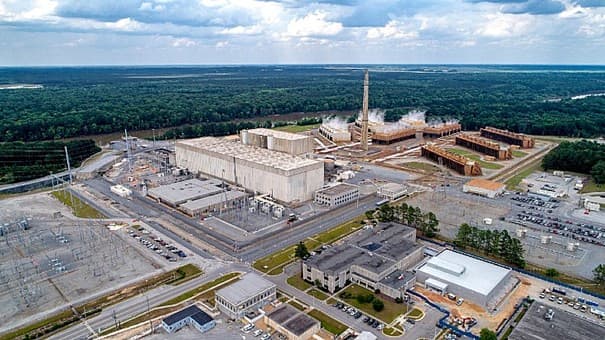
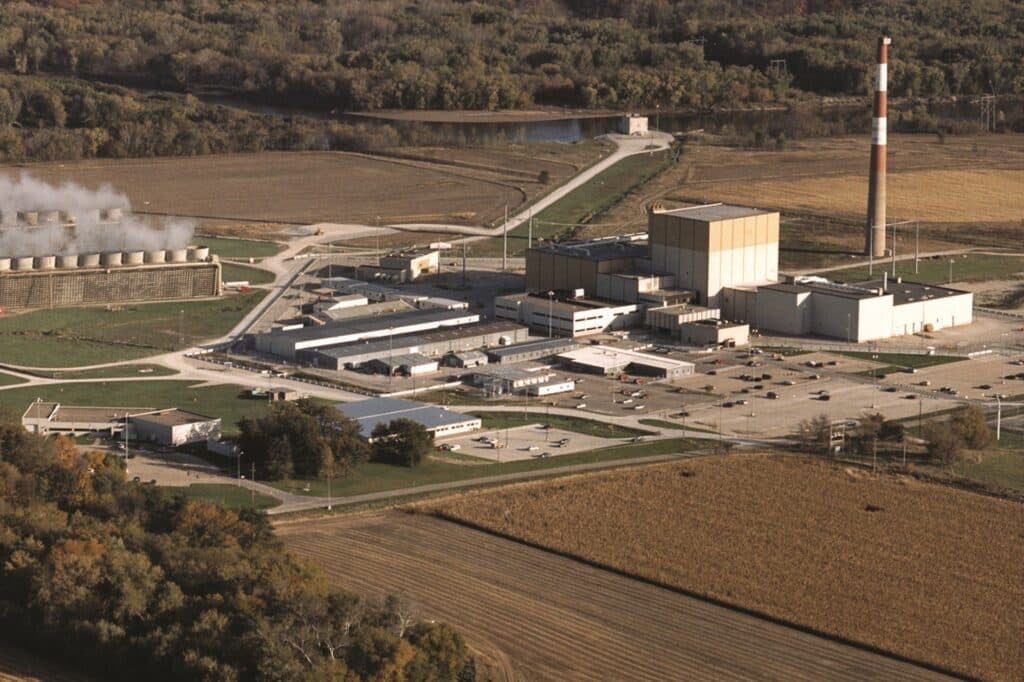
This year, two boiling-water reactors at the Edwin Irby Hatch Nuclear Power Plant also received licences for 80 years of operation (source: Southern Nuclear).
Seeking the longest possible operation of existing units
A large number of reactors were built in Europe and the United States during the 1970s and 1980s. Construction of new units later declined dramatically, and a large share of reactors are now approaching operating lifetimes exceeding forty to fifty years. As it is now becoming clear, not least in connection with the rise of artificial intelligence, that these regions cannot manage without nuclear power and that new plants cannot be built quickly, efforts must be made to ensure the long-term safe operation of existing units.
The operating life of a reactor is fundamentally limited by the condition of its reactor vessel. While it could in principle also be replaced, this would not be economically viable. All other components and structures can be replaced if necessary. However, for some of them this may likewise not be economically worthwhile if the extension of reactor operation would be relatively short. This applies, for example, to steam generators, while replacing cabling can also be highly demanding. It is therefore very important to take continuous and meticulous care of all equipment and carry out replacements, including of cables, on an ongoing basis.
Safety is the priority in nuclear energy. It is an industrial sector with the strictest rules in this area. Every country has a nuclear safety authority that exercises very strict oversight of the condition of nuclear facilities. Nuclear units in principle have unlimited licences, but at precisely defined intervals they must demonstrate that the equipment can be operated safely for the next specified period. The assessment for granting an operating permit is a relatively lengthy and demanding procedure. It is important for the operator, in cooperation with the nuclear safety authority, to begin it sufficiently early and devote appropriate effort to it. There are numerous deadlines that enable a responsible assessment of all safety parameters. These are generally genuinely related to nuclear safety and certainly should not be shortened or abolished.
Every reactor vessel contains surveillance specimens that make it possible to assess the vessel’s condition and damage from neutron flux. Vessels are proving to be more resilient than expected. At the same time, suitable configuration of the reactor core is making it possible to reduce the neutron load on vessel walls. Annealing can also extend a vessel’s service life. It is therefore becoming clear that the safe operation of some types of current reactors can be extended to sixty to eighty years.
The oldest operating reactors, at Switzerland’s Beznau plant, are already approaching 55 years of use. Their sixth decade of operation is thus being tested. A number of units already hold licences for sixty years of operation, while in the United States several already have licences for eighty years. In both the US and Europe, we can see intensive efforts by operators to extend the safe use of existing units. This requires long-term, ongoing care for all nuclear power plant equipment, ensuring refurbishments and upgrades, arranging timely fuel supplies, and securing a suitably technically educated workforce. Everything must be carried out in cooperation with the nuclear safety authority and subject to meeting all safety requirements. Czech nuclear power plant operator ČEZ has also taken this path, targeting 80 years of operation at both Dukovany and Temelín, as discussed in more detail in a recent article.
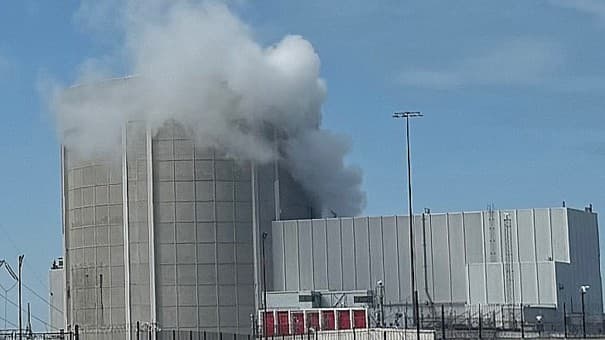
Tests are under way at the Palisades plant in preparation for its restart (source: Holtec).
The situation with restarting shut-down reactors in the US
The situation regarding the resumption of operations at permanently shut-down nuclear reactors was analysed in detail in the article already mentioned. Let us recall the basic facts. Several units were shut down in the US for economic reasons around the turn of the 2010s and 2020s. They were unable to compete with cheap fracked gas and subsidised renewable sources. In recent years, however, the situation has changed dramatically as a result of geopolitical shifts, but above all due to the rise of artificial intelligence. The geopolitical situation is raising gas prices even in the United States, while artificial intelligence is dramatically increasing the energy needs of data centres. These require a stable and predictable source of electricity. Nuclear power plants are precisely such a source.
Major data giants are therefore willing to sign long-term electricity supply contracts with operators of nuclear assets. Three projects to restart permanently shut-down units are now at an advanced stage in the US. The first is the Palisades plant, built between 1967 and 1971. The 800 MWe pressurised-water reactor was shut down in 2022 for the economic reasons mentioned above, after 51 years of operation, even though it had an operating licence until 2031. The plant was acquired by Holtec, a company long involved in nuclear waste management and nuclear power plant decommissioning. Following the change in economic conditions, the company decided in 2023 to become a nuclear operator as well and began steps to restart the unit. Installation of the final two major equipment components was recently completed. These involved positioning the turbine generator and installing a new fuel-loading machine. Turbine commissioning has thus begun. An intensive inspection of the reactor pressure vessel and other equipment, combined with a number of refurbishments and upgrades, will be followed by a commissioning and testing phase that should enable the plant to enter service later this year. As mentioned, the current licence is valid until 2031, and plans call for licences for a further 20 years of operation to be obtained in the coming years. Holtec also plans to build two of its SMR-300 small modular reactors at the site.
The second plant that could return to service after permanent shutdown is Unit 1 of Three Mile Island. This is an 880 MWe pressurised-water reactor built between 1968 and 1974. It was shut down for economic reasons in 2019. Constellation Energy’s decision to restore operations was prompted by Microsoft’s commitment to purchase electricity from the unit for twenty years. The aim is to start the plant, under the new name Crane Clean Energy Center, in 2027. A very important development was the recent decision allowing the transfer of grid connection and power export capability from the recently shut-down Eddystone plant, owned by the same company (a thermal power plant burning gas and fuel oil to cover peak demand). Here, too, the plan is to seek a further twenty-year operating extension after the original licence expires in 2034, taking it to 2054. The reactor would therefore operate for eighty years in total.
The third reactor being prepared for restart is Duane Arnold in Iowa. It is a 600 MWe boiling-water reactor built between 1970 and 1974. In this case, a windstorm damaged the cooling tower in 2020. Under the conditions at the time, repairing it would not have been economically viable, and the plant’s sole unit was permanently shut down for economic reasons. However, a 25-year electricity offtake agreement has now been signed with Google. Work is therefore under way to inspect the plant and repair the cooling system. The necessary permitting at local level has already been completed. The Nuclear Regulatory Commission (NRC) is working on a licensing package to transfer the plant from decommissioning status to operating status. Completion is expected in 2028, with a target restart in 2029.
The US is thus seeing considerable interest in restarting some previously shut-down units. The nuclear safety authority has responded to this trend by creating a new division focused specifically on restarting previously permanently shut-down reactors. The ability to transfer licences between companies and a specific licensing system are being used. A distinctive feature of the US is that these reactors have operated for more than fifty years. The current trend towards extending safe operation to as much as eighty years is therefore being utilised. It will be interesting to see how many reactors can be restarted and whether this trend spreads to other countries.
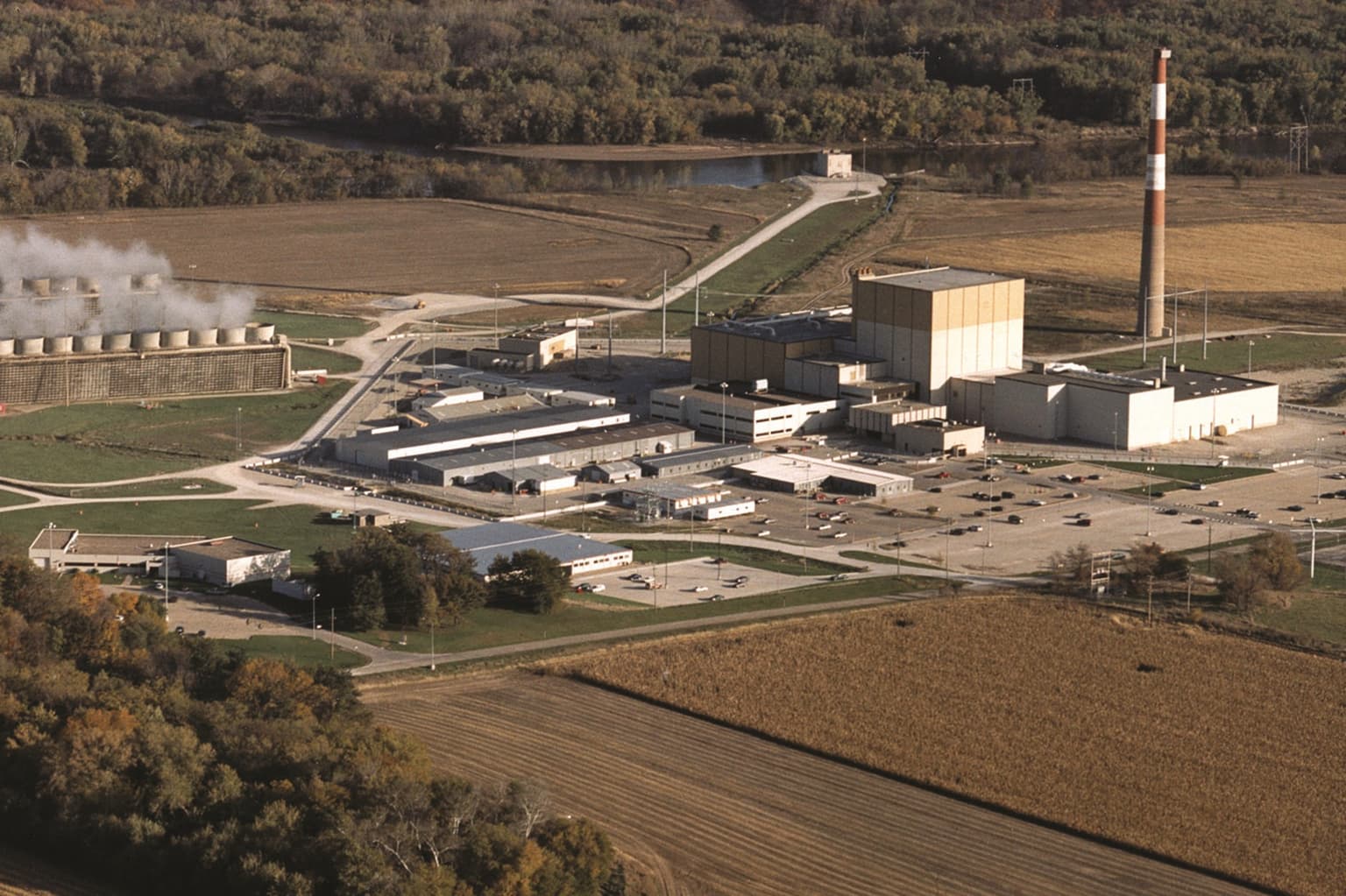
The Duane Arnold plant could return to operation (source: NextEra Energy).
The situation in Japan
Japan has a highly specific situation concerning the restart of facilities that have been shut down for a long time. Following the tsunami and the accident at the Fukushima I plant in 2011, it gradually shut down all its nuclear reactors and reorganised its entire nuclear oversight system. The regulator subsequently established new, more demanding requirements for the operation of nuclear facilities, comprehensively incorporating lessons from this tragic accident. Geological and seismic conditions at nuclear facility sites are being reassessed very carefully in every case—above all, whether there is an active geological fault at the site. If such a fault is identified, restarting the nuclear facility is not possible under any circumstances. For reactors that have passed this assessment, individual operators decide whether it is economically viable to implement all the necessary safety measures, such as a new, higher tsunami barrier.
Before the accident, Japan had 54 reactors in operation and 2 under construction. In addition to the six reactors at Fukushima I, decommissioning has already begun for a further 15. Fifteen units have returned to operation, ten are being prepared for restart, and the fate of eight remains open. However, it should be recalled that formally all units are classified as operating until a decision is made to decommission them; they are merely in long-term outage.
For restart in Japan, it is important not only to meet all conditions set and assessed by the nuclear safety authority; approval for operation from local communities is also crucial. Without it, a reactor cannot be restarted. Operators must therefore gain the trust of local communities. This was extremely challenging for TEPCO, the operator of the Fukushima I plant. It succeeded recently, and this year the ABWR boiling-water reactor, Unit 6 of the Kashiwazaki-Kariwa plant, began supplying electricity.
Even after the Fukushima I accident, Japan returned to the use of nuclear energy. The reason was society’s recognition that, under Japanese conditions, the country cannot do without nuclear energy, as well as intensive efforts to earn public trust. We follow the situation in Japan in greater detail in a series of articles on the Fukushima I accident and the clean-up of its consequences; the latest can be found here.
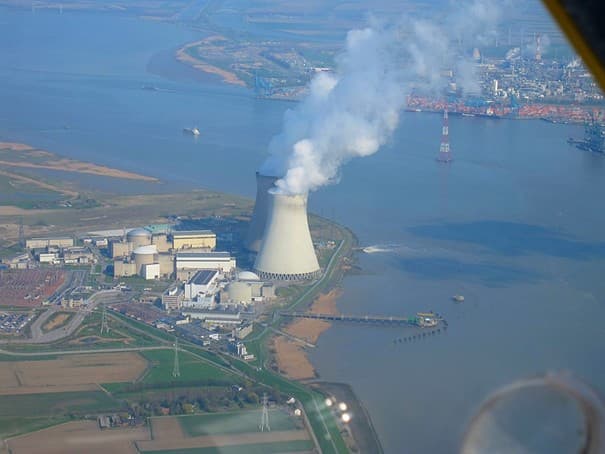
Belgium’s Doel nuclear power plant now has only one unit in operation, the newest one (source: Alexandre Jacquemin/Wikimedia)
The situation in Belgium
Belgium has always been very active in nuclear research and nuclear technology. A total of seven reactors, with combined capacity of approximately 5.9 GWe, operated at the Doel and Tihange plants, entering service gradually between 1975 and 1985. They supplied more than 50 % of Belgium’s electricity production. Belgium was therefore among the countries with the highest shares of nuclear electricity and a strong dependence on these assets. At the same time, these sources had long supplied Belgium with low-emission electricity. An intensive campaign by anti-nuclear activists led Belgium to legislate a nuclear phase-out by 2025 in 2003. After that year, no nuclear power reactor was to operate in Belgium. This also meant that all permits for operating nuclear assets in Belgium were to end after that year.
However, it gradually became apparent that replacing them would be a major problem and that nuclear electricity would largely be replaced by fossil-fuel generation. The energy crisis caused by Russia’s invasion of Ukraine and fighting in the Middle East then clearly demonstrated that Belgium could not do without nuclear assets. After 2022, attitudes towards nuclear energy began to change dramatically in Belgium. Political representatives, supported by Belgian society, began working intensively to reverse the 2003 decision.
The owner and operator of Belgium’s nuclear power plants is French company Engie. It accepted the Belgian state’s decision to gradually end operation of all nuclear units by 2025. It aligned long-term unit servicing, recruitment and staff retention, and the preparation of documents for Belgium’s FANC nuclear regulator with that objective. The company therefore no longer anticipated continued reactor operation and initially responded negatively to the Belgian state’s request for their further use. After fairly intensive pressure, it ultimately agreed to keep the two most modern units, Doel 4 and Tihange 3, in operation; they were not due to be shut down until 2025.
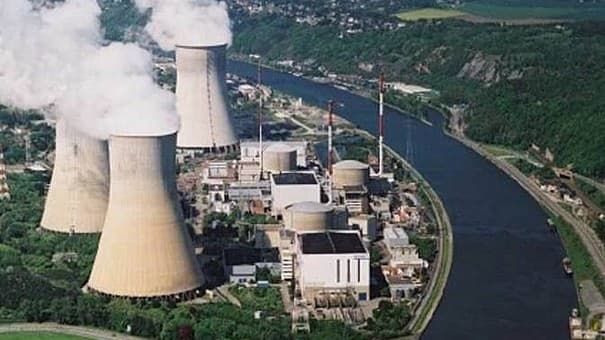
Only one unit is currently operating at Belgium’s Tihange plant as well, but the situation could change (source: Electrobell).
Intensive work to inspect the equipment, comprehensive maintenance, changes in employment policy and applications to the relevant authorities for a new operating licence created a pathway to continued operation. Politicians also repealed the 2003 law banning the use of nuclear assets in 2023. Conditions were thus created to ensure in time the possibility of obtaining authorisation from the FANC nuclear safety authority for a further ten years of operation. The period during which these units were “shut down” was therefore very short.
A specific aspect is that this was not an operating extension under an existing licence, which expired in 2025, but the obtaining of a new licence. This meant that the assessment was much more comprehensive and required, for example, a renewed environmental impact assessment. It is precisely this circumstance that Czech anti-nuclear activists from the Calla Movement, Children of the Earth and other organisations cite when demanding such a new assessment for extending the operation of the Dukovany and Temelín nuclear power plants. As already mentioned, a target of sustainable operation for up to eighty years was recently set for these plants. In this case, however, the situation is different. Both plants have open-ended licences to operate nuclear assets. They therefore only need to periodically demonstrate their ability to operate safely in terms of nuclear safety; environmental impacts are not reassessed.
In 2026, negotiations are also under way between the Belgian state and Engie on the future of the remaining five older nuclear reactors. The Belgian state is interested in bringing them back into operation. It has already entered the management of the nuclear power plants through the continued operation of Doel 4 and Tihange 3, and negotiations are now under way on the terms of a full takeover and nationalisation of these plants. This should be completed by the end of the year. At the same time, the Belgian state has prohibited any irreversible steps towards decommissioning the reactors concerned. The Belgian state wants to operate the newest units at least until 2045, i.e. for 60 years, and also restore operation at the older ones. In their case, as with the US plants, this would mean resuming operation after a shutdown, this time for political reasons. The age of the units is also similar to their American counterparts. It will therefore be interesting to see whether Belgium succeeds.
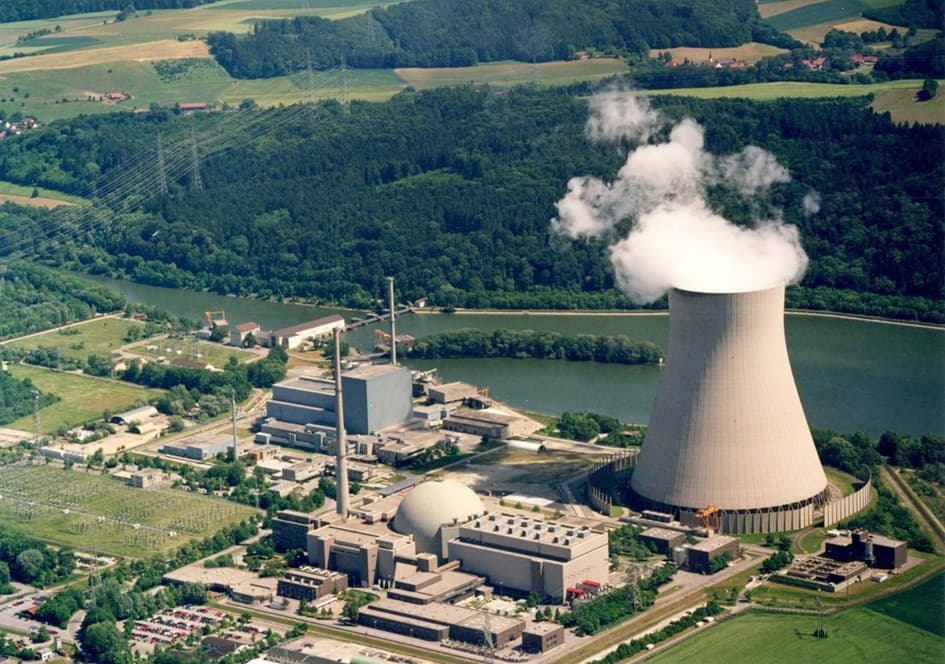
Bavaria’s Isar-2 plant was shut down in 2023 (Source: Wiki)
The situation in Germany
Before looking at the situation in Germany, let us recall the key conditions that must be met for shut-down units to be restarted. First, there must be strong support among politicians and the public for restoring nuclear reactor operations and using them for a sufficiently long period. There must be an operator with a nuclear licence that wants to use nuclear reactors. Effective support must be provided for the licensing process, based on cooperation between the operator and the nuclear safety authority. It is essential to secure sufficient qualified personnel, equipment inspection and maintenance, necessary refurbishments, and fuel supplies. All of this is in place in the examples described in the US and now also in Belgium.
Let us look at whether and how these conditions are being met in Germany. In recent years, a number of voices have emerged in Germany that regard the shutdown of nuclear units as a major mistake and speak of the possibility of restoring operation at some shut-down nuclear units. In some cases, these are prominent figures from the main political groupings. They include CSU politicians from Bavaria, whose energy sector was heavily dependent on nuclear assets and for whom the nuclear phase-out had truly dramatic consequences. It is an industrial region with a major need for electricity; whereas it was previously an electricity exporter thanks to nuclear power plants, it is now heavily dependent on imports.
The problem, however, is that this does not represent a transformation of society-wide attitudes towards energy. So far, there are only considerations of extending the use of shut-down nuclear units until the “successful completion of the Energiewende”. In other words, using restarted units for only a few years. One factor is that the greatest chance of restarting lies with the last three units shut down. These are Isar 2 in Bavaria, Neckarwestheim in Baden-Württemberg and Emsland in Lower Saxony—meaning only one of them is in Bavaria. The reactors entered service between 1988 and 1989, and are not even forty years old; compared with the American reactors, they are therefore much younger. Technically, they could operate for another twenty or even forty years.
However, their operators had targeted their shutdown in 2022 and aligned equipment servicing, ongoing inspections, repairs undertaken, fuel orders and employment contracts accordingly. To resume operation, these units would have to undergo the entire relicensing process. With the required inspections and servicing, this would most likely take several years. Economically, the whole process would only be worthwhile if the restarted units operated for at least ten years, and preferably longer.
Another obstacle is that the shutdown of the last nuclear power reactors will also affect the focus of the nuclear safety authority. While the US created a department for restarting nuclear power reactors, Germany is instead reducing departments focused on the safety of such reactors. They are not expected to be needed.
Unlike in Belgium, Germany has not seen a change in the attitude of society and politicians, nor demand for the repeal of the ban on the use of nuclear energy. It cannot be expected that there will be a call to operate shut-down units for an economically meaningful period, let alone build new reactors. None of the former nuclear power plant operators wants to return to their use after its experience with German society.
A critical issue is also the fact that decommissioning was started immediately for all shut-down units. Even at the final three units, steps have already been taken that would not be entirely easy to reverse.
In my view, Germany will not restart its shut-down units and will return to using nuclear energy only after a relatively long period, when comparison with countries that use nuclear assets convinces it of the absurdity of its energy strategy. By then, Czechia could have a relatively very strong nuclear industry and could intensively export, for example, Rolls-Royce reactors to Germany.
Sdílejte článek prostřednictvím:
Topics:Názor
You might also like
2 August 2026, 08:21
31 July 2026, 19:49