10 October 2026, 07:37
Loading...
Franco-Belgian nuclear alliance: New impetus for the European energy sector
Veronika Jurcová
12 September 2025, 11:42
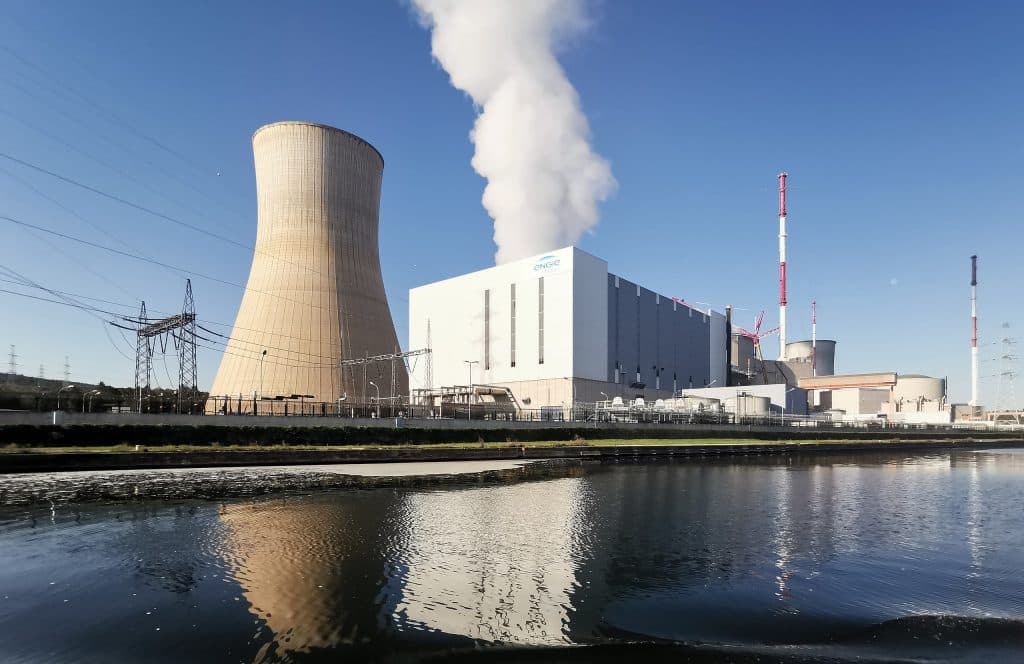
French and Belgian nuclear industry associations have agreed to strengthen cooperation in the nuclear sector. The partnership aims to share information, experience and best practices, while also supporting alliances between companies in the two countries. The agreement follows an earlier political declaration by the energy ministers of Belgium and France, reports World Nuclear News.
France’s Groupement des Industriels Français de l'Energie Nucléaire (Gifen) and the Belgian Nuclear Forum (BNF) signed an agreement in early September to strengthen cooperation in the nuclear sector. The partnership aims to share information, experience and best practices, while also supporting alliances between companies in the two countries.
The agreement follows a July declaration by the energy ministers of Belgium and France, who expressed their desire for closer cooperation in key areas: extending the life of existing reactors, developing new projects including small modular reactors (SMRs), innovation, education and strengthening supply chains.
“This cooperation agreement between the industry associations BNF and Gifen is the next logical step, because ultimately it is industry players who will have to put it into practice,” BNF Director General Serge Dauby said. In his view, Belgium and France can strengthen their capabilities and help restore nuclear energy’s position in Europe as a key pillar of security of supply, energy sovereignty and decarbonisation.
Belgium has meanwhile made a major U-turn: this spring, its parliament repealed the 2003 law on the phase-out of nuclear energy and the ban on new construction. After years of uncertainty, Belgium has opted for nuclear power as part of its path to decarbonisation and energy security.
The joint Franco-Belgian initiative is also intended to strengthen the voice of the pro-nuclear alliance within the EU, which now has 14 member states.
A nuclear renaissance and weakening opposition
Europe has seen a shift in recent years, with more and more countries returning to nuclear power or expanding it. Italy is preparing for a change in policy 35 years after shutting down its last nuclear power plant. Following the recent repeal of the ban on building new reactors, the energy ministry estimates that nuclear power could account for around 10 % of installed capacity by the end of the next decade. Denmark is considering lifting its ban on the use of nuclear energy, which has been in place since 1985.
Ten countries are working on new units. Projects in Finland, Hungary and the United Kingdom are at the licensing stage, while projects in the other member states (Bulgaria, the Czech Republic, Lithuania, Poland and Romania) are in the preparation stage.
There are also signs that Germany could soften its long-standing opposition to common European pro-nuclear policies. At the end of August 2025, Germany and France agreed on a common approach to shaping European energy policy, which includes nuclear energy as a low-carbon source and could bridge their long-standing disagreement over its role in the green transition. The two countries adopted an economic agenda proposing a new policy through 2040, based on equal treatment for all technologies that contribute to achieving climate neutrality.
The anti-nuclear front is therefore weakening, partly as a result of geopolitical developments. Russia’s invasion of Ukraine and the threat of dependence on Russian fossil fuels have prompted European governments to reconsider their positions and seek more stable domestic or allied energy sources.
Relations with the US are also part of European nuclear policy. To avoid US tariffs, the EU pledged in July to buy $750 billion worth of US energy and technology over the next three years, including fuel and reactor solutions. This move raises questions about whether Europe’s nuclear renaissance will be heavily dependent on US suppliers.
France is positioning itself as the driving force behind Europe’s nuclear renaissance, but its state-owned giant EDF has faced difficulties in recent years: contracts to build reactors in Poland went to US companies, while a South Korean supplier won in the Czech Republic despite pressure from Paris.
The Franco-Belgian cooperation nevertheless represents a broader trend. The success of Europe’s nuclear renaissance will depend on the ability to coordinate industrial policies and investment in infrastructure, as well as on European companies’ ability to remain competitive with the US, Korea and China. Without such coordination, European companies risk losing market share in key projects and becoming dependent on players from outside Europe.
Translation disclaimer
This article is a machine translation of the Czech original and has not yet been fully reviewed. In case of any doubt, please refer to the Czech version.
Sdílejte článek prostřednictvím:
You might also like
10 October 2026, 07:02
9 October 2026, 13:47