EU gas consumption rises for second year. LNG now accounts for 45% of imports

Natural gas consumption in the European Union in 2025 increased year on year for the second consecutive year. According to the European Commission's quarterly report, it reached 339 billion cubic metres, 2% more than in 2024. However, this was only a modest recovery following the sharp drop in consumption during the energy crisis. European consumption remains below its 2022 level.
In the fourth quarter, the EU consumed 106 billion cubic metres of gas, 2% more year on year. Growth occurred despite temperatures being milder than the long-term average across most of Europe. Electricity generation therefore played a significant role. Gas-fired power plants generated 112 TWh of electricity in the final three months of the year, 8% more year on year, accounting for 17% of total electricity generation in the EU.
The Commission states that, for the full year, gas consumption in households and the commercial sector increased by approximately 2%, while consumption for electricity generation rose by 13%. However, these sectoral figures are not based on complete statistics for the entire Union. They are based on data from transmission system operators in Germany, France, Italy, Spain and Portugal, which together account for approximately 60% of EU gas consumption.
LNG now accounts for almost half of imports
Total natural gas imports into the EU reached approximately 288 billion cubic metres in 2025, rising 5% year on year. Norway remained the largest supplier, with a 30% share, followed by the United States with 26%. North Africa accounted for 12.7% of imports and Russia for 12.5%. Qatar and Azerbaijan each covered approximately 4% of imports.
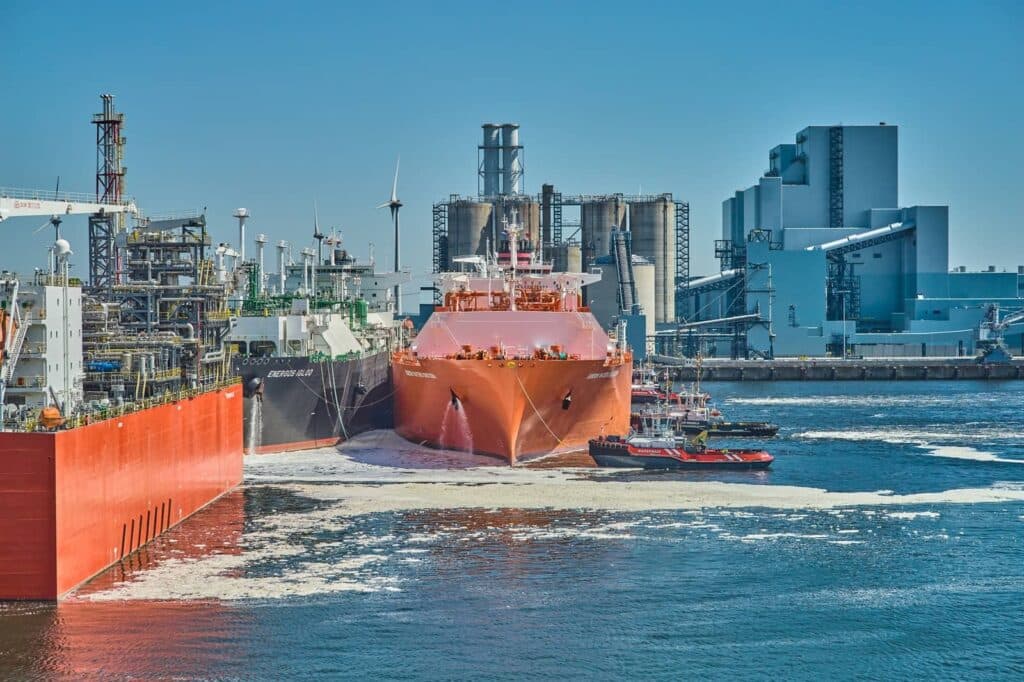
The import structure continued to shift away from pipeline supplies towards liquefied natural gas, or LNG. Pipeline imports fell 8% year on year to 158 billion cubic metres. By contrast, LNG imports rose 29% to 131 billion cubic metres and already accounted for 45% of total gas imports into the Union. Its importance was even more pronounced in the fourth quarter, when LNG made up 47% of imports. In the same period in 2021, its share was just 23%.
The United States became the dominant LNG supplier. Its share of the EU's full-year LNG imports rose from 45% in 2024 to 58% in 2025. Russia's share, by contrast, fell from 20% to 13%. In the fourth quarter, Russia was the EU's second-largest LNG supplier after the United States, followed by Qatar. Following the end of transit through Ukraine, Russian pipeline gas supplies to the Union were routed only via Turkey.
According to the Commission's methodology, the European Union was the world's largest single LNG import market in 2025, accounting for 24% of global trade. It was followed by China with 16%, Japan with 15% and South Korea with 11%. However, this comparison sets the EU, a bloc of 27 countries, against individual countries. It therefore does not mean that Europe imported more LNG than all of Asia. On the exporters' side, the United States remained the largest supplier, while Qatar and Australia took the next two positions with roughly comparable shares.
Wholesale prices fell, but only limitedly for households
The average wholesale gas price at the Dutch TTF (Title Transfer Facility) trading hub reached approximately 30 EUR/MWh in the fourth quarter. It was down 30% year on year and 68% lower than in the fourth quarter of 2021. However, it remained approximately 37% above the level in the first half of 2021, which the Commission uses as its pre-crisis reference period. The full-year average reached 36 EUR/MWh, up 5% year on year.
The decline in wholesale prices was only partly reflected in final prices for households. The average retail price monitored in cities across member states reached 106 EUR/MWh in the fourth quarter and was virtually unchanged year on year. Energy itself accounted for approximately half of the final price, while the remainder consisted of network charges, energy taxes and value-added tax.
Storage facilities were less full than in previous years
Europe's weak point was its gas storage level. Average storage fill levels during 2025 stood at 61%, compared with 78% in 2024. At the end of December, storage facilities were 69% full, lower than in the same period from 2022 to 2024 but higher than in the crisis year of 2021. The maximum technical capacity of European gas storage facilities is approximately 101 billion cubic metres, equivalent to roughly one-third of annual EU consumption. EU gas storage levels remain low even now, at around 11% below the level at the same time last year.
The European gas market stabilised in 2025, but this does not mean a return to the situation before the energy crisis. Europe has replaced its dominant dependence on Russian pipelines with a far more diversified but also more globally interconnected LNG-based structure. The main risk is therefore shifting from the physical availability of a single transmission route to competition over costs on the global market, tanker availability and the concentration of US supplies. The fragility of this system is evident amid the ongoing crisis in the Strait of Hormuz