25 October 2026, 08:20
Loading...
Top 10 Czech energy stories of the past week
oEnergetice.cz
1 September 2024, 20:48

This week, we once again bring you a carefully selected list of the ten most important articles published on oEnergetice.cz. If you missed any of them, here is a selection of the articles that attracted the most interest from our readers. Good luck in the week ahead!
1. A record year for Czech solar: output has already matched last year’s total
Czech solar power plants had already surpassed their total output for all of last year by mid-August this year. Last year, solar power plants generated almost 2.8 TWh. After years of stagnation, electricity generation from solar power plants reached a record last year, and it will rise even more significantly this year.
Czech solar power plants surpassed last year’s output of 2.8 TWh in mid-August. To date, cumulative generation since the start of the year has reached almost 3 TWh. While electricity generation from solar power plants had remained more or less constant in previous years, it rose significantly for the first time last year. This year, the increase will be even more substantial.
Read the full article HERE.
2. Volkswagen revises its electric vehicle production plans

Volkswagen and other automakers in Europe are facing a “huge effort” to meet their e-mobility targets. However, demand for vehicles is not as high as expected.
As reported by Clean Energy Wire, Volkswagen is facing problems caused by high costs and declining revenue in the e-mobility sector. The company’s chief executive, Oliver Blume, said so. Europe’s largest automaker is now planning to resort to cost-cutting measures to improve its finances.
Read the full article HERE.
3. Situation at the Kursk nuclear power plant is serious, Grossi says during visit
The situation at the Kursk nuclear power plant is serious, the head of the International Atomic Energy Agency (IAEA), Rafael Grossi, said today. The facility is operating under almost normal conditions, he said, but there is a risk of a nuclear incident, Reuters reported. The IAEA chief visited the plant in western Russia today in connection with Ukraine’s incursion into the border region of Kursk earlier this month.
Russia also accused Ukraine last week of attempting a drone attack on the facility and has repeatedly said that Ukraine is attacking it.
Read the full article HERE.
4. Further US sanctions target Russia’s shadow LNG shipping fleet
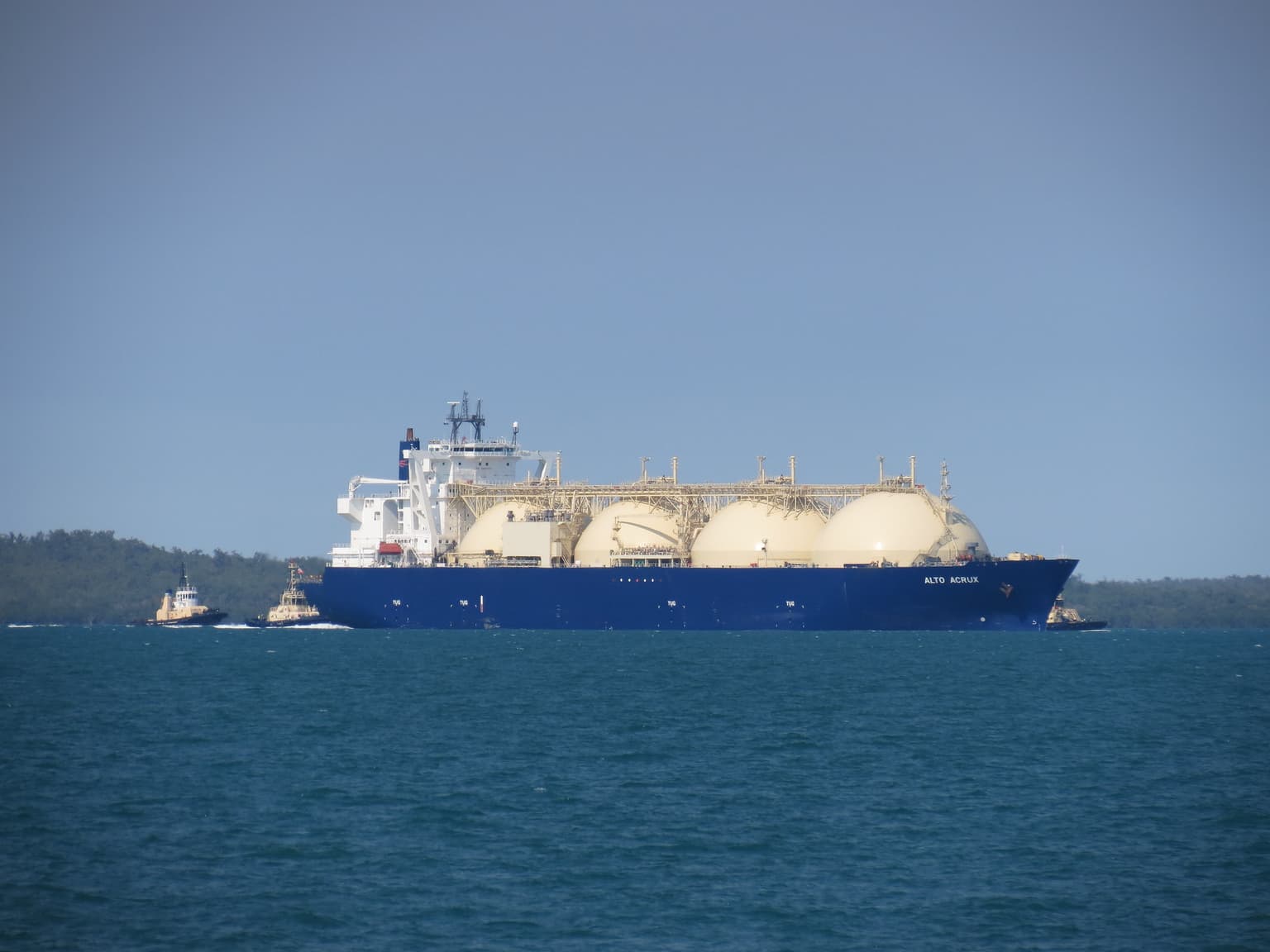
The US has imposed sanctions on seven LNG carriers linked to Russia, including vessels that are believed to have recently loaded cargo at a new Arctic export facility. The sanctions target nearly 400 individuals and entities. The move increases pressure on Russia and its efforts to expand LNG trade, according to S&P Platts.
On August 23, the day before Ukraine’s Independence Day, the United States announced new sanctions aimed at increasing pressure on Russia and its allies in the war against Ukraine. The measures focus on disrupting Russia’s LNG trade, particularly through sanctions targeting the shadow tanker fleet that Russia uses to circumvent existing restrictions.
Read the full article HERE.
5. India brings new Kakrapar nuclear power plant unit online
India has reached a significant milestone in its energy sector. Unit KAPS-4 at the Kakrapar power plant, with a capacity of 700 MW, has been commissioned at full power. The achievement comes as India seeks to increase the share of nuclear energy in its energy mix. The country aims to reduce its dependence on fossil fuels and meet its emissions-reduction commitments.
KAPS-4 is part of the Kakrapar Atomic Power Station, located in the western Indian state of Gujarat. It is the second 700 MW pressurized heavy water reactor (PHWR) to be operational in India.
Read the full article HERE.
6. European solar manufacturer keeps production in Germany, won’t move to the US
Germany’s largest solar panel manufacturer, Swiss company Meyer Burger, has announced that it will not close its plant and move to the US. Producing cells in Germany is the “most economical option” for supplying its panel assembly lines, the company added.
Meyer Burger announced in January that it would close its German solar cell plant, which has a stated annual production capacity of 650 MW. It has now announced, however, that its planned factory in Colorado Springs, US, will not be built. Euractiv reports,
Read the full article HERE.
7. USD 35 trillion in investment: the key to transforming the energy sector
The International Renewable Energy Agency (IRENA) recently presented an ambitious plan to triple renewable energy capacity by 2030. This is not merely a technical task, but one that involves a wide range of challenges related to financing renewable energy development, international cooperation and capacity building. This article examines the areas that are key to achieving this goal.
Cooperation and the equitable distribution of investment
Intensive international cooperation is essential to achieving this goal. The IRENA report stresses that the current uneven flow of investment prevents developing countries from fully tapping the potential of renewable energy. Addressing these inequalities will require a reassessment of how investment is distributed.
Read the full article HERE.
8. Waste incinerator under construction near Most, set to process 150,000 tonnes a year for energy

Construction has begun on a waste incinerator in Komořany, near Most. The waste-to-energy facility (ZEVO) will have an annual capacity of 150,000 tonnes. Construction costs exceed five billion crowns. United Energy CEO Milan Boháček said this today at the groundbreaking ceremony. Half the cost will be covered by the company, which is part of Daniel Křetínský’s holding, using funding from the Modernisation Fund. The facility is expected to start operating in spring 2027.
The company has signed a memorandum on the supply of unsorted waste with all the largest cities in the Ústí nad Labem Region and a number of municipalities across the region. It has also secured commitments for supplies from, for example, Cheb. “The incinerator is designed to handle half the waste generated in the Ústí nad Labem Region. One advantage is that it will be a relatively cheap source of heat for Most and Litvínov,” Boháček said.
Read the full article HERE.
9. German Krümmel nuclear power plant gets decommissioning permit; work to take 15 years
The shut-down German nuclear power plant Krümmel has received a decommissioning permit from the federal authority. The single-unit, 1400 MW plant in Schleswig-Holstein ceased operations in 2011 following the nuclear accident in Fukushima, Japan. Operator and 50% co-owner Vattenfall expects decommissioning work to take another 15 years.
The nuclear regulator in the German state of Schleswig-Holstein issued a permit for the complete decommissioning and dismantling of the Krümmel nuclear power plant. The single-unit plant, with a 1400 MW (gross) boiling water reactor (BWR), began operating in 1983. Before it was shut down in 2011 in response to the accident in Fukushima, Japan, the unit was offline for extended periods several times due to a transformer fault.
Read the full article HERE.
10. Environmental groups file constitutional complaint over exemption for Chvaletice power plant

Non-governmental organizations Hnutí Duha and Greenpeace, together with the legal expert group Frank Bold, have filed a constitutional complaint against an exemption allowing the Chvaletice power plant to emit mercury and nitrogen oxides, which it received from the authorities between 2019 and 2021. They consider it unconstitutional, for example, that the plant was granted the exemption despite receiving a negative assessment under the environment ministry’s methodology. They also disagree with the courts’ finding that releasing more than a tonne of toxic mercury would not constitute an activity causing serious environmental pollution, the organizations said in a press release.
The Olomouc branch of the Regional Court in Ostrava overturned the exemption twice, and the Supreme Court sent the case back each time. On the third occasion, the regional court upheld the exemption. After the Supreme Administrative Court rejected the environmental organizations’ cassation appeal, they have now filed a complaint with the Constitutional Court.
Read the full article HERE.
Topic
How EU state aid can shape clean technology decarbonization and affect competition in the single market
In recent years, the European Union has increasingly focused on supporting the transition to clean technologies while seeking to maintain a balance in the single market. A recent report published by the European Commission’s Joint Research Centre (JRC) discussed the role of state aid in this process, particularly how it could affect competitiveness and cohesion among member states.
The EU has ambitious targets for reducing greenhouse gas emissions and achieving carbon neutrality by 2050. Developing and deploying clean technologies is essential to achieving these goals. These include renewable energy, electric mobility, hydrogen technologies and technologies focused on improving energy efficiency.
Read the full article HERE.
Energostat: electricity generation in Czechia
Data in this chart is also available in 15-minute resolution60min15min
Energostat: electricity generation in Germany
Data in this chart is also available in 15-minute resolution60min15min
Find more up-to-date charts and data on Energostat
Translation disclaimer
This article is a machine translation of the Czech original and has not yet been fully reviewed. In case of any doubt, please refer to the Czech version.
Sdílejte článek prostřednictvím:
Topics:Energy Weekly
You might also like


23 October 2026, 14:38