
25 October 2026, 08:20
Loading...
Top 10 energy stories from the past week
oEnergetice.cz
15 September 2024, 21:03
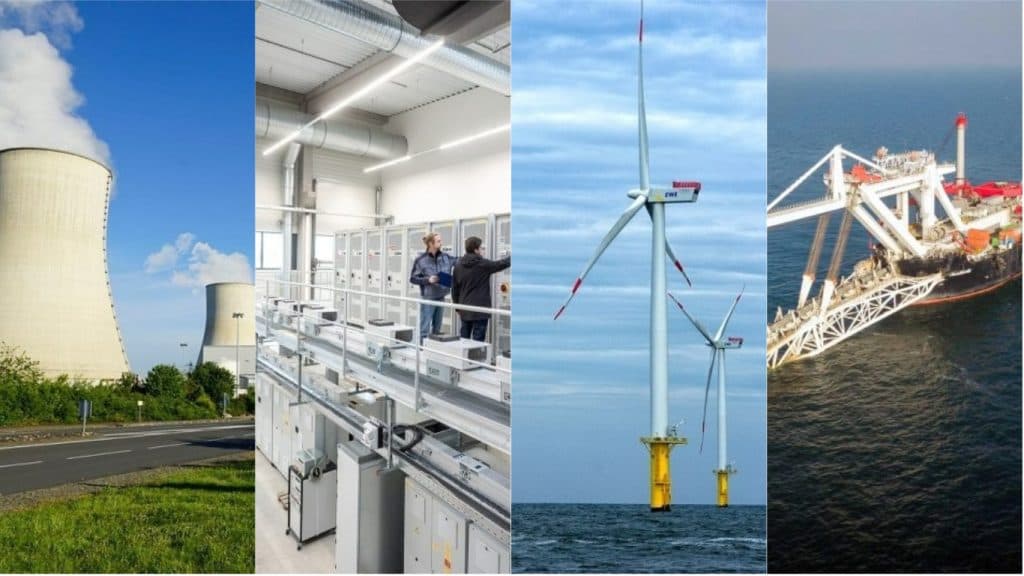
This week, we once again bring you a carefully curated list of the ten most important articles we published on oEnergetice.cz. If you missed any of them, here is a selection of the stories that caught our readers’ attention the most. Good luck in the new week!
1. Cooling tower at Zaporizhzhia nuclear power plant irreparably damaged
International Atomic Energy Agency (IAEA) Director General Rafael Mariano Grossi inspected the cooling tower that was damaged by fire last month at the Zaporizhzhia nuclear power plant. He said the tower “will not be usable in the future and will therefore probably be demolished.”
Grossi, who has visited the Zaporizhzhia nuclear power plant for the fifth time, said the security situation remains very fragile. “Our work continues. We will analyse and assess what we saw today until the conflict ends or until it moves into a phase where there are no active military operations,” Grossi said. According to Grossi, the risk of a serious incident cannot be entirely ruled out.
Read the full article HERE.
2. World’s largest nuclear power plant one step closer to restart, but needs local approval

The Japanese government approved several measures last week that should help bring the Kashiwazaki-Kariwa nuclear power plant back into operation. With an installed capacity of more than 8 GW, it is the largest nuclear power plant in the world. However, the plant has remained shut down since the devastating tsunami and accident at the Fukushima Daiichi nuclear power plant.
The plant’s operator has been planning to restart the Kashiwazaki-Kariwa plant for some time, which would help the company reduce its electricity generation costs. However, TEPCO still needs to obtain local approval for the move. According to Reuters, Japan’s nuclear regulator lifted a ban on operating the facility last December. The ban had been imposed in 2021 over certain security shortcomings.
Read the full article HERE.
3. Municipalities are so far checking compliance with the ban on polluting boilers based on complaints.

Municipalities are mainly checking compliance with the ban on using polluting boilers, which took effect at the beginning of September, in response to complaints from residents. They have not yet begun carrying out widespread inspections. One reason is a shortage of officials. Municipalities also lack information about who still has a polluting boiler. At the start of the heating season, they therefore want to identify such properties through visual inspections as well. If they find a violation, they intend to address it first with a warning and only then, if necessary, with a fine. The penalty for heating with a polluting boiler can be as high as 50,000 crowns. This emerged from a Czech News Agency (ČTK) survey of the regions.
Due to their impact on air pollution, boilers in the first and second emission classes have been prohibited from being used for heating since 1 September. According to estimates by the Association of Heating Technology Companies, around 150,000 were still in operation in the country at that time. People were eligible for national or European subsidies to buy new boilers.
Read the full article HERE.
4. EU faces opposition from carmakers over mandatory quotas for green steel
Automotive industry associations believe that boosting demand for so-called “green steel” by introducing minimum quotas for carmakers will not reduce the emissions intensity of steel production. Environmentalists, however, take a different view and believe that the automotive industry should lead the market for green steel production. Euractiv reports on the issue.
Steelmakers, environmental groups and German politicians recently proposed draft legislation that would require European carmakers to produce a minimum share of green steel. However, the ideas have met with opposition from the industry itself. European carmakers believe such a decision should be driven by market needs and should not be merely the result of political debate.
Read the full article HERE.
5. Major milestone for the UAE: final unit at Barakah nuclear power plant officially enters commercial operation

The United Arab Emirates has successfully completed construction of its first nuclear power plant, Barakah. The fourth unit has completed all tests and officially entered commercial operation. With a total capacity of 5,600 MW, the plant’s South Korean APR-1400 units will now cover around a quarter of the country’s electricity consumption. As part of its climate goals, the UAE is already planning to complete two more units at the site.
The Emirates Nuclear Energy Corporation (ENEC) announced the achievement of a major milestone. The fourth and final unit at Barakah, the Arab world’s first nuclear power plant, has successfully entered commercial operation. Construction of the 1,400 MW APR-1400 unit took 9 years. In total, it took the country an impressive 12 years to build its first four-unit nuclear power plant, with a capacity of 5.6 GW.
Read the full article HERE.
6. Bill amending emissions allowance law faces motion to reject

The government’s bill amending the emissions allowance trading law will face a motion to reject it at its third reading. The motion was put forward during today’s second reading by opposition SPD MP Jiří Kobza, who had already sought to have the bill rejected at the first reading. Kobza said that emissions allowance trading is a tool that will make life more expensive for citizens. Parliament did not complete the bill’s second reading today and is likely to return to it next week.
The government’s bill is intended primarily to introduce a rule that money from the sale of emissions allowances can be used only for measures that reduce or offset the effects of climate change. The amendment responds to a revised EU directive requiring all revenues from allowances to be used for climate protection. In line with the European directive, the bill also adjusts the rules for emissions allowances in maritime transport. It raises the maximum fines for the most serious offences from five to 20 million crowns.
Read the full article HERE.
7. Italy returns to nuclear power: a new era for energy on the horizon

Italy is planning a return to nuclear power, which could significantly change its energy mix. It is moving to establish a new nuclear company in response to its growing dependence on electricity imports and its efforts to cut CO2 emissions in line with the European Union’s climate goals.
In 2022, more than 15% of Italy’s electricity was imported. A significant share came from France, where nuclear power accounts for a dominant part of the energy mix. The Czech Republic, by contrast, has a long history of nuclear power and relies heavily on its two nuclear plants—Dukovany and Temelín.
Read the full article HERE.
8. Common mistakes in the “Renovate Grandma’s House” programme: “Some people will have to repay their grant,” experts warn

The “Renovate Grandma’s House” programme has been running for almost a year. Experts say the conditions of the scheme, known as “Grandma’s,” which helps people renovate older properties, are extremely demanding. Ekonews provides an overview of the most common mistakes made by people applying for grants.
Read the full article HERE.
9. Greece to join Romania and Bulgaria in tackling high energy prices
Greece will work with Romania and Bulgaria to tackle high electricity prices. Greek Energy Minister Teodoros Skylakakis told Greek radio today, according to Reuters. He said the EU’s single electricity market is not working in southeastern Europe and that a lasting solution needs to be found.
Greece gets almost half of its energy cheaply from solar and wind farms. However, as in other southern European countries, prices regularly rise during the warm summer months, when demand for air conditioning is high and electricity supplies from other European countries are insufficient.
Read the full article HERE.
10. Westinghouse modular reactors could bring Czechia 293 billion crowns by 2050, PwC says

Westinghouse today presented the results of a study by PwC examining the economic benefits of deploying AP300™ small modular reactors (SMRs) with a combined capacity of 3,000 MW. The report estimates that the project could add up to 292.7 billion crowns to Czech GDP over 25 years during the construction and installation phase.
The study estimates that the manufacturing, engineering and construction phases of the AP300 SMR project would generate 80,000 person-years in addition to the contribution to GDP mentioned above. This is equivalent to around 3,200 full-time jobs per year. Once operational, the AP300 SMR project is estimated to contribute 95.3 billion crowns to Czech GDP each year and help create around 8,500 direct and indirect jobs.
Read the full article HERE.
Topic
Green jobs are being created, but not in Europe
The EU Green Deal promised new jobs in green industries to replace those lost in other sectors, but these jobs are so far being created outside Europe, Judith Kirton-Darling, general secretary of the EU’s largest industrial trade union, warned in an interview with Euractiv. She is particularly concerned about the automotive and steel industries.
The European Green Deal is a set of measures aimed at transforming the EU’s economy to achieve climate neutrality by 2050. According to the EU, this ambitious plan is intended not only to create new opportunities for economic growth, technological development and new business models, but also to create jobs that will replace—or even outnumber—those disappearing in traditional industries. However, industrial decarbonisation poses many challenges, and according to IndustriAll Europe, the EU’s largest industrial trade union, the continent may be heading into a difficult economic period.
Read the full article HERE.
Opinion
How to get solar power under control, and what does it really cost to run an electric car?
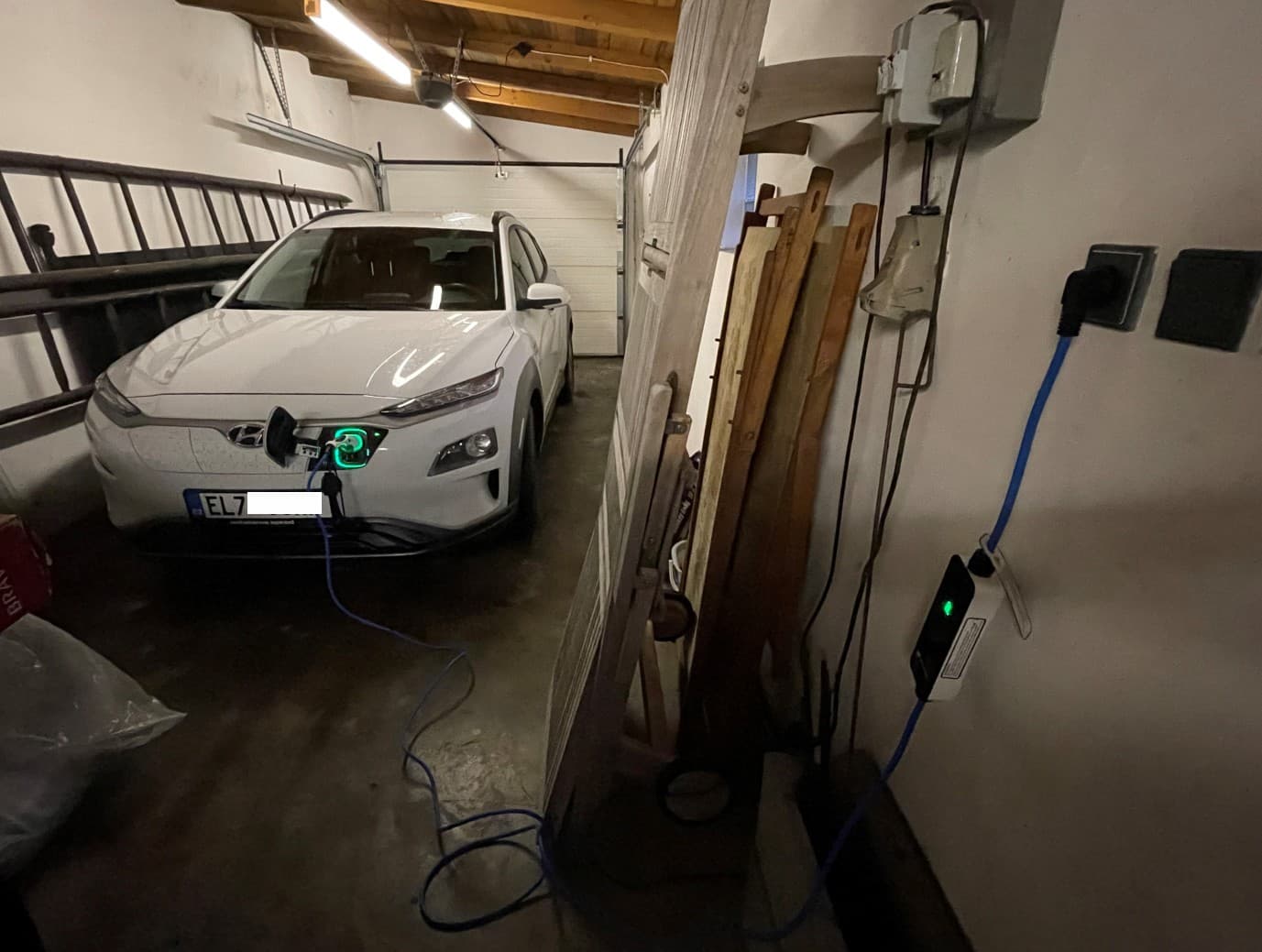
In previous articles, I described my experience with home solar PV and running an electric car. The discussions that followed raised many questions worth exploring further and explaining in context. In 2024, several changes in the energy market also significantly affected the economics of both solar PV and electric cars.
At the beginning of the year, based on my experience so far, I decided to expand my solar PV system. Component prices had fallen compared with previous years, so I expanded the system to 9.5kWp with a 24kWh battery, without any subsidies. Such a system can cover a fairly significant share of winter consumption, but in summer it produces roughly twice as much over the course of a month as the house can use. To achieve a reasonable payback even under these conditions, the system also needed to be upgraded with smart controls.
Read the full article HERE.
Energostat: electricity generation in the Czech Republic
Data in this chart is also available in 15-minute resolution60min15min
Energostat: electricity generation in Germany
Data in this chart is also available in 15-minute resolution60min15min
More up-to-date charts and data are available on Energostat
Translation disclaimer
This article is a machine translation of the Czech original and has not yet been fully reviewed. In case of any doubt, please refer to the Czech version.
Sdílejte článek prostřednictvím:
Topics:Energy Weekly
You might also like




23 October 2026, 14:38