1 November 2026, 21:20
Loading...
Top 10 energy stories of the past week
oEnergetice.cz
3 December 2023, 22:00
1. Transmission system operators announce completion of synchronisation with Ukraine
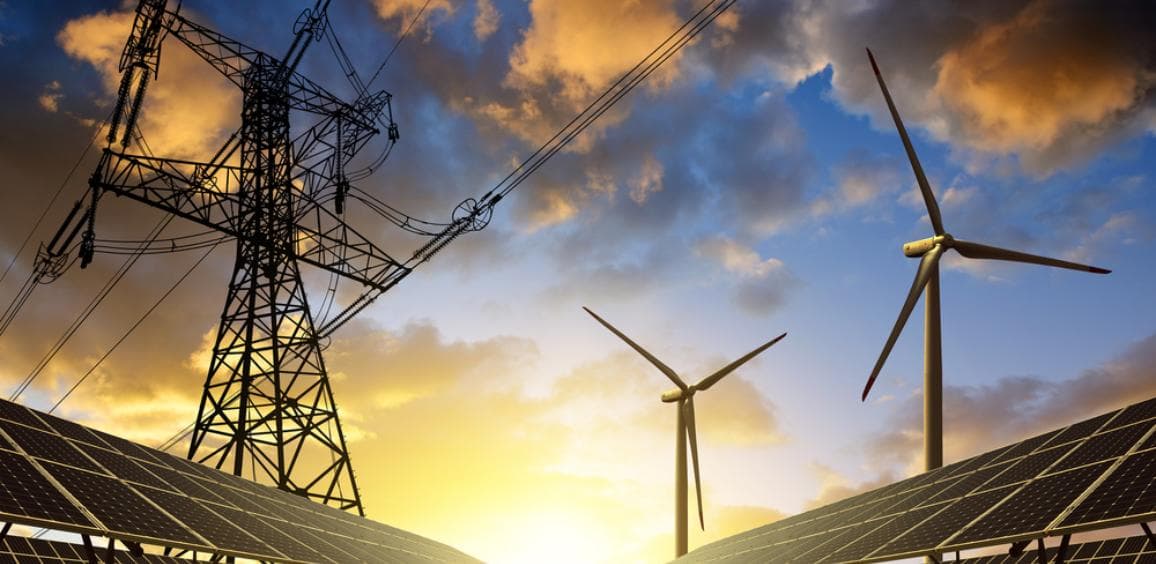
Continental European transmission system operators announced that Ukrainian transmission system operator Ukrenergo has met key technical requirements for the permanent interconnection of the power systems of continental Europe and Ukraine. The connection will significantly increase export capacity from continental Europe to Ukraine.
Ukraine has been working intensively to prepare its power system for cooperation and interconnection since Russia’s annexation of Crimea. One of the aims of these efforts is to permanently end cooperation with Russia. Ukrainian energy companies have been taking concrete steps since 2017. Ukraine has invested around EUR 700 million in upgrading its infrastructure.
2. Westinghouse AP300 small modular reactor to power up to 300,000 households

Nuclear power plays a key role in the search for zero-emission ways to generate electricity. Small modular reactors (SMRs) are a clean energy source that will complement the energy mix and ensure Czechia’s energy and geopolitical security. Westinghouse’s AP300 SMR technology is based on the proven, larger conventional AP1000 reactor, which will speed up its licensing process and could allow the first unit to start generating electricity as early as 2033.
Westinghouse, which has a long history in the nuclear industry, focuses on innovation and advanced technologies. One such innovation is the development of the AP300 small modular reactor, which promises to usher in a new era of nuclear power. The AP300 builds on the foundations of an advanced, proven conventional reactor. This makes the AP300 SMR the only small modular reactor based on a unit already in operation.
3. Italy and Germany plan giant hydrogen pipeline to Africa

Germany plans to work with Italy to adapt existing gas pipelines to carry hydrogen, securing supplies of clean hydrogen from Tunisia. The hydrogen pipeline “across the Alps” is expected to help Germany decarbonise its industries. In addition to domestic European hydrogen production, Germany is also counting on imports from countries outside the EU, the Euractiv website reports.
German Chancellor Olaf Scholz met Italian Prime Minister Giorgia Meloni in Berlin on Wednesday, 22 November. At the meeting, they also pledged to work closely together on energy matters.
4. Poland’s second nuclear power plant: ministry issues key decision
Poland’s Ministry of Climate and Environment has issued a key decision on the construction of a second large nuclear power plant. Two APR1400 reactors from South Korean company KHNP are planned for the Patnów-Konin region.
PGE PAK Energia Jądrowa applied to the ministry to build the plant in August this year. The application described the project’s characteristics, including its maximum installed capacity, planned operating life and details of the APR1400 technology to be used in the plant’s construction. According to the application, the two units would generate 22 TWh of electricity a year, equivalent to around 12% of Poland’s current consumption.
5. Japan starts up the world’s largest experimental fusion reactor
Japan today officially brought the experimental JT-60SA fusion reactor into operation. It is currently the largest of its kind in the world, AFP reported. Fusion technology is still in its early stages, but experts say it could become a safe, cheap and environmentally friendly energy source of the future.
The JT-60SA reactor is a joint project between Japan and the European Union. It is intended to support the even larger International Thermonuclear Experimental Reactor (ITER), being built in southern France, whose construction has been beset by delays, cost overruns and technical problems, AFP reports.
6. European Commission presents plan to modernise the EU’s electricity grid
The European Commission (EC) today presented a plan to modernise the electricity grid, preparing ageing infrastructure in EU countries for the growing role of renewable energy sources. Energy Commissioner Kadri Simson announced the plan today. It envisages that EUR 584 billion (CZK 14.2 trillion) will need to be invested over the next seven years. Infrastructure in some member states is more than 40 years old.
The electrification of transport, along with the connection of new wind farms and solar installations, is among the many projects planned for the coming years. The aim is to properly interconnect the electricity market across the EU. The Commission expects EU electricity demand to rise by around 60% between this year and 2030. Industry, household heating, cars and some hydrogen projects will all need more electricity.
7. Czech Energy Regulatory Office to announce final regulated energy prices for next year on Thursday
The Energy Regulatory Office (ERÚ) will announce the final form of the regulated component of energy prices for next year on Thursday. In its proposal, issued a month ago, the office expected the regulated component of household electricity prices to rise by 71%, which would mean an average increase of around CZK 1,408 per megawatt-hour (MWh), including VAT. The proposed increase for gas was 39%, which would raise the price by around CZK 125 per MWh. The final figures may, however, be slightly different. According to Industry and Trade Minister Jozef Síkela (STAN), the ERÚ has found savings of CZK 3 billion in recent weeks, which could reduce the proposed rise in regulated prices by a few percentage points. Analysts nevertheless expect people to pay more for electricity next year.
Energy prices comprise a commercial component, set by suppliers, and a regulated component, managed by the state. The regulated component accounts for around 40% of the final electricity price for households and around 20% of the gas price. For large consumers, the regulated component makes up a smaller share of the final electricity price.
8. Construction of nuclear units in Czechia to speed up: no appeals against permits; associations must go to court
An amendment to the so-called Linear Infrastructure Act, approved by the Czech Senate, is set to significantly limit the right of parties to proceedings to seek a review of permits issued for so-called energy security projects. These include nuclear power plants and related infrastructure, such as roads and power lines connected with the construction of nuclear facilities.
The Czech Parliament approved an amendment to the so-called Linear Infrastructure Act on Wednesday. The act applies to the construction of infrastructure projects of national importance (in addition to energy infrastructure, it currently also covers transport infrastructure and electronic communications infrastructure). If the amendment is also signed by the Czech president and subsequently enters into force, the scope of the act will be significantly expanded. This will also affect so-called energy security projects.
Czechia could have twice as many waste incinerators as it does now, says environment minister
There are currently four large waste-to-energy plants (ZEVO), commonly known as incinerators, operating in the country. They process around 710,000 tonnes of waste each year, although under the law Czechia can dispose of more than twice as much this way.
Projects have mainly taken off since the rules allowed waste-to-energy plants to receive funding from the Modernisation Fund. Environment Minister Petr Hladík says it is now necessary to recalculate how many projects can still receive subsidies.
10. Japan to test hydrogen co-firing at a gas-fired power plant
Japan’s Okinawa Electric Power plans to test hydrogen co-firing at one of its gas-fired power plants next year. The company’s president said the hydrogen would be burned to reduce carbon dioxide emissions. If the process proves successful during the trial, hydrogen could be burned regularly in the gas turbine.
The use of hydrogen in the energy sector has received growing attention in recent years, particularly as a potential means of storing energy from renewable sources. For hydrogen technologies to develop successfully, however, their use needs to be tested throughout the supply chain, including at the facilities that will ultimately burn the hydrogen.
In focus
Germany’s capacity reserve: power plants to ensure security of supply
Alongside support for renewable energy sources, Germany also provides non-market support to conventional power plants through several reserves that keep the required capacity on standby for various purposes. These include reserves that provide capacity to stabilise the transmission system, as well as reserves used to cover electricity demand when generation capacity is insufficient.
Transmission system operators maintain a capacity reserve to ensure security of electricity supply. The reserve is used to increase available capacity when supply on German electricity markets cannot fully meet demand.
Energostat: electricity generation in Czechia
Energostat: electricity generation in Germany
Translation disclaimer
This article is a machine translation of the Czech original and has not yet been fully reviewed. In case of any doubt, please refer to the Czech version.
Sdílejte článek prostřednictvím:
Topics:Energy Weekly
You might also like
1 November 2026, 16:09
1 November 2026, 07:59
31 October 2026, 12:55
31 October 2026, 08:21