25 October 2026, 08:20
Loading...
Top 10 energy stories of the past week
oEnergetice.cz
22 September 2024, 20:02

This week, we once again bring you a carefully selected list of the ten most important articles published on oEnergetice.cz. If you missed any of them, here is a selection of the articles that attracted the most interest from our readers. Best of luck in the new week!
1. Commission tells car industry: You had plenty of time

The automotive industry is complaining about strict emissions targets for transport. Manufacturers have also calculated that they could face fines of up to 16 billion euros for failing to comply with the rules for 2025. The European Commission, however, has rejected these claims.
Under EU requirements for CO2 emissions from passenger cars and vans, automakers must reduce the average CO2 emissions of their vehicles by 15% by next year compared with 2021 levels. However, as electric car sales are falling short of expectations, some industry players called in an unofficial document circulated over the weekend for a two-year delay to avert the risk of multibillion-euro fines. Euractiv reports.
Read the full article HERE.
2. Germany presents bill to support gas-fired power plants
Germany’s Federal Ministry for Economic Affairs and Climate Action has presented a draft bill to support the construction of new power plants. The government aims to ensure that enough power plants are built in the coming years to guarantee security of supply in the future when renewable energy generation is low. The ministry has now launched a consultation process.
Under the draft bill, the German ministry plans to support the construction of 7 GW of new gas-fired power plants or upgrades to gas-fired power plants, which are to be converted to run on hydrogen from their eighth year of operation. New projects will be given priority and are expected to account for at least 5 GW of the total.
Read the full article HERE.
3. Europe’s biggest Russian LNG importers introduce rules to ban its re-export from the EU
Spain, France and Belgium have begun introducing new rules to block the re-export of Russian LNG. The EU will ban the transshipment of Russian LNG from next year. Experts say this is unlikely to affect short-term prices or LNG supplies.
As part of its latest package of sanctions against Russia, adopted in June, the EU will ban the transshipment of Russian liquefied natural gas (LNG) through EU territory for shipment to other regions from next year.
Read the full article HERE.
4. Main task for new energy commissioner? It will be costly and affect Czechia too
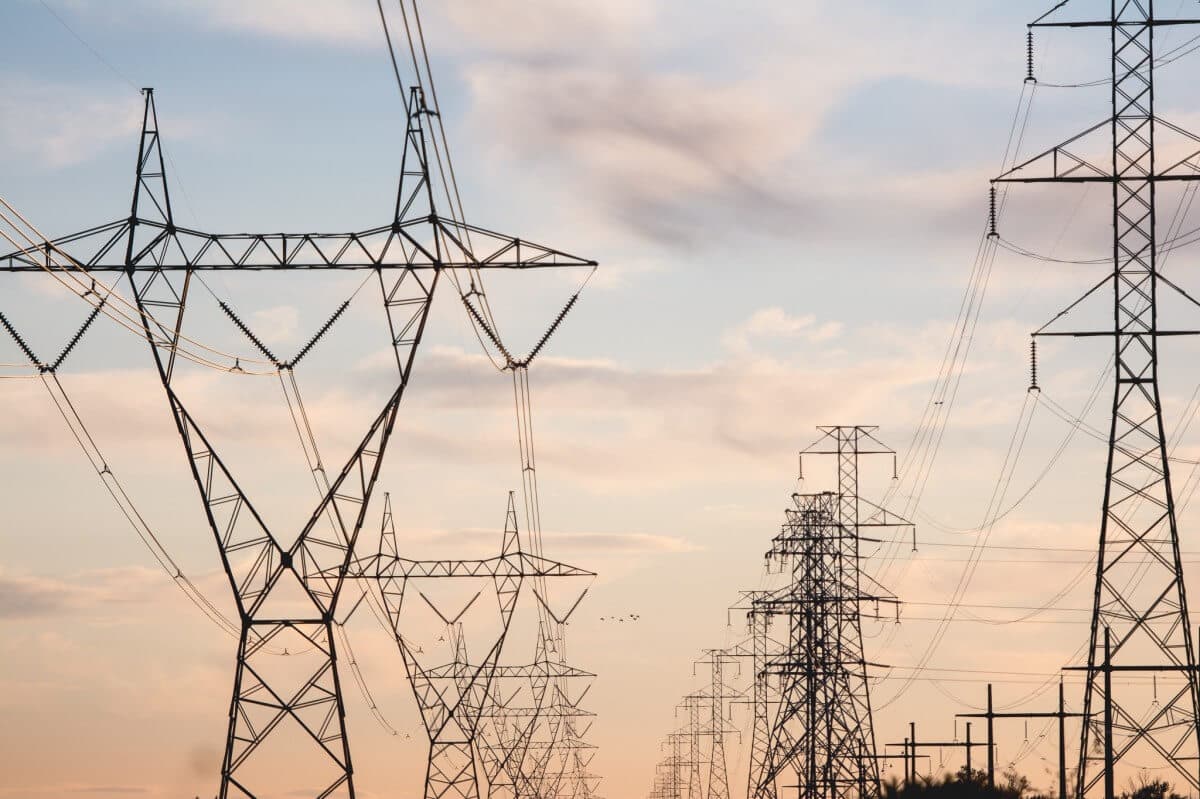
One of the main tasks for the new European commissioner for energy will be developing electricity transmission and distribution grids, according to the British think tank Ember. Without modern grids and stronger cross-border interconnections, the benefits of renewable electricity—on which the European Union’s energy system should be based in the coming decades—cannot be fully harnessed. This task, however, will require significant investment, including in Czechia.
The transition to renewable energy is one of the European Union’s main goals. The EU’s 27 member states are seeking to achieve climate neutrality by 2050, in part through the use of renewable energy.
Read the full article HERE.
5. Ukrainian company to boost European energy security with first US LNG cargo
The trading arm of Ukrainian energy company DTEK hopes to sign an agreement this week for its first LNG cargo from US company Venture Global. DTEK is seeking further long-term supply agreements that would help Europe offset the loss of Russian gas.
“We see these volumes as part of the energy security of the entire [European] region, including Ukraine, of course,” D.Trading CEO Ivan Geliukh told Montel in an interview.
Read the full article HERE.
6. Hundreds of gas-fired power plants with capacity of up to 100 GW to be built in US, driven by AI
The United States is preparing for significantly higher electricity consumption, driven in part by the growth of artificial intelligence, data centers and electric vehicles. Around 200 new power plants, with installed capacity of up to 100 GW, are currently at various stages of planning, Bloomberg reports. Experts fear that natural gas-fired power generation will remain part of the US energy mix for longer than originally expected.
The development of computer and mobile applications that use artificial intelligence is beginning to have a real impact on power generation. Electricity producers are likely to respond to the ever-increasing consumption of data centers, which are essential for AI, by building new gas-fired and combined-cycle power plants.
Read the full article HERE.
7. Ško-Energo begins 4.5 billion koruna refurbishment of Mladá Boleslav heating plant
Ško-Energo has begun a major refurbishment of its heating plant in Mladá Boleslav, with biomass set to be its sole fuel. The modernization will cost 180 million euros, or around 4.5 billion koruna. A grant from the State Environmental Fund’s Modernisation Fund will cover about half of the cost. This is the biggest modernization in the heating plant’s history and is expected to be completed by the end of 2027. Martina Vulcová informed the Czech News Agency on behalf of the company.
“Large-capacity silos for storing wood chips and a sorting facility will also be built on the site,” the company said on its website.
Read the full article HERE.
8. Tin crisis: Rising prices threaten electrical engineering and automotive industries in Czechia
The tin market is facing unexpected challenges that could drive prices of this key raw material even higher. After several major mining operations were out of service for an extended period, global tin supplies have been severely disrupted, putting pressure on supply chains and increasing market volatility. Reuters warns of a tin shortage for the electrical engineering industry.
Tin is an essential component in many industries. The greatest demand comes from the electronics industry, where tin is used mainly in soldering (around 47% of global consumption). Electronic devices, from computers to smartphones, depend on it.
Read the full article HERE.
9. Bulgarian-Romanian dam project from the socialist era revived

Dozens of international environmental organizations have denounced as dangerous a project backed by the European Commission to build a dam and power plant on the Danube between the Bulgarian town of Nikopol and the Romanian town of Turnu Măgurele. They argue that the project was rejected by the previous regime as well.
Bulgaria and Romania plan to jointly build two hydropower plants with a total capacity of 840 MW. The project’s preliminary estimated cost is around 2 billion euros. Construction of the hydropower complex is expected to take eight to ten years, Euractiv reports.
Read the full article HERE.
10. Chvaletice power plant partially resumes operation today after nearly five days
Chvaletice power plant partially resumed operation today after nearly five days offline. It had to suspend operations on the afternoon of 11 September because of a fire in a cable tray. This morning, the operator reconnected the plant to the grid and started generating electricity on two units, Petr Dušek said on behalf of the plant. The cable fire caused no injuries.
The equipment that lost power was primarily the desulfurization system, which does not directly generate electricity but reduces emissions. It was therefore necessary to shut down all units safely. The fire was detected by the electronic fire alarm system and initially tackled by the plant’s own fire brigade. Four more professional and volunteer fire units then came to assist.
Read the full article HERE.
Topic
Draghi report: How to lower energy prices and boost EU competitiveness

Mario Draghi, former president of the European Central Bank, presented a report on Monday, 9 September, outlining a vision for the future of European competitiveness at the European Commission’s request. From the perspective of climate and energy policy, it is a key analysis of how energy prices affect competitiveness, the ability to meet climate targets and Europe’s position in the world.
The report on the future of European competitivenessfocuses on the effects of climate and energy policy on the EU and analyzes individual sectors. It sets out a plan for decarbonization, strengthening security, reducing dependence and closing the innovation gap.
Read the full article HERE.
Energostat: electricity generation in Czechia
Data in this chart is also available in 15-minute resolution60min15min
Energostat: electricity generation in Germany
Data in this chart is also available in 15-minute resolution60min15min
Find more up-to-date charts and data on Energostat
Translation disclaimer
This article is a machine translation of the Czech original and has not yet been fully reviewed. In case of any doubt, please refer to the Czech version.
Sdílejte článek prostřednictvím:
Topics:Energy Weekly
You might also like


23 October 2026, 14:38