Europe Has Record-Low Gas Stocks, Market Fears Price Shock

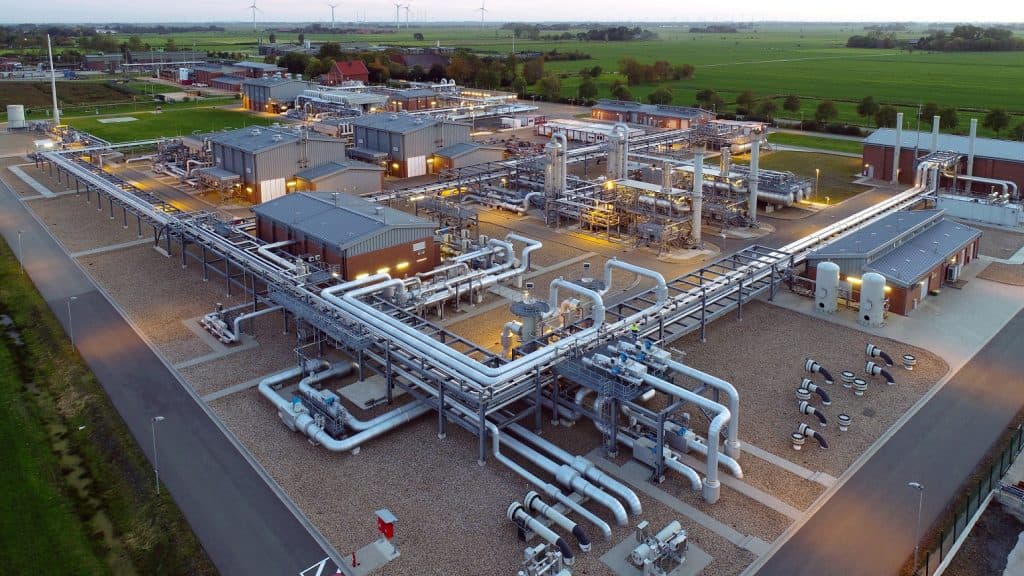
Natural gas stocks in the European Union are at a record low for this time of year. Storage facilities are less than 58 percent full, the lowest level since statistics began being kept in 2011 and 12 percentage points lower than a year ago. This follows from data from Gas Infrastructure Europe (GIE). The US-Israeli war against Iran has curtailed global supplies of liquefied natural gas (LNG), raising the prospect of a significant increase in gas prices during the winter period, Reuters reported today.
The current situation has revived memories of the 2022 energy crisis, which pushed up prices and cut industrial profits. Compared with 2022, the EU now consumes less gas and obtains a larger share of its energy from renewable sources. However, after curbing imports of Russian gas, it has become more reliant on LNG from the global market, making it more vulnerable to supply disruptions. If storage facilities cannot be sufficiently replenished ahead of winter, when demand is higher, the EU may be forced to buy gas at substantially higher prices.
Following the 2022 energy crisis, the European Union introduced an obligation to fill gas storage facilities to 90 percent of capacity by November. It later eased the target to 80 percent by December. The measure is intended to ensure that EU countries have a fuel reserve for the winter months, when demand for gas for heating peaks. Restoring stocks this year has been complicated by the closure of the strategic Strait of Hormuz following the outbreak of war with Iran, which has removed around one-fifth of global LNG supplies from the market. Qatar normally provides this volume.
The price of natural gas in Europe nearly doubled by the end of July compared with the period before the escalation of the Middle East conflict. It rose from around 31 euros per megawatt-hour (MWh) to almost 60 euros (CZK 1,500) per MWh. In recent days, it has fallen to around 53 euros per MWh on hopes that a peace agreement between the US and Iran will be concluded. In 2022, following Russia's military invasion of Ukraine, prices temporarily climbed to a record of more than 300 euros per MWh.
Price forecasts vary widely. According to Energy Aspects, if operations in the Strait of Hormuz resume, gas prices could range between 60 and 80 euros per MWh this winter. However, if Qatari LNG supplies were removed from the market and the winter were colder than usual, the average gas price between November and March could rise to as much as 110 euros per MWh, while stocks could fall to ten percent of capacity by the end of March. Efforts to maintain this reserve at as much as 16 percent could, according to estimates, push the average price as high as 210 euros per MWh.
The rapid construction of LNG import infrastructure in Europe has given countries more options for securing supplies than in 2022, when they relied heavily on Russian pipeline gas. However, the EU's increased dependence on LNG also means that countries are no longer protected by fixed-price contracts for pipeline gas and are vulnerable to potential price swings if they need to buy more gas.
Wood Mackenzie analyst David Lewis warned that the low level of gas stocks has created a risky situation. "If there is a very cold winter or a prolonged cold spell, some form of demand curtailment or price increase may be necessary, otherwise Europe will run out of gas," he said.
EU storage capacity can hold more than 102 billion cubic metres of gas. Withdrawals from storage cover up to 30 percent of winter consumption, provided the winter is not unusually severe.
A European Commission spokesperson said that, according to the latest assessment, the target of filling gas storage facilities to 80 percent is sufficient to ensure winter supplies and is technically achievable. Analysts, however, are sceptical, estimating that storage facilities will be filled to only 67 to 76 percent of capacity before the start of the heating season. Even reaching these levels would require European buyers to offer higher prices for LNG supplies and outbid competition from Asia, which must replace its usual supplies via the Strait of Hormuz.
The disruption to supplies through the Strait of Hormuz has intensified the global competition for LNG cargoes and supported price growth. The market has also moved deeper into so-called backwardation, where gas prices for nearer delivery are higher than prices for later delivery, a period that now already includes winter. According to Aurora Energy Research analyst Jacob Mandel, there is therefore currently no financial incentive to buy gas at market prices to fill storage facilities, because purchasing gas for storage and subsequent sale makes little economic sense.
According to Mandel, filling European gas storage facilities to 80 percent before winter would require a near-record pace of replenishment that could only be achieved with government intervention. However, there is currently no political will for such measures. The situation is further complicated by the fact that the EU still plans to impose a complete ban on imports of Russian LNG from the end of this year, aimed at limiting Moscow's revenues for financing the war in Ukraine.
Whatever the final price level, it will ultimately be reflected in household bills and industrial sectors. "It will mean higher energy bills for this winter and the next one," Energy Aspects analyst Erisa Pasková told Reuters.