Renewable curtailment: China has this year wasted Mexico’s annual electricity consumption
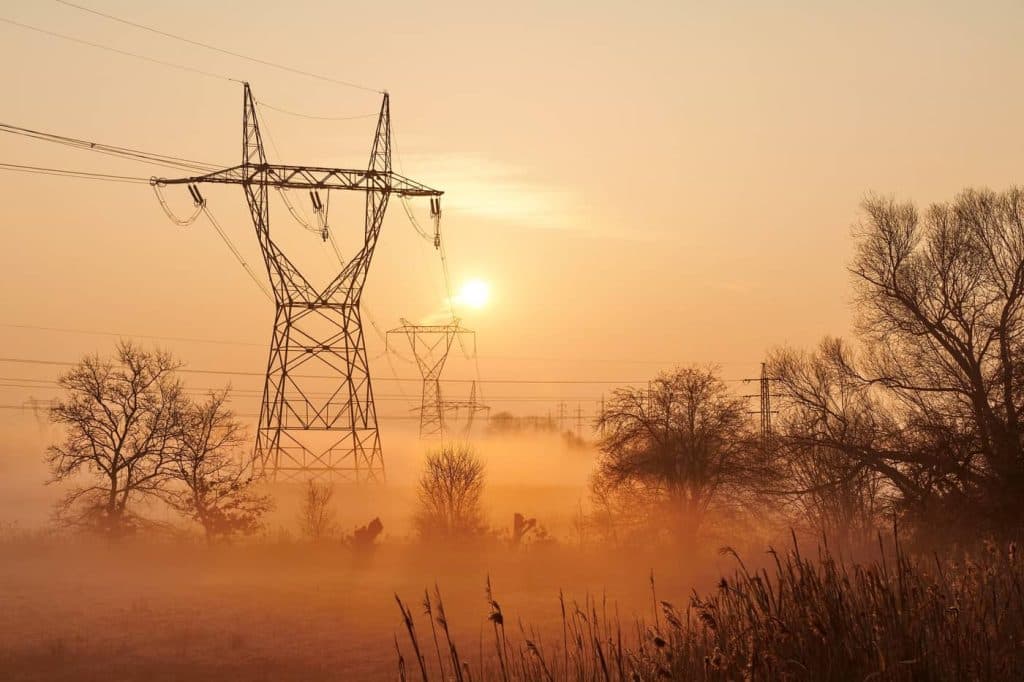
China generates more electricity from renewable sources than its grid can absorb. At the same time, it continues to build coal-fired power plants at a record pace. However, the need to curtail renewable electricity generation is not solely a Chinese phenomenon; a number of countries, including the Czech Republic, are grappling with it.
As one of the world’s leading producers of renewable electricity, China must curtail generation on a large scale. This is shown by a report by Global Energy Monitor (GEM) and the Centre for Research on Energy and Clean Air (CREA) covering the first half of 2026.
According to the International Energy Agency (IEA), so-called curtailment occurs when the electricity system cannot absorb all the electricity generated. This may be due to limited transmission capacity, grid stability requirements or an imbalance between supply and demand. While it considers the phenomenon partly unavoidable, its persistent or widespread occurrence stems from planning shortcomings.
What do the figures behind the official data show?
China sets a nationwide limit of 10% for the maximum rate of renewable electricity curtailment. Authorities introduced this cap in 2024, raising it from the previous 5%. China’s National Energy Administration (NEA) stopped publishing monthly provincial curtailment data in March, as reported by Reuters.
In July, the NEA stated that the country curtailed 8.6% of solar generation and 9.1% of wind generation in the first half of 2026. However, according to weather-adjusted calculations by GEM and CREA, China increased its combined curtailment rate from 19.7% to 26.1%.
Estimated curtailment, including unreported volumes, thus reached 360 terawatt-hours (TWh) over the six months. This represents a year-on-year increase of 49%, while curtailment alone exceeded the overall increase in electricity demand during the period. For comparison, it is equivalent to Mexico’s annual electricity consumption.
There is a considerable imbalance in the geographical distribution of curtailment. Nearly half of the increase mentioned above (46%) is concentrated in just five administrative regions in the north and northwest of the country: the autonomous regions of Inner Mongolia, Xinjiang and Ningxia, and the provinces of Qinghai and Gansu. The government is concentrating most newly built wind and solar power plants there, while the main demand centres are located in the densely populated east and southeast.
Where to look for the culprit?
The report indicates that the main cause of the problem is long-term contracts that guarantee coal a large market share. Although the new five-year plan for renewable energy development envisages renewables covering growth in electricity demand, contracted coal volumes have the opposite effect.
According to Qi Qin, CREA’s China analyst, installed coal-fired capacity continues to grow due to previously issued permits and political protection, even as plants operate for fewer hours and some renewable electricity generation remains unused.
“China’s power sector is receiving conflicting signals. Policymakers are calling for tighter coal controls, yet a record number of new coal-fired power plants continue to come online, supported by market mechanisms that guarantee coal both capacity payments and substantial electricity sales volumes. Until these incentives are aligned, the transition of coal from baseload generation to a flexible backup role will remain challenging,”commented Christine Shearer, a research analyst at Global Energy Monitor.
So far this year, China has brought online the highest amount of coal-fired capacity in a half-year period since 2016. A total of 30 gigawatts (GW) of installed coal-fired capacity was commissioned. This is 43% more than in the same period of the previous year, while only 2.7 GW was retired.
Thus, roughly ten times as much new installed capacity was added for every gigawatt retired. Construction also started on further facilities with 25.4 GW of installed capacity. This occurred despite China moving towards stricter approval procedures for new projects.
A global problem
China is far from exceptional when it comes to the challenge of keeping pace with renewable energy development. Reuters pointed out that the pre-emptive rejection of new wind or solar projects due to insufficient grid capacity is becoming a growing challenge for decarbonisation worldwide and highlights continued reliance on fossil fuels. In the first half of 2026, renewable electricity curtailment increased year on year by 37% in Australia and by 34% in Japan, for example.
According to an August assessment of power system flexibility by Czech transmission system operator ČEPS, cumulative renewable generation curtailment in the Czech Republic is expected to reach approximately 4.1% in 2030 and 4.3% in 2035.
Translation disclaimer
This article is a machine translation of the Czech original and has not yet been fully reviewed. In case of any doubt, please refer to the Czech version.