Coal is now a wholly marginal source of electricity in the European Union. It accounts for less than ten percent of power generation, according to a recently published report by international think tank Ember.
At every party, there are always a few last people who leave the pub only when staff sweep them out with a broom. Let us imagine, for a moment, a coal party attended by all European countries. One after another, they stop generating energy from coal – getting up from their chairs and heading home. Ten EU countries have already left the party. Another nine have one foot out the door. Czechia will very likely leave just before closing time, even though it too is running out of enthusiasm for coal-fuelled revelry.
The exact date does not matter
Nineteen EU countries have a zero or less than five-percent share of coal in their energy mix, according to think tank Ember. Estonia, Lithuania and Latvia have never generated electricity from coal. Malta decommissioned its coal-fired power plants as early as 1995. Ireland stopped burning coal last June, while Finland did so in April before that. Finland had originally planned to phase out coal only in 2029, but over the past five years one wind farm after another has been built in the Nordic country, meaning that operating coal plants simply no longer pays off there.
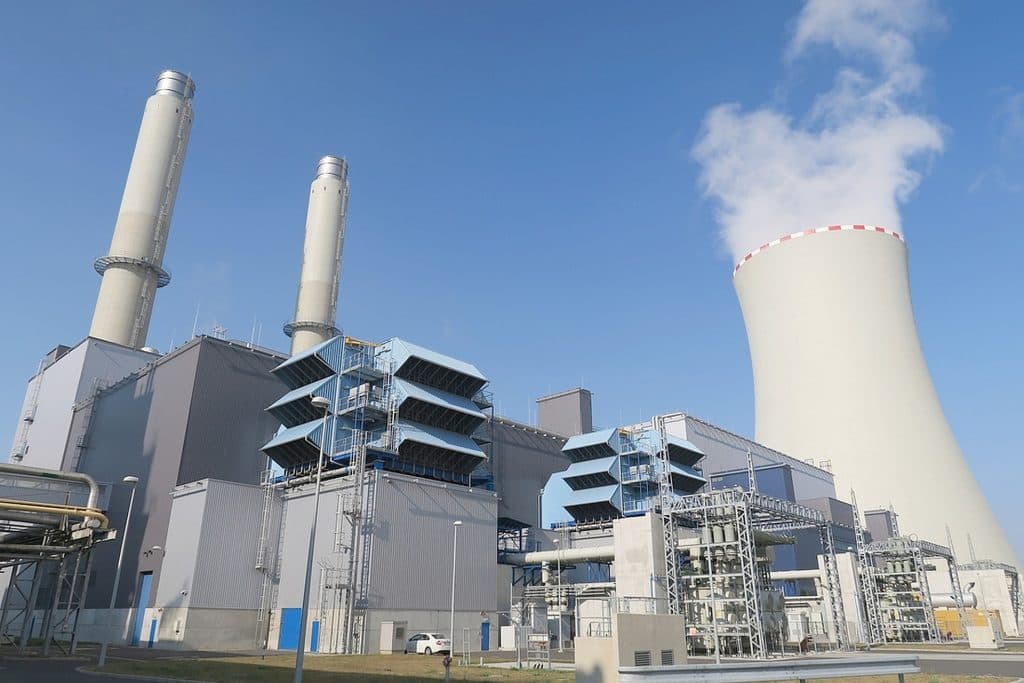
In Czechia, too, the economics of running coal-fired power plants are no longer adding up. They will close because of expensive emissions allowances. Next year, the largest of them – the 1200-megawatt Počerady coal-fired power plant – will close. Two coal units at Chvaletice will also be decommissioned. Even so, coal still accounts for more than a third of domestic electricity generation.
“Many countries still have some significant coal generation – Poland, Germany, Czechia, Bulgaria, the Netherlands, Italy and Greece, for example. Personally, I warn against targets of this kind, such as a set year for a coal phase-out. The trajectory is clear; whether it happens a few years earlier or later really does not matter,” says Michal Macenauer, strategy director at consulting company EGU.
Greece as a good example
Some countries did not face a difficult coal phase-out, as the fossil fuel had always made only a minimal contribution to their electricity generation. It would therefore make little sense to compare them with the situation in Czechia, where coal has historically played an enormous role – not only as a fuel, but also as a symbol of prosperity and employment in certain regions.
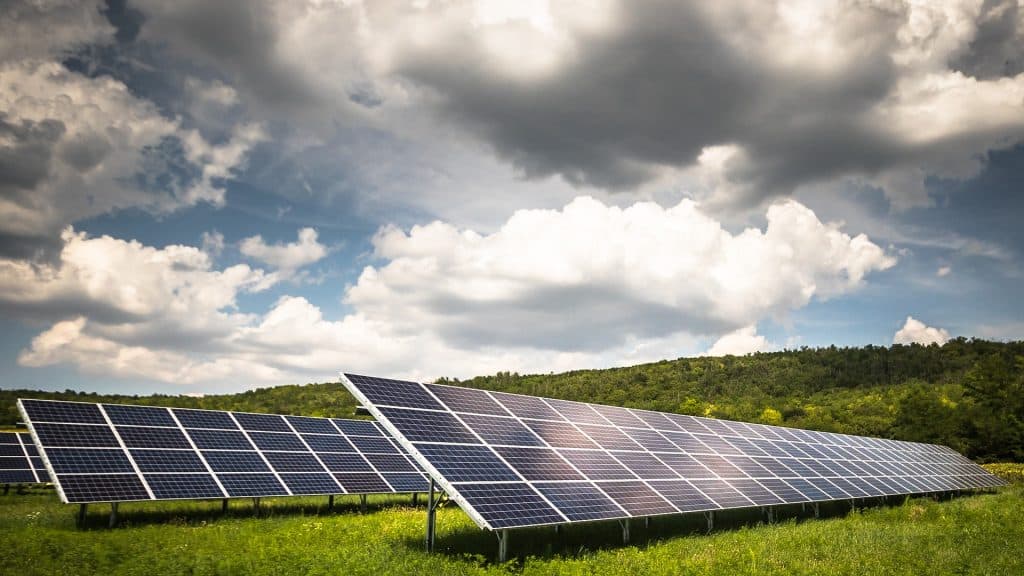
Greece could, however, be a good example for Czechia. As recently as 2014, the country generated more than half of its electricity from coal. It now accounts for just under five percent of the energy mix. Much of the demand has been covered by solar power plants, whose generation potential is considerably higher in Greece than in Czechia.
However, Ember data also show that, alongside renewables, new gas-fired power plants are replacing coal in Greece. And such plants are not yet being built in Czechia, although they should be. Greece originally set 2028 as its coal exit year, but the latest information suggests it could manage this as early as next year.
“Another European example is the United Kingdom, which closed its last coal-fired power plant two years ago. This ended 142 years of coal-fired electricity generation on its territory,” says Oldřich Sklenář, an analyst at the Association for International Affairs.
“Not every country has conditions for developing wind power as favourable as Britain. Onshore and offshore wind farms generate more than 29 percent of electricity production there. Yet gas-fired power plants still have the largest share, providing 31 percent of UK generation last year,” the analyst explains.
Nuclear renaissance on paper
The countries of Europe’s lignite triangle will face the greatest difficulty in phasing out coal. Germany, Poland and Czechia still have a significant share of the fossil fuel in electricity generation.
“From the perspective of replacing coal in the energy sector, Germany is doing best of the three, managing under the Energiewende to meet its targets for the development of renewable sources. The question, however, is at what cost to end consumers. Besides high electricity prices, desperately slow grid construction and the German energy sector’s long-term dependence on imported natural gas are also proving problematic,” Sklenář says. Germany would also most likely find it easier to phase out coal had it not closed its nuclear power plants through a purely political decision.
Poland and Czechia, by contrast, are planning a major renaissance of nuclear energy. So far, however, this is taking shape only on paper. In Czechia, the new nuclear units at Dukovany are due to begin trial operation in 2036. Poland is currently targeting 2040.
“What Poland is succeeding in is the development of wind power – wind farms there provide around fourteen percent of electricity generation. Until relatively recently, Poland was in a similar position to Czechia in this area. The difference is that wind generation here has still not exceeded a one-percent share,” Sklenář points out.
What we will get out of it
If the European Union wants to meet its climate targets, it must get rid of coal as quickly as possible. The fact is that, globally, Europe accounts for only a small amount of emissions. The closure of European coal-fired power plants will therefore not play a significant role in slowing climate change. This is often mentioned by representatives of the governing Motorists for Themselves party. For example, the recently appointed Environment Minister Igor Červený said on the programme Questions of Václav Moravec that Czechia and Europe account for “only a small part” of emissions.
However, Motorists for Themselves fail to add that closing coal-fired power plants will demonstrably have a direct positive effect on the lives of Europeans, including Czechs. “Yes, Europe produces roughly six percent of emissions, so closing our coal-fired power plants will not make a dent in climate change. But we cannot approach it like this: the neighbour has a mess in their garden, so I will have one too and will not start cleaning up until they do,” says Daniel Kortus, a scientist at the University of Chemistry and Technology, Prague.
“Europe grew rich by burning fossil fuels, and pretending now that it does not really concern us seems to me personally like a bad message to send to the rest of the world,” says Kortus, who is behind the Klimatomluva project. It aims to debunk disinformation and myths about climate change on social media.
“Carbon dioxide remains in the atmosphere for hundreds of years, so from this perspective the effect of closing coal-fired power plants will not be noticeable immediately, even if we close them all,” Kortus says. “What will be noticeable immediately, though, is that the air will become cleaner in places where coal is burned. This is because aerosols and nitrogen and sulphur compounds that create smog do not last long. The smog we see in Prague during winter months, when a great deal of heating is taking place, need not exist at all in the future,” Kortus argues. “For me, it is not about slightly reducing global emissions, but about cleaning up the air here at home, which will have an enormous impact on quality of life,” the scientist adds.