3 August 2026, 11:16
What happens when the market is flooded with too many batteries? A mature market shows an 85% drop in revenues

Martin Voříšek
3 August 2026, 08:17
This article is a machine translation of the Czech original and has not yet been fully reviewed. In case of any doubt, please refer to the Czech version.
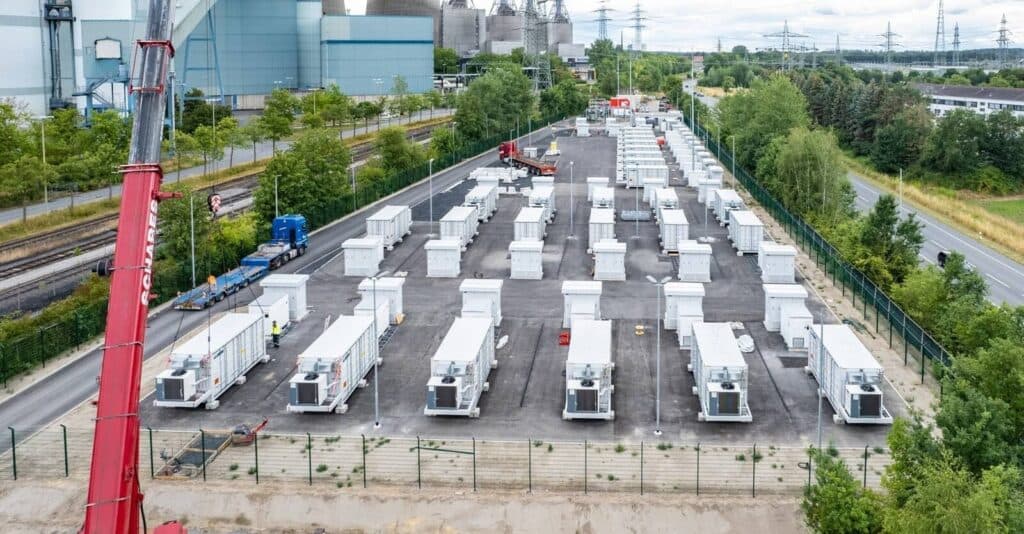
The Australian market, one of the most advanced in terms of battery storage deployment, shows how quickly a battery boom can transform the promising economics of storage. The capacity of large-scale batteries in the National Electricity Market (NEM) has already exceeded 9,000 MW, doubling year on year, while the average difference between charging and discharging prices fell year on year from 342 to just 51 Australian dollars per MWh. This represents a decline of around 85%, according to a quarterly report by the Australian Energy Market Operator (AEMO). The operator also published detailed numerical statistics alongside the report (a link to download the statistics is provided at the end of the article).
The energy sectors in the Czech Republic and across Europe are on the verge of a boom in battery storage construction. A technology that for a long time saw only minimal capacity additions is becoming mainstream. In the Czech Republic, several hundred, and perhaps even low thousands, of MW of installed capacity are under construction, along with at least twice as many MWh of capacity.
Australia underwent a battery storage construction boom over the past year, and the Australian market operator's quarterly report provides a clear picture of how the electricity market has changed as a result. Above all, it shows why price differences between midday prices and the evening peak fell by 85%.
Exceptional year-on-year capacity growth
Between the second quarter of 2025 and the same period this year, investors commissioned storage facilities with 4,640 MW of power capacity and 12,353 MWh of energy capacity across NEM regions. In the second quarter of this year alone, 951 MW and 2,753 MWh were added, including the 300 MW Stanwell storage facility and the 222 MW Woolooga project in Queensland.
Installed capacity thus doubled year on year. For comparison, average demand in the NEM was 24,200 MW.
Commissioning such a volume of storage had a major impact on the Australian energy market. As the Australian Energy Market Operator's (AEMO) quarterly report shows, average battery discharging (i.e. power supplied to the grid) nearly tripled year on year, while average charging demand rose by 182%.
The impact of batteries on the wholesale market is relatively straightforward: new storage facilities increase demand during hours of high generation, particularly from solar plants, thereby raising prices at midday, when solar output is at its highest. In the evening, on the other hand, they supply ever greater power to the system and displace more expensive sources, especially gas-fired generation. Their effect is therefore to flatten the electricity day-ahead price curve.
According to the quarterly report, battery storage facilities also set the final market price much more frequently (i.e. they were the marginal resource). In the second quarter, they set the price in 36% of five-minute intervals, compared with 17% a year earlier. All NEM regions saw batteries exert greater influence on price setting, especially New South Wales and Queensland.
The drop in price spreads affected all Australian NEM regions
The increase in installed battery storage capacity was reflected very significantly in price differences between the highest and lowest daily market prices. On average, intraday price spreads fell by 85% year on year to 51 Australian dollars. The largest year-on-year decline occurred in New South Wales, where the spread fell by 90% to 41 AUD/MWh, and in Victoria, where it declined by 88% to 50 AUD/MWh.
Exceptional events in the day-ahead market did not disappear despite the increase in battery capacity. In South Australia, during a windless period and amid constrained electricity imports, the price reached ten times the market price cap of 20,300 AUD/MWh on 22 June. Yet even such spikes were no longer sufficient to offset the overall flattening of the price profile.
It should be noted, however, that the second quarter of last year was exceptional in a number of metrics – for example, spot prices a year ago were the highest in the past three years. The same was true for ancillary services revenues. The percentage decline in revenues is therefore pronounced partly because it is compared against a high base.
Lower peaks, but also lower revenues
The average wholesale price in the NEM fell by 47% year on year to 74 AUD/MWh, with higher renewable energy generation and weaker evening demand contributing to the decline alongside batteries.
Cannibalisation is not limited to electricity trading, the quarterly report adds. Battery revenues from ancillary services in the NEM fell by 51% year on year to AUD 4.8 million. In Western Australia's WEM, greater competition cut the cost of activating frequency services by 92% to AUD 1.5 million.
Australia's development thus recalls the situation in photovoltaics: as a technology expands, it gradually fills the market and begins to cannibalise itself. The Czech duck curve also did not deepen significantly further this year, as the normalised price around 8 p.m. fell from last year's 2.07 times the average to 1.89 times.
The signals may also matter for Europe's battery boom
Installed battery storage capacity is gradually increasing in the Czech Republic, and industry statistics show that 318 MWh of battery storage capacity was commissioned in the first half of this year alone. However, many projects are in preparation. Projects being developed by Second Foundation exceed 300 MW, while plans by the Sev.en Group amount to approximately 160 MW.
A similar trend is unfolding across Europe. In a single week, five groups of projects with a total capacity of 682 MWh were completed in Germany, Estonia, Belgium, Denmark and Bulgaria.
The pace of market entry and the composition of future revenues are therefore important for investors. If, alongside ancillary services revenues, the spread between midday and evening prices also narrows rapidly, the economics of purely merchant batteries could deteriorate substantially sooner.
The PDF report can be downloaded HERE. The report data can be downloaded HERE.
Sdílejte článek prostřednictvím:
You might also like
3 August 2026, 10:46
2 August 2026, 17:40