
1 November 2026, 21:20
Loading...
Top 10 Czech energy stories of the past week
oEnergetice.cz
28 January 2024, 21:46
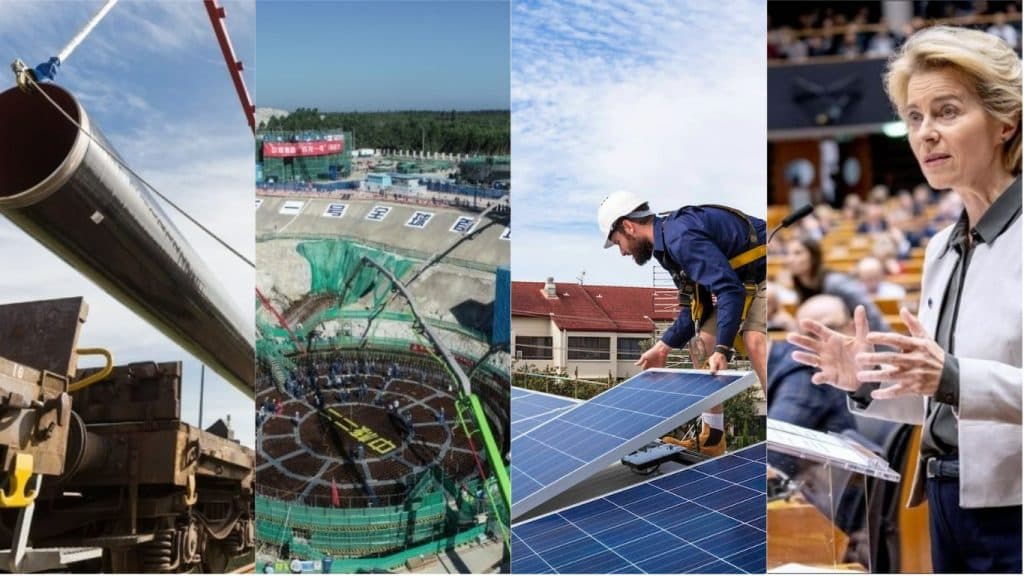
1. Kremlin: If Kyiv does not extend gas transit, Russia will use alternative routes

If Ukraine does not extend its contract for the transit of natural gas from Russia to Europe, Russia will use alternative routes and seaborne deliveries of liquefied natural gas (LNG) to export gas to Europe. Kremlin spokesman Dmitry Peskov said this today, according to Reuters.
If the transit agreement is not extended, changes will need to be made to the logistics chains for Russian gas exports, Peskov said. “The question is how this gas will get there (to Europe). Of course, there are routes via Turkey, and there are also LNG supplies, which are in demand now,” Peskov said.
2. US weighs tightening conditions for gas exports, with potential impact on Europe

The US government is reportedly considering changing the conditions for granting licenses to operate export terminals for liquefied natural gas. Obtaining a license could become more difficult in the future. The stated reasons are climate protection and a desire to prevent the construction of new energy infrastructure that would reinforce the United States’ dependence on fossil fuels for decades to come.
One of the European Union’s main LNG suppliers is considering whether to reconsider its stance on the construction of new LNG export terminals, according to foreign media. Over the past two years, these terminals have significantly helped the EU overcome the energy crisis and the effective disruption of natural gas supplies from Russia to a number of countries.
3. Slovakia became a net electricity exporter after completing a new nuclear unit
Bratislava, 22 January (ČTK) – Slovakia became a net electricity exporter last year, according to data from local transmission system operator SEPS. A new nuclear unit entered service in the country in 2023, and its operator says it will make Slovakia self-sufficient in electricity generation.
Last year, Slovakia exported 14 067 gigawatt-hours (GWh) of electricity via its transmission system, down 8.2 percent year on year, while imports fell by 36.4 percent to 10 648 GWh. The country’s trade surplus in the commodity therefore reached 3419 GWh, whereas in 2022 imports exceeded exports by 1 424 GWh.
4. Ukraine denies it is willing to extend Russian gas transit contract
Ukraine has denied that it is ready to discuss extending the key contract for the transit of Russian gas through its territory, which expires at the end of this year. Bloomberg reported this today. Slovak Prime Minister Robert Fico said on Wednesday, after meeting his Ukrainian counterpart Denys Shmyhal, that gas transit through Ukraine to Europe could continue.
“The Ukrainian side’s position is clear: the transit contract will expire at the end of this year,” Shmyhal’s press office told Bloomberg.
5. EFET: Higher gas transport fees fragment European market and raise import costs for eastern countries

The European Federation of Energy Traders has objected to increases in charges for cross-border gas transport in Europe. Some European countries have raised fees for transporting gas through their territory to cover the costs of filling storage facilities in 2022. The federation says such measures are inconsistent with the principle of solidarity and make gas imports from the west more expensive for eastern Europe.
In recent weeks, rising transport fees have become a major issue across the European gas market. Germany has seen particularly sharp increases, as it seeks to cover costs incurred when filling gas storage facilities in 2022. Italy and Austria are also considering similar measures.
6. Solar power systems are installed on more than 150,000 Czech homes. New systems typically include a battery
Last year, more than 82,000 new solar power systems with a combined capacity exceeding 970 megawatts were connected to the grid in Czechia, according to data from distributors. Most were installed by homeowners, but more and more companies are also building their own solar facilities.
Households drove most of the growth, adding 820 megawatts. More than 80,000 of them installed solar systems last year, usually paired with a battery. As many as 92 percent of solar system owners in Czechia have a battery, putting the country among the world’s leaders, Jan Fousek, chairman of the board of the Solar Association, which presented the data, noted.
7. US: Plus Power brings what it calls the most advanced battery storage system online in Hawaii
Plus Power has brought its Kapolei Energy Storage battery system online, describing it as the most advanced of its kind. The facility in Hawaii has a total capacity of 185 MW and an energy storage capacity of 565 MWh. In addition to its conventional use for short-term energy storage, the system provides several ancillary services to the grid. The project aims to help the state transition from fossil fuel-based electricity to renewables.
US company Plus Power announced that its Kapolei Energy Storage (KES) project had entered service in Hawaii. It is located on the island of Oahu, near an industrial zone, on a site just over 30,000 square metres in area. The battery system consists of 158 Tesla Megapack 2 XL lithium iron phosphate batteries. The storage facility can provide 185 MW of power in total and has a maximum energy storage capacity of 565 MWh.
8. Demolition of Prunéřov I lignite power plant in the Chomutov region is complete
Demolition of the Prunéřov I lignite power plant in the Chomutov region is complete. Excavators have levelled the plant’s production and operating equipment, leaving piles of scrap metal and concrete rubble that are gradually being removed. The administration building with its gatehouse, as well as buildings containing staff facilities and changing rooms, remain standing. The site is ready for reuse and is expected to continue serving the energy sector. Ota Schnepp, a spokesperson for the ČEZ Group, told the Czech News Agency (ČTK) today. The site had been considered as a possible location for a car battery factory.
The power plant has been out of service since the end of June 2020. Demolition began in May 2022 with the dismantling of the cooling towers, on a site covering roughly 40 hectares. “The remaining scrap metal, which the contractor is taking away by rail, will soon be gone too. The construction waste will be used as fill for landscaping,” said Jiří Hampl, director of the Tušimice and Prunéřov power plants in the ČEZ Group.
9. First transmission network development plan for offshore wind farms published
According to a plan published by the European Network of Transmission System Operators, robust connections between offshore wind farms and consumers on land will need to be in place by 2050. This will require building at least 54 000 kilometres of transmission infrastructure and investing around 404 billion euros.
The plan’s targets call for European countries to install up to 354 GW of offshore wind capacity by 2050, more than ten times today’s installed capacity. If Norway and the United Kingdom’s targets were included, total offshore wind capacity would rise to 496 GW. Annual additions to installed capacity are set at a minimum of 22 GW, compared with growth of around 2.5 GW in recent years.
10. ČEZ share price in politicians’ hands: “Lex ČEZ” to be debated by the lower house
The bill on the transformation of business companies, commonly known in Czechia as Lex ČEZ, is due to be discussed by the Constitutional and Legal Affairs Committee next week. The committee has postponed its debate several times, but the bill has now also been added to the agenda of the Chamber of Deputies. Many analysts and lawyers viewed the original draft as purely expedient and specifically targeting a single company; they were not satisfied with the subsequent amendments either. ČEZ shares therefore react very sensitively to every new development concerning changes to the legislation.
Last year, the share price of Czech energy giant ČEZ plunged by almost 10% in two days, to around 1020 Kč per share, after news that the government had approved the highly controversial bill on the transformation of business companies. The fall reflected concerns that the government did not intend to compensate minority shareholders through a squeeze-out, as France had done, for example.
Opinion
Practical experience with an electric car and home solar power: a year in review
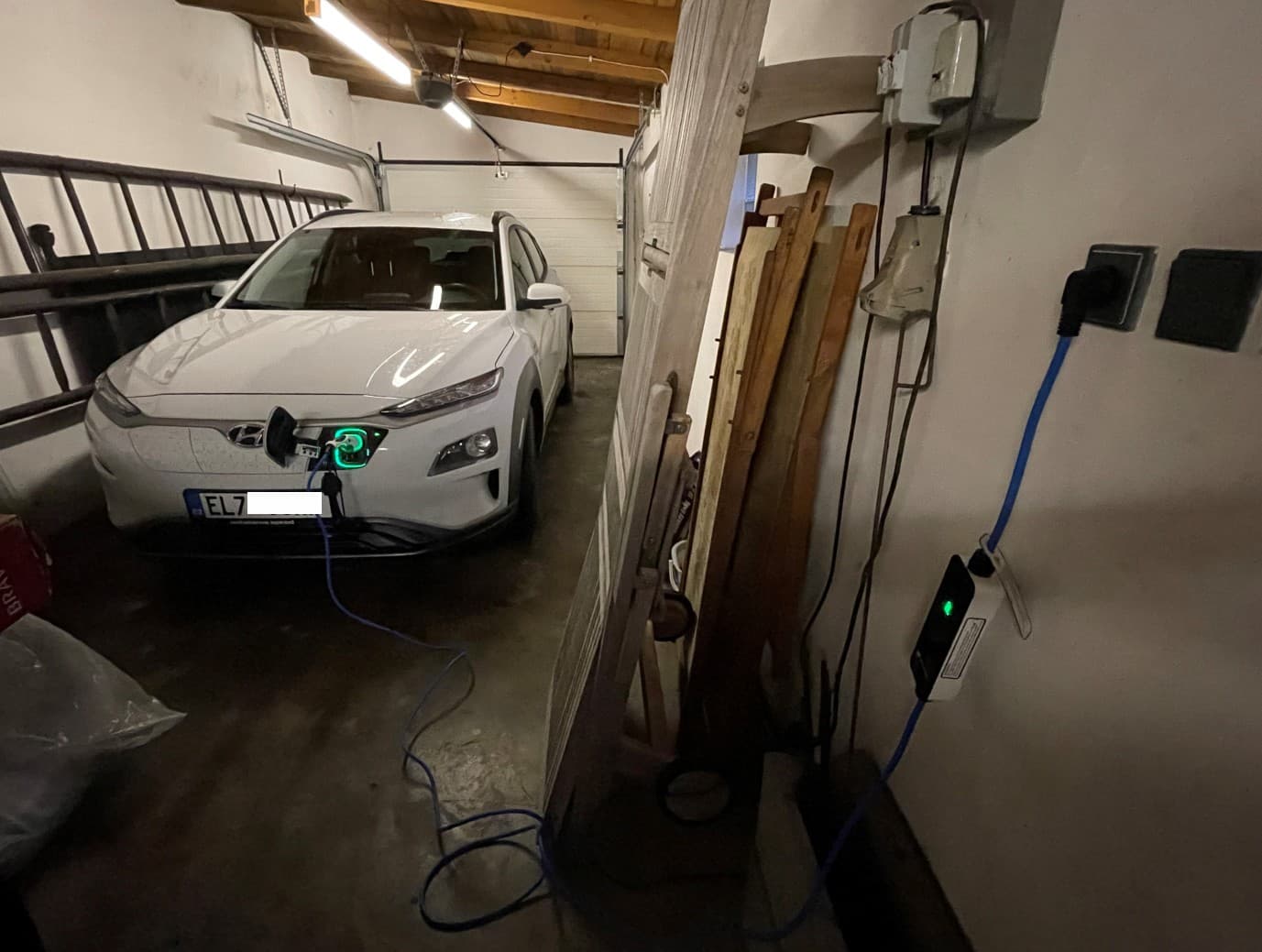
By mid-2023, around 120,000 small solar PV systems with a combined capacity close to that of a Temelín unit had been connected in Czechia. Home solar has its own particularities, and it is important to learn how to use the system properly. In July, I wrote an article about how rooftop solar and an electric car work together. I now have data for the whole year, so I would like to follow up with a more detailed look at how the car is used.
The home’s total consumption for the period 11/2022-10/2023 was 7,7MWh, of which 5,9MWh was used by the house and 1,8MWh to charge the car. The car therefore accounted for just under a quarter of total energy consumption. The 5,5kWp solar PV system generated around 5,3MWh of electricity over the year. Around 1MWh of electricity could not be used and was fed back into the distribution grid. More than 80% of the energy generated was used directly on site. Solar generation therefore covered approximately 55% of total consumption, including the car.
Nuclear energy in 2023, part 3: China and Russia lead the way in development
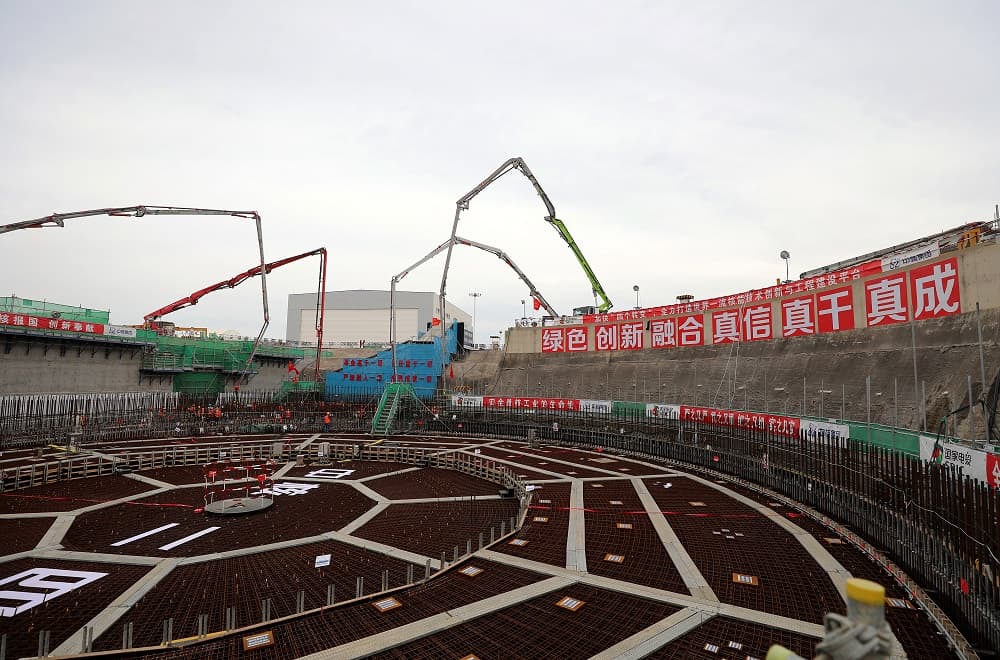
China is approaching the point where it will have more reactors than France, moving into second place behind the United States. It currently has 55 reactors in operation, compared with France’s 56. France could bring the Flamanville 3 unit online next year, but China is very likely to start up more than two units.
In mid-2023, China approved the construction of six more units: Ningde 5 and 6, which are expected to use Hualong One reactors; Xudabao 1 and 2, which will use CAP1000 reactors, with construction of the first unit ceremonially launched in mid-November; and Shidaowan 1 and 2, which will also use Hualong One reactors. It is worth noting that four CPR-1000 units are already operating at Ningde, VVER-1200 reactors are being built as the third and fourth units at Xudabao, and the HTR-PM200 high-temperature, helium-cooled small modular reactor is already operating at Shidaowan.
Energostat: electricity generation in Czechia
Energostat: electricity generation in Germany
Translation disclaimer
This article is a machine translation of the Czech original and has not yet been fully reviewed. In case of any doubt, please refer to the Czech version.
Sdílejte článek prostřednictvím:
Topics:Energy Weekly
You might also like

1 November 2026, 16:09
1 November 2026, 07:59

31 October 2026, 12:55

31 October 2026, 08:21