
28 October 2026, 15:10
Loading...
Top 10 Czech energy stories of the past week
oEnergetice.cz
19 May 2024, 14:30

1. Major French nuclear milestone: EDF begins loading fuel at Flamanville 3
Construction of France’s new EPR nuclear unit is nearing completion. Following approval from the nuclear regulator, technicians have begun loading fuel into the Flamanville 3 reactor. The French began construction of the 1650 MW unit in 2007, with completion originally scheduled for 2012. After a series of delays, current plans envisage the new unit being connected to the grid this summer.
French energy company EDF announced that it had received approval from the nuclear regulator (Nuclear Safety Authority – ASN) to load fuel into the Flamanville 3 reactor.
2. Ukraine is boosting gas production to reduce its dependence on imports
Ukraine has recently stepped up efforts to increase domestic natural gas production. Although the country can meet most of its needs through domestic production, it still has to import natural gas. Despite the ongoing war, production rose slightly last year, and a stronger increase could come this year.
Activity in the development of natural gas production in Ukraine increased during the first quarter of this year. According to S&P Global, the country’s association AGPU said the average number of active drilling rigs reached 46. According to AGPU, the average number of active rigs was 30 before the war and 37 in the first quarter of last year.
3. US bans uranium imports from Russia, which has fuelled American reactors

US President Joe Biden signed a law on Monday banning imports of enriched uranium from Russia, which until now has been a major supplier of fuel for American nuclear power plants. It is the latest move by Washington to sever ties with the Russian economy amid Russia’s aggression in Ukraine. According to the White House, it is also a positive boost for nuclear power in the US.
Russia is the world’s largest producer of enriched uranium, and supplies from the country have so far accounted for about 24 percent of the nuclear fuel used in US power plants, Reuters reported. This may be why the import ban came much later than the equivalent measures against Russian oil and gas, which Congress approved shortly after Russia’s invasion in February 2022.
4. Germany’s strategy for building new power plants is delayed, raising industry concerns
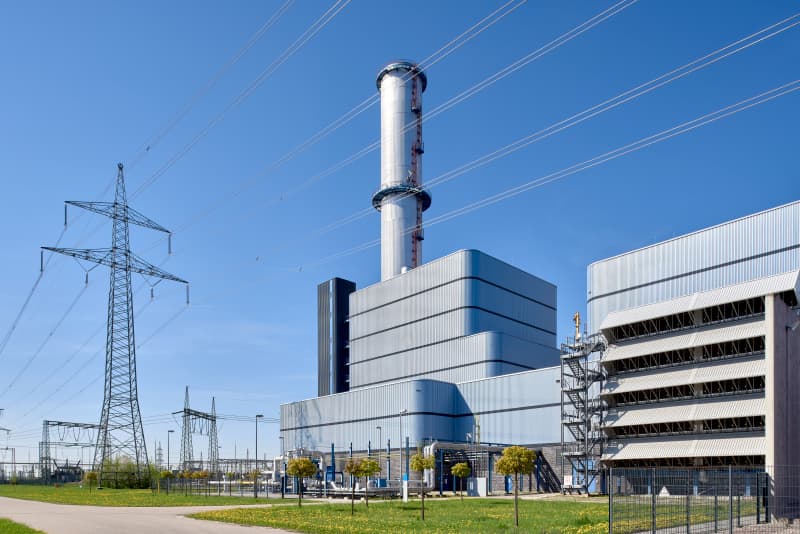
Representatives of the German energy industry have expressed doubts that the planned government power plant strategy will be developed in time for auctions to take place in 2024. The strategy is intended to support investment in new hydrogen-ready gas-fired power plants, which will replace retiring coal-fired power plants and ensure sufficient capacity in the south and west of the country.
Companies wishing to bid for contracts to build new power plants need details of the auctions well in advance so they can prepare their bids, said Ingbert Liebing, head of the local energy companies association VKU.
5. Equinor: Floating wind costs are falling more slowly than expected
Floating wind farms are expected to make it possible to tap the potential of deeper waters, which are unsuitable for conventional fixed-bottom turbines. However, the technology is still more expensive than conventional fixed installations. According to the head of Equinor France Renewables, costs for floating wind farms are falling slowly, and they are unlikely to become competitive with fixed installations for at least another 10 years.
The economics of floating wind farms depend heavily on turbine size. Unlike conventional offshore wind farms, they require floating structures, which increase costs. More powerful turbines therefore make it possible to spread these costs over a larger volume of generation.
6. Modernising Czechia’s electricity grids will cost CZK 476 billion by 2035

Modernising Czechia’s electricity grids in response to the growth of green energy will require around CZK 475.7 billion by 2035. From this year, grid operators will have to increase investment by 38 percent to CZK 40 billion a year. The investment would boost output value and household incomes. At the same time, it could increase public revenues, raise gross value added and create thousands of new jobs. This is according to a study by Deloitte and calculations by the Czech Association of Regulated Electricity Companies (ČSRES), whose representatives presented the findings to journalists.
“The main benefit of the necessary investment in electricity grids is ensuring a stable supply of electricity. Reliable and safe operation of the power system is a priority for all of us, but the economic benefits of the investment are also significant,” said Marian Rusko, chairman of the ČSRES Board.
7. Data centres could increase EU electricity demand by up to 14%; outlook for Czechia uncertain
According to a study by US company Goldman Sachs, electricity consumption in Europe could rise by more than 40% by 2033. Alongside the electrification of transport and industry, the development of artificial intelligence and the associated construction of data centres could also be a key factor. Their capacity is currently growing particularly in Germany, the UK and France. The outlook for future development in Czechia remains uncertain.
In recent years, European electricity demand has been affected by several shocks, including the Covid-19 pandemic and the energy crisis. According to a study by US bank Goldman Sachs, these factors slowed the electrification of individual sectors compared with earlier expectations. As a result, electricity consumption across the continent has fallen by around 10% cumulatively since 2008.
8. Fico: Slovakia wants to build a new nuclear unit under state ownership
Bratislava, 13 May (ČTK) – The Slovak government wants to build a new nuclear unit with a capacity of up to 1200 megawatts under state ownership, Prime Minister Robert Fico told journalists today. The cabinet is expected to make its first decision on the matter at its next meeting on Wednesday. Bratislava wants to select a construction partner through an international tender. Czechia is also currently holding a tender for the construction of new nuclear units.
Slovakia had already begun preparing a new nuclear power plant project in cooperation with Czechia. In 2009, during Fico’s first government, the company Jadrová energetická spoločnosť Slovenska (JESS) was established for this purpose. The Slovak Ministry of Economy controls 51 percent of its shares, while the remaining stake is held by Czech power company ČEZ Group. The project was originally expected to begin construction in 2014.
9. Industry and transport will drive hydrogen demand in Germany, with energy joining after 2040
Germany will need more hydrogen in the coming years than previously expected. According to the National Hydrogen Council, hydrogen consumption in Germany is expected to reach 94 to 125 TWh in 2030 and then rise to 620 to 1 288 TWh by 2045.
Hydrogen produced using electricity from renewable sources is considered a key element in decarbonising the energy sector and industry. Germany is among the countries making major bets on this fuel. It plans to use hydrogen in industry and transport, for heat production and, for example, as fuel for backup and peak-load gas-fired power plants.
10. Up to five wind turbines could be built near Strmilov in the Jindřichův Hradec region
Jihlava-based company Jipocar Power wants to build up to five wind turbines more than 200 metres tall near Strmilov in the Jindřichův Hradec region. Residents are concerned about noise, falling property prices and damage to the landscape, as they said today at a presentation of the company’s proposal in the local cinema. The company’s representatives proposed a contract stipulating an annual contribution to the town’s budget based on a minimum output from each wind turbine: CZK 1,125.000 per year for 25 years, the turbines’ lifespan. In future, the municipality and residents could buy the electricity generated as a secondary source of power. The town council will review the contract in June.
“We chose Strmilov based on three main factors. First, the grid connection: the distributor must have spare capacity in the distribution network. There also needs to be enough wind, and it must be possible to transport the technology to the site,” company managing director Kamil Vondráček told ČTK. The company has identified a site almost a kilometre from the town, in fields in front of the forest in the direction of Nová Olešná, and a second site at a similar distance in the direction of Bořetín. A wind turbine more than 200 m tall costs around CZK 250 million.
Topic
We need subsidies for green hydrogen production—and fast, industry says
The European Union’s hydrogen strategy envisages a boom in green hydrogen (produced from renewable sources) over the coming years, and subsidies have been earmarked for it. However, companies in Czechia complain that these subsidies are difficult to access and that the government is moving too slowly.
Orlen Unipetrol plans to build a large photovoltaic plant and an electrolyser near Litvínov. However, because green (or, more precisely, renewable) hydrogen produced from renewable sources is currently not competitive with grey hydrogen made from fossil fuels, the company has been seeking subsidies.
New gas package – part 3: Network planning, security of supply and a ban on Russian gas
On 11 April, the European Parliament approved a package designed to facilitate the uptake of renewable and low-carbon gases. It also aims to coordinate the planning and operation of the EU energy system, introduces measures to improve energy security, and allows imports of gas from Russia and Belarus to be blocked.
Energostat: electricity generation in Czechia
Energostat: electricity generation in Germany
Translation disclaimer
This article is a machine translation of the Czech original and has not yet been fully reviewed. In case of any doubt, please refer to the Czech version.
Sdílejte článek prostřednictvím:
Topics:Energy Weekly
You might also like

28 October 2026, 13:08

28 October 2026, 11:10

28 October 2026, 09:08
