
1 November 2026, 21:20
Loading...
Top 10 energy events of the past week
oEnergetice.cz
19 November 2023, 17:49

1. Weak demand could lead to a gas surplus in Europe in the coming years
The European natural gas market could face a significant oversupply in the coming years, driven by an expected increase in global production, falling demand and higher electricity generation from renewable sources. This is according to comments from experts cited by the international news service Montel.
According to Jonathan Stern of the Oxford Institute for Energy Studies, one factor that could ease pressure on the European natural gas market is a gradual increase in Russian natural gas supplies to China, freeing up some gas flows from Asia to Europe.
2. Czech Academy of Sciences: Czechia has what it takes to host a fusion power plant prototype
Experts from the Czech Academy of Sciences say the Czech Republic has all the prerequisites to become the country where a prototype nuclear fusion power plant could be built and commissioned around 2050, generating electricity without negative environmental impacts. The prototype could, for example, be built on the site of one of the former coal-fired power plants, and its construction would be a major boost for Czech companies. This is according to an expert opinion, known as AVex, prepared by the Czech Academy of Sciences (CAS) for members of the Chamber of Deputies and Senate, as well as ministry and regional authority officials. The Czech News Agency (ČTK) has obtained a copy of the opinion.
Experts say nuclear fusion represents a virtually inexhaustible source of energy and that fusion power plants will be safe. This is partly because spontaneous fusion cannot occur in their reactors; in the event of any serious malfunction, the fuel cools rapidly and the nuclear fusion process stops immediately. Construction of the DEMO fusion power plant prototype is due to begin in Europe in the second half of the 2030s, with full operation expected around 2050. Experts said Czechia has what it takes to host it, citing, among other things, the country's active participation in the DEMO project and the construction of the COMPASS-U tokamak fusion reactor at the Institute of Plasma Physics of the CAS.
3. Solar power purchase prices remain unchanged after Constitutional Court rejects senators' petition

Purchase prices and annual green bonuses for solar power plants will remain unchanged this year. The Constitutional Court rejected a petition from a group of senators seeking to repeal one line in a price decision issued by the Energy Regulatory Office (ERO). They say the prices are too low and do not guarantee a return on investment. The issue concerns a specific group of solar power plants with installed capacity above 100 kilowatts, connected to the distribution grid in January and February 2011. The senators estimate that no more than 50 operators are affected.
Although the Constitutional Court rejected the petition, it also stressed that price regulation for photovoltaic power plants must be set in the coming years to ultimately ensure statutory guarantees of a return on investment within 15 years and a reasonable profit within 20 years. Senator Hana Žáková (STAN) therefore considers today's ruling a success, in essence.
4. Fico: Slovakia continues work with Czechia on power plant project, but may opt for small reactors
Bratislava, 16 November (ČTK) – Slovakia is continuing to work with the Czech Republic on plans for a new large nuclear power plant in western Slovakia, while the use of small modular reactors is also an option. This follows a statement today by Slovak Prime Minister Robert Fico.
“There is the option of building a new large unit, or alternatively continuing with what are known as small reactors. The work schedule with the Czech Republic remains in place, and we are preparing the construction of another unit at the Jaslovské Bohunice nuclear power plant,” Fico, who supports nuclear power generation, told journalists.
5. Hungary and Rosatom agree on schedule for nuclear power plant expansion
The Hungarian government has agreed with Russian state-owned nuclear company Rosatom on a timetable for building two new units at Hungary's Paks nuclear power plant. The MTI news agency reported this today. Hungarian Foreign Affairs and Trade Minister Péter Szijjártó said at a joint press conference with Rosatom CEO Alexey Likhachev that the new units would begin operating at the start of the next decade.
In August, Hungary signed an amended construction contract with Russia for the expansion of the Paks plant, bringing the project's preparatory phase to an end and clearing the way for construction work to begin. Rosatom is the project's main contractor. Szijjártó noted, however, that 94 Hungarian companies and several companies from the United States, Germany, France, Sweden and Austria are also involved in the project.
6. RWE chief: Germany can phase out coal by 2030 if gas-fired plants are built
Markus Krebber, CEO of Germany's RWE, said Germany can meet its target of phasing out coal earlier if the government creates the conditions needed to build the necessary gas-fired power plants. His comments came shortly after Germany's finance minister said the country should abandon its goal of shutting down coal-fired power plants by 2030 if it cannot guarantee an adequate electricity supply at affordable prices.
Germany's economy minister, Robert Habeck, sought to temper the finance minister's negative comments about the country's ability to shut down coal-fired power plants by 2030 just a few days after they were published. In an interview with Bloomberg, he said he did not share the finance minister's skepticism and assured that securing a coal phase-out by 2030 remained one of the government's goals.
7. Nuclear waste repository expected to cost over 100 billion; four sites shortlisted
Key facts about spent nuclear fuel repositories in the Czech Republic (the Chamber of Deputies today approved a law on the nuclear waste repository):
8. France plans tax on nuclear electricity, with proceeds to protect consumers

The French government has reached an agreement with EDF, which is currently wholly state-owned, on a future system for regulating electricity sales from nuclear power plants. The new system is intended both to keep the company profitable so that it can make future investments and to protect households and businesses from extremely high electricity prices. It is due to take effect in 2026. It is not yet clear whether it will also require approval from the European Commission.
After months of negotiations, the management of state-owned French company EDF and the French government have reached an agreement. While EDF, according to Reuters, sought to maximize its revenue to fund future investments, the French government pushed to keep electricity prices as low as possible for households and businesses.
9. Vattenfall continues preparations for new nuclear units in Sweden
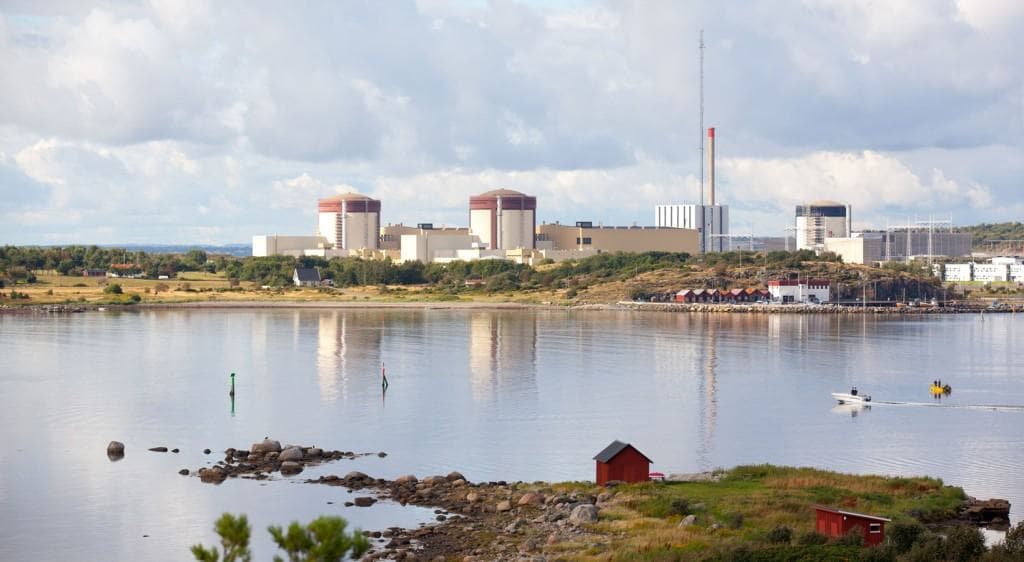
Vattenfall is continuing preparations to build new nuclear units at Sweden's Ringhals power plant. The company has asked local authorities to work with it on a detailed plan and zoning decision. According to Vattenfall's plans, at least two small modular reactors are to be built at the site by the early 2030s. The Swedish government is currently discussing legislation to facilitate the construction of new nuclear power sources.
Swedish energy company Vattenfall has asked Varberg municipality to prepare a detailed plan leading to approval for the construction of new nuclear reactors at the Ringhals plant. In June last year, Vattenfall launched a pilot feasibility study for building at least two small modular reactors (SMRs). The goal is to bring the first unit online in the early 2030s.
10. Commercial use of green hydrogen gets underway cautiously, with new Napajedla project showing what is possible
The Czech Republic's first electrolyser producing green, or zero-emission, hydrogen has been launched. The hydrogen will be used in domestic industry and transport. Green hydrogen is expected to play an important role in decarbonizing Czech industry and the economy.
Solar Global launched the electrolyser in Napajedla, in the Zlín region, on Monday. It produces hydrogen using solar power and, in part, wind power, making the company a pioneer of this technology in the Czech Republic. The company, a leading domestic producer of photovoltaic power plants, produces green hydrogen using solar panels installed on the roof and wall of its headquarters, with support from a wind power plant.
Topic
Germany's grid reserve: Power plants filling the gap left by stalled grid expansion
In addition to supporting renewable energy sources, Germany also provides non-market support to conventional power plants through several reserves that keep capacity on standby for different purposes. Some reserves provide capacity to stabilize the transmission grid, while others are used to meet electricity demand when generating capacity is insufficient.
Germany currently keeps conventional power plants on standby in the following reserves:
Conference
Cooperation at every level will be essential for the energy transition and for secure, flexible supplies

The first European Energy Summit was held on Tuesday 17 and Wednesday 18 October 2023 at the Ponton venue on Bratislava's Tyršovo nábrežie. The event brought together many prominent figures from the energy sector, particularly from Central Europe, who shared their views and insights on energy transition and the future of electricity in a series of panel discussions. Experts from around the world also joined from Bratislava and shared their perspectives in online presentations. On the second day, Minister of Economy Peter Dovhun also attended the summit and took part in a discussion.
Jaroslav Vach (Chairman of the Board and CEO of SEPS, a.s.) and Martin Ďurčák (Chairman of the Board of ČEPS, a.s.) spoke at the opening of the first European Energy Summit about the importance of holding such an event. They agreed that exchanging experience and working together are essential.
Energostat: electricity generation in the Czech Republic
Energostat: electricity generation in Germany
Translation disclaimer
This article is a machine translation of the Czech original and has not yet been fully reviewed. In case of any doubt, please refer to the Czech version.
Sdílejte článek prostřednictvím:
Topics:Energy Weekly
You might also like

1 November 2026, 16:09
1 November 2026, 07:59

31 October 2026, 12:55

31 October 2026, 08:21