
28 October 2026, 15:10
Loading...
Top 10 energy stories from the past week
oEnergetice.cz
28 April 2024, 18:29
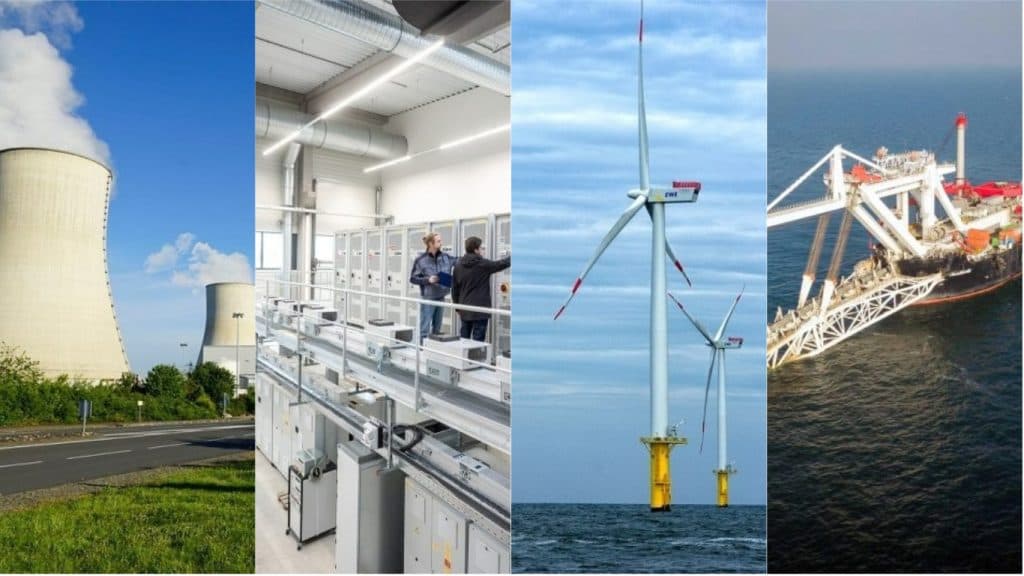
1. Report: Two European countries meet all their electricity demand with renewables
According to the new Global Wind Report, a total of seven countries worldwide now generate 100% of their electricity from renewable energy sources. Two of them are in Europe.
Last year was the best year on record for new wind power installations. According to the latest Global Wind Report from the Global Wind Energy Council, reported by Euro News, 116 gigawatts of new wind power capacity were installed worldwide in 2023. That is 50% more than in 2022 and the largest year-on-year increase on record.
2. German governing party wants to end support for renewables
Germany’s Free Democratic Party (FDP), a member of the governing coalition, has called for support for renewable energy sources to be phased out. It argues that they are ready to be exposed to market prices. The party has stirred controversy in the coalition government, the Süddeutsche Zeitung reported.
Ahead of the party conference held at the end of the week, FDP leaders presented measures to accelerate the economic transformation. One of them is to phase out support for renewable energy sources (RES).
3. Ukraine begins work on its first US-built AP1000 nuclear unit
Ukraine’s Khmelnytskyi Nuclear Power Plant is set to gain two AP1000 units from US company Westinghouse. During an official ceremony, representatives of both sides began preparatory work on the construction of the plant’s Unit 5, with an installed capacity of 1250 MW. The plant has two operating VVER-1000 units, while two more have been at various stages of completion since the 1980s. Westinghouse has also supplied nuclear fuel for the two operating Russian-designed units.
Ukraine’s energy company Energoatom announced that it had begun preparatory work on the construction of Units 5 and 6 at Khmelnytskyi Nuclear Power Plant. The two new AP1000 units are to be supplied by US company Westinghouse, which plans to build a total of 9 large conventional units in Ukraine under a 2022 memorandum of understanding. During the official event, engineers began concreting a drainage channel and a dam that will protect the construction site.
4. Interest in heat pumps stagnates in Czechia as industry seeks state support
Interest in heat pumps in Czechia is stagnating. Czech households bought 55.620 units last year, around eight percent fewer year on year. Most of last year’s demand also came in the first half of the year. One of the main reasons was a fall in gas prices. Industry representatives are therefore calling for incentives for environmentally friendly heating, arguing that investing in gas boilers may not pay off in the future. This is according to statisticsfrom the Ministry of Industry and Trade (MPO) and comments from the Heat Pump Association (AVTČ) to the Czech News Agency (ČTK).
Although last year’s heat pump sales were still above average, demand fell gradually from its record level in 2022. The year before last, Czechs bought more than 60.000 of these units, doubling demand. That momentum carried into the start of the following year, with more than 40.000 heat pumps sold in the first half. By last summer, however, many sellers were already reporting that demand was gradually declining. The statistics confirmed this, showing that only around 15.000 units were sold in the second half of the year.
5. End of an era: UK’s last coal-fired power station to close

The UK will shut down its last coal-fired power station this September. Ratcliffe-on-Soar, once a backbone of the country’s energy system, will close after 56 years of operation. The UK is therefore definitively removing coal from its energy mix, The Guardian reported. What does the future hold for the power station?
The power station began operating in 1968 and at one time burned as much as 65% of all the coal mined in South Nottinghamshire, a region traditionally rich in “black gold”. Its installed capacity of 2000 MW made it one of the largest power stations of its kind in the country; by comparison, the Czech Počerady power station has a capacity of 1000 MW. Its name, Ratcliffe-on-Soar, refers to the nearby village on the River Soar.
6. Sweden: Further sanctions on Russia should target its oil tanker fleet
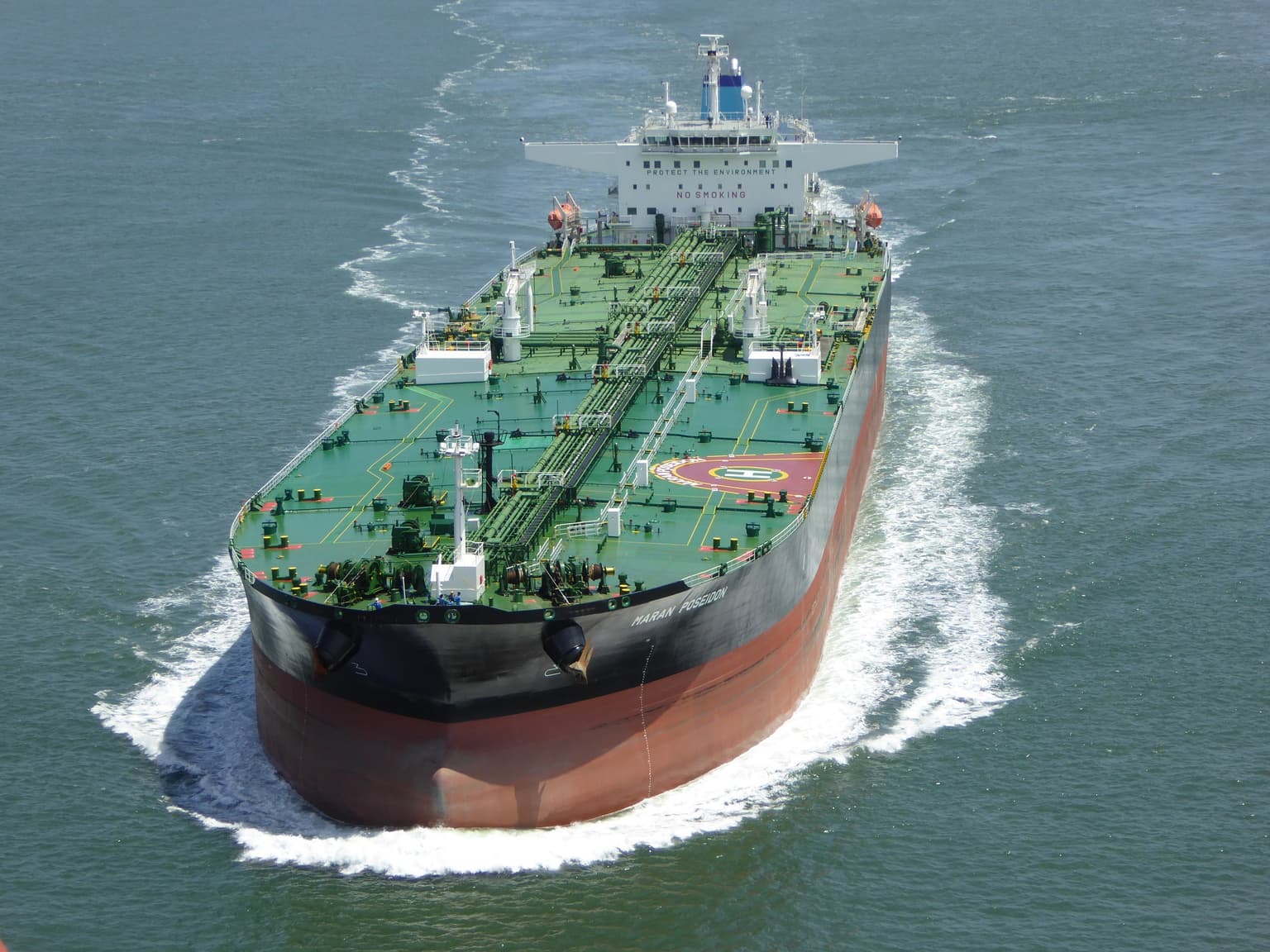
Since the start of the conflict between Ukraine and Russia, the European Union and its partners have imposed a range of sanctions on Russia. Further measures are being prepared, including discussions about a ban on Russian gas imports. Sweden’s foreign minister has also called for sanctions to target the so-called shadow fleet of tankers transporting Russian oil.
Many sanctions have specifically targeted Russia’s oil and gas sector. Examples include not only a ban on Russian oil imports into most EU countries, but also a price cap. This sets the amount buyers of Russian oil and petroleum products can pay Russian exporters without being exposed to the impact of sanctions.
7. What is the state of the EU’s LNG market, and what does the future hold?
The Agency for the Cooperation of Energy Regulators (ACER) has published its first report on the liquefied natural gas (LNG) market in the European Union. Since Russia’s invasion of Ukraine, Europe has become the world’s largest LNG import market, overtaking traditional giants such as China and Japan. The United States has also surpassed Qatar and Australia to become the world’s largest LNG exporter.
Since February 2022, the EU has significantly expanded its LNG import capacity, which has increased by 50 billion cubic metres (bcm) per year. Floating terminals account for 75% of this capacity; the Czech Republic has also secured supply capacity at a floating terminal.
8. Germany: Lawmakers approve 10,000 kilometres of hydrogen pipelines

The German Bundestag has approved the construction of a key 9 700 km hydrogen network that will transport hydrogen across Germany and connect the country’s hydrogen infrastructure with neighbouring countries. The international outlet Clean Energy Wire reported, citing the newspaper Der Spiegel.
German lawmakers approved amendments to legislation that will enable construction of a key hydrogen network linking production and import areas with centres of future demand. Construction is to be carried out in several phases, with completion planned for the period from 2032 to 2037.
9. EU unlikely to ban Russian gas supplies by 2027
The European Commission’s plan to phase out Russian gas by 2027 could be derailed by opposition from EU member states that depend on Russia. Energy experts said this during a debate organised by the Center for European Policy Analysis (CEPA).
“I don’t think EU member states will have the political strength to do this on a voluntary basis,”Baker McKenzie Rechtsanwälte energy senior adviser Walter Boltz told Montel.
10. France closed its last coal mine 20 years ago

Coal mining had a 300-year history in France. But the mining profession gradually had to give way as the industry became unprofitable and new energy sources, especially nuclear power, emerged. France’s last coal mine, La Houve, closed on 23 April 2004 in Creutzwald, near the German border.
The first coal deposit in France was discovered in the first half of the 18th century. Coal mining expanded during the Industrial Revolution and reached record levels after the Second World War.
Energostat: electricity generation in Czechia
Energostat: electricity generation in Germany
Translation disclaimer
This article is a machine translation of the Czech original and has not yet been fully reviewed. In case of any doubt, please refer to the Czech version.
Sdílejte článek prostřednictvím:
Topics:Energy Weekly
You might also like

28 October 2026, 13:08

28 October 2026, 11:10

28 October 2026, 09:08
