Top 10 energy stories from the past week
This week, we once again bring you a carefully selected list of the ten most important articles we published on oEnergetice.cz. If you missed any of them, here is a selection of the stories that attracted the most interest from our readers. Good luck in the new week!
1. China admits to damaging gas pipeline between Finland and Estonia
Last year, the Balticconnector natural gas pipeline between Finland and Estonia was damaged, and the Chinese government has now admitted responsibility for the damage. It said the incident was an accident, although doubts remain.
Last year, Finnish police and international investigators examined whether the damage to the Balticconnector pipeline between Finland and Estonia was deliberate or accidental. The pipeline and a telecommunications cable were damaged on 8 October, probably by a large anchor dragged by the Chinese vessel Newnew Polar Bear. The anchor itself was found at the site of the damage, which led to the ship being identified.
Read the full article HERE.
2. Record battery storage facility to be built in the US, capable of supplying power for 100 hours
A new project on the northeastern coast of the United States will bring a battery storage facility with record-breaking capabilities. Form Energy’s project is exceptional for its storage capacity: it can deliver up to 85 MW for as long as 100 hours. The facility will be part of massive investments aimed at enabling states to connect additional offshore wind farms.
The US Department of Energy announced that it would support the Power Up New England project with 389 million dollars (around CZK 9 billion). The project’s partners will invest a further 499 million dollars (almost CZK 11.5 billion). As part of massive investments in energy development across six northeastern US states, a record-breaking energy storage facility will also be built, capable of supplying electricity for more than four days.
Read the full article HERE.
3. French nuclear power plants have to cut output amid heatwave
French energy company EDF has cut output at its nuclear power plants by several gigawatts because of a heatwave. The company also warned that further cuts could be needed through next Monday.
Many French nuclear power plants use river water to cool their reactors. EDF is legally required to reduce output when river water temperatures are high or flows are low. Temperatures in southwestern France reached 41 °C on Sunday, according to weather service Meteo France.
Read the full article HERE.
4. RWE starts up green hydrogen electrolyser in Lingen
RWE has commissioned a pilot 14 MW electrolyser in Lingen, Germany. The facility is expected to be capable of producing 270 kilograms of green hydrogen per hour. The news was reported by renews.
Green hydrogen production began in early August at RWE’s electrolyser in Lingen, Germany. This is one of RWE’s key hydrogen initiatives this year. As a pilot project, it is intended to provide valuable insights for developing future industrial-scale hydrogen production facilities.
Read the full article HERE.
5. Sweden’s nuclear plans to cost tens of billions of euros
Sweden is one of the EU countries still considering operating nuclear power plants in the coming decades. The country already has several nuclear units, but they do not have an unlimited lifespan and will eventually need to be replaced at a minimum. According to a new study commissioned by the Swedish government, building new capacity totalling 5 GW would cost almost 30 billion euros. However, nuclear capacity could even double by the middle of the century.
After many years of retreat, the energy crisis—accompanied by a sharp rise in natural gas and electricity prices—has prompted renewed and more intensive debate about the development of nuclear power in some European countries. Czechia is one example: the tender for the construction of a new unit at the Dukovany nuclear power plant was recently evaluated. But ambitions to retain nuclear power in the energy mix extend beyond Czechia’s borders.
Read the full article HERE.
6. Whoever controls Sudzha, gas is still flowing through it
Austria, Hungary and Slovakia have confirmed that gas is still flowing to them despite the unclear situation at the metering station at the Sudzha border point. The countries also agreed that they would continue reducing their dependence on Russian gas.
Intense fighting between Ukrainian and Russian forces near the pipeline that carries Russian gas to European countries has not disrupted supplies, network operators and gas companies told Euractiv.
Read the full article HERE.
7. China’s transport electrification is affecting the German car industry
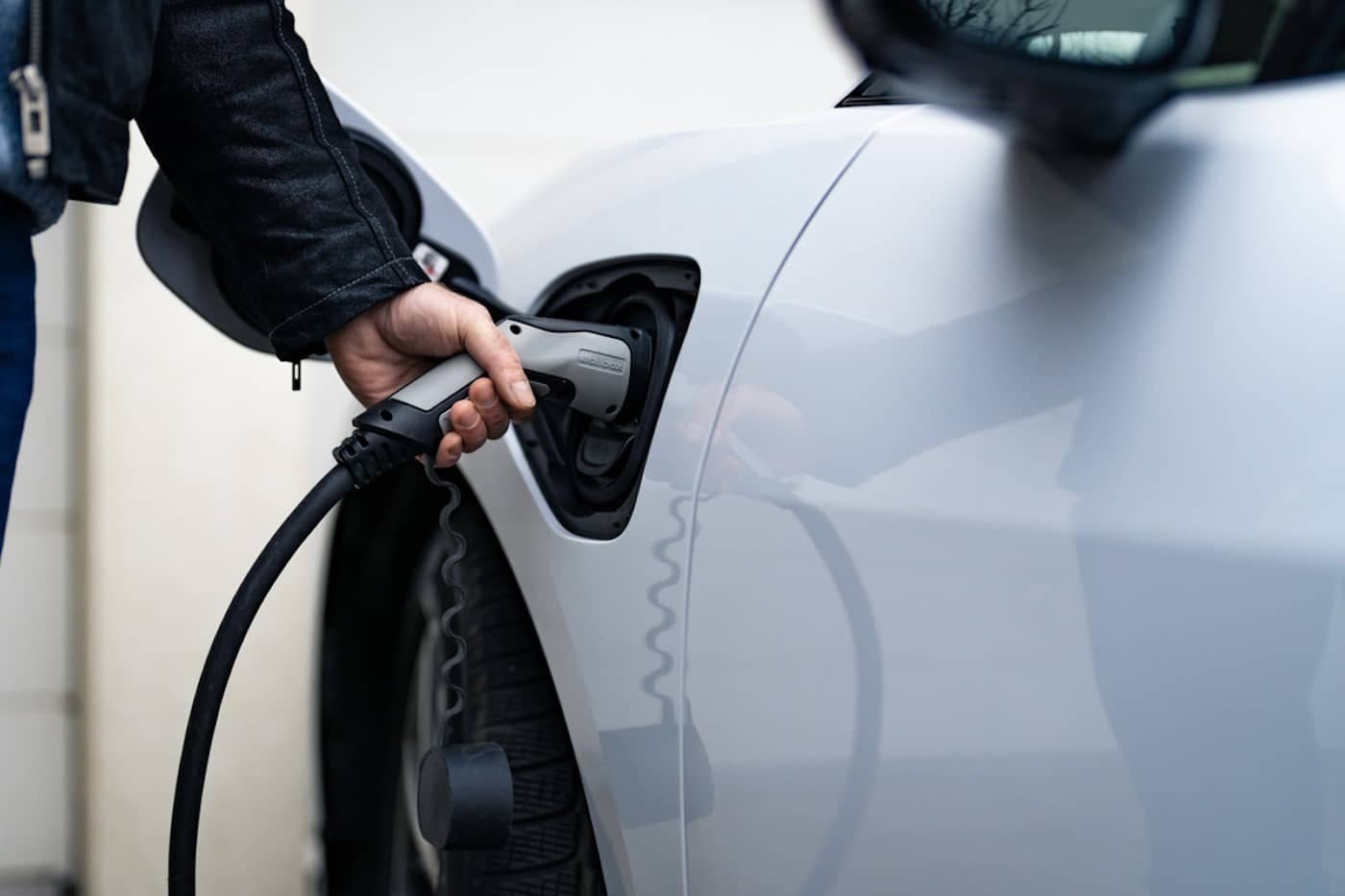
The sharp decline in sales of combustion-engine vehicles in China is affecting the German car industry. While 94% of new vehicles in China were powered solely by an internal combustion engine in 2020, the figure was just 59% in the first half of this year. The news was reported by international publication Clean Energy Wire.
The electrification of passenger transport in China is gathering pace. According to the country’s passenger car association, July this year saw, for the first time in history, more electric vehicles and plug-in hybrids registered than vehicles powered solely by an internal combustion engine.
Read the full article HERE.
8. The only one in Czechia: GasNet starts building gas industry training facility
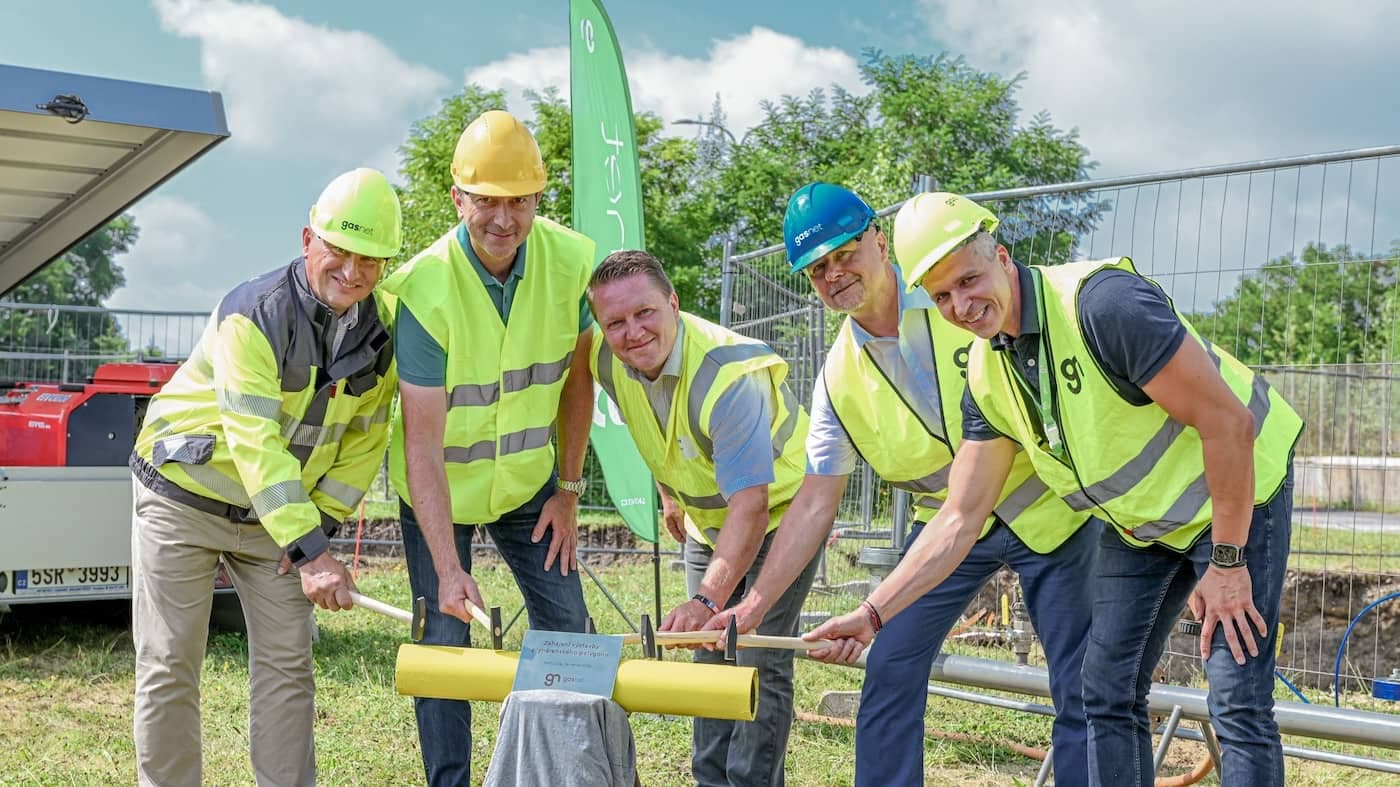
GasNet, the Czech Republic’s largest gas distributor, will build a unique gas industry training facility at its site inPardubice. It will be a comprehensive training and testing site for gas workers and the only facility of its kind inthe entire Czech Republic. The gas distributor has begun construction of the facility’s first section in Pardubice.
A ceremonial hammering and a toast. GasNet’s Chief Operating Officer Petr Koutný and Construction Director Pavel Komsa launched construction of the facility in Pardubice. They were joined by GasNet’s Director of Special Works Petr Zajíček, Head of the Bohemia 3 Regional Area Jakub Neterda, and Zdeněk Sitař, representing occupational health and safety. And, as gas workers, they did not tap on a cornerstone but on a “foundation gas pipe”. Five small hammers therefore rang out against a yellow steel pipe at the construction site, marking the start of a unique project for the entire Czech gas industry.
Read the full article HERE.
9. Dukovany plant increases output of its second unit
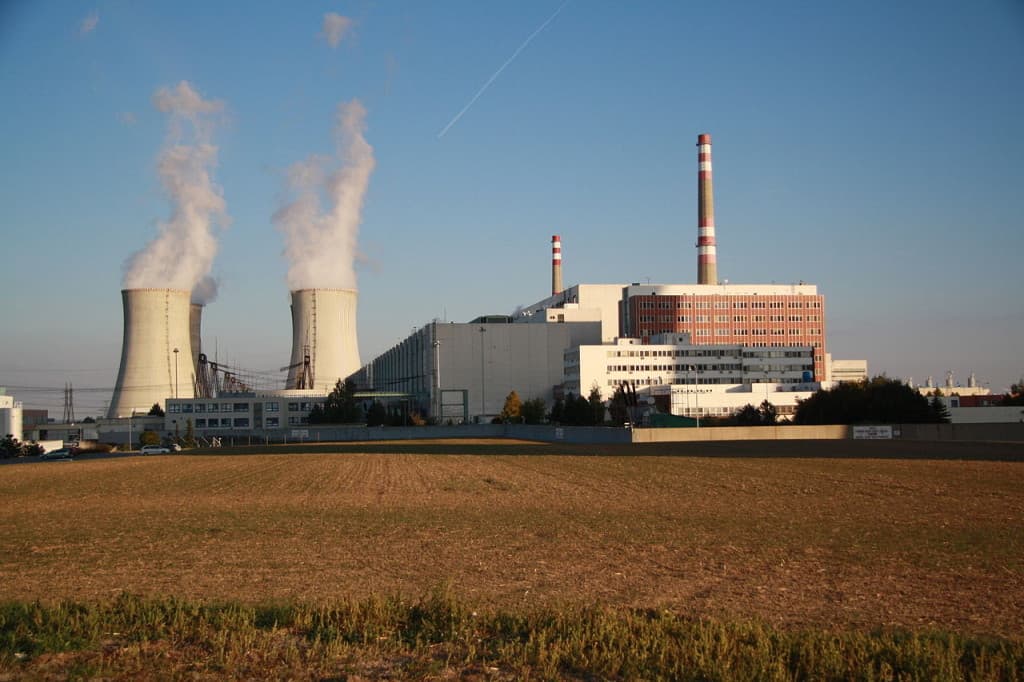
Energy workers have increased the output of the second unit at the Dukovany Nuclear Power Plant from 500 to 512 megawatts (MW). They have completed another stage of a project covering all four Dukovany units. The output of unit three was already increased in April this year, while work on the final unit is due to be completed next spring. This follows a statement issued today by ČEZ.
Once the upgrades to all units are complete, the plant’s annual generation is expected to increase by approximately 300,000 megawatt-hours (MWh), or 0.3 terawatt-hours (TWh), according to the company. Last year, the Dukovany plant generated 14.3 TWh of electricity.
Read the full article HERE.
10. Tropical temperatures reduce solar output; technology also matters
Current tropical temperatures are reducing the output of solar power plants, generally by a few percent compared with ideal conditions. Industry representatives say this does not automatically mean that summer is worse for photovoltaics, as the lower output is usually offset by stronger sunlight and longer days. They also point out that the technology used makes a difference. This is based on comments from industry associations and manufacturers to the Czech News Agency (ČTK). Wednesday was the hottest day of the year so far in Czechia, with temperatures reaching 35 degrees in most parts of the country.
“Solar panels produce less power at high temperatures because silicon performs better at low temperatures. The output at 35 degrees can be five to ten percent lower than at 25 degrees,” said Jan Krčmář, executive director of the Solar Association.
Read the full article HERE.
Energostat: electricity generation in Czechia
Energostat: electricity generation in Germany
Translation disclaimer
This article is a machine translation of the Czech original and has not yet been fully reviewed. In case of any doubt, please refer to the Czech version.