
25 October 2026, 08:20
Loading...
Top 10 energy stories in Czechia from the past week
oEnergetice.cz
17 November 2024, 19:31
This week, we once again bring you a carefully selected list of the ten most important articles we published on oEnergetice.cz. If you missed any of them, here is a selection of the articles that attracted the most interest from our readers. Good luck in the new week!
1. Austria will ask the EU for help if Germany does not scrap its gas transit fee. The fee also affects supplies to Czechia

With the German government now collapsed, it is unclear whether the country will manage to scrap the additional charge for natural gas transit by the end of the year. Germany introduced the fee to cover costs associated with filling underground gas storage facilities in 2022. It makes gas transit through Germany to neighboring countries, including the Czech Republic, more expensive. However, following strong political pressure, including from neighboring countries, the German government promised to abolish the fee from 2025. In light of the current political situation in the country, however, this step is uncertain.
As the end of the year approaches and the future of gas transit through Ukraine remains uncertain, gas supplies to Europe are a key concern. Central and Eastern European countries are particularly uncertain, as they have no direct access to the sea or to infrastructure for importing liquefied natural gas (LNG).
Read the full article HERE.
2. You can save thousands of crowns a year on electricity. One of the major suppliers has cut prices significantly
Electricity supplier EPET, part of the EPH Group, has significantly cut prices for new customers. Effective today, it is offering an acquisition tariff with a one-year fixed price of 2 649 Kč/MWh and a monthly charge of 130 Kč excluding VAT. The price is even lower with a two-year fix, at 2 499 Kč with the same monthly charge excluding VAT. Both offers are currently the cheapest of their kind among the larger electricity suppliers.
Suppliers are competing for new household customers ahead of the end of the year. In recent weeks, major suppliers led by ČEZ, E.ON and innogy have already announced cuts to their electricity prices. Their prices are gradually falling below those of products with monthly price fixes, suggesting they are looking to attract customers who plan to cancel their monthly fixed-price contracts.
Read the full article HERE.
3. Are German nuclear power plants back in the running? CDU calls for expert assessment of a restart

Leaders of Germany’s largest opposition party have called for an expert assessment of the possibility of restarting the nuclear power plants shut down last year. They describe Germany’s phase-out of nuclear energy during the energy crisis as an ideologically motivated and mistaken decision.
In the policy document “A new energy agenda for Germany”, politicians from the conservative Christian Democratic Union (CDU) and Christian Social Union (CSU) outline their energy policy priorities for the country’s future. In the position paper, they describe Germany’s phase-out of nuclear energy during the energy crisis as an ideologically motivated and mistaken decision by Chancellor Olaf Scholz’s governing coalition.
Read the full article HERE.
4. Now is the ideal time to install solar panels. Top-tier technology manufacturers are entering the market, says Martin Hodek

Like the energy sector as a whole since 2021, the residential solar PV sector has been on a roller coaster since the energy crisis. The crisis brought a significant increase in new residential installations. After years of stagnation, installed capacity from solar power plants connected to the Czech grid began to grow. This trend is now gradually fading.
Nevertheless, conditions for installing residential solar PV may be ideal right now. Martin Hodek of Huawei Technologies says solar panel prices are currently very low and the number of top-tier technology suppliers on the market is also growing.
Read the full article HERE.
5. Gas-fired heat pumps cut costs. How?

The number of heat pumps installed in Czechia has surged over the past four years. Since 2010, around 270 thousand have been supplied to the domestic market, with half of them added in just the last two years. The vast majority, however, are electrically powered. Heat pump technology can also run on gas, and these pumps offer a number of advantages. Alexandr Lužný, head of innovation at GasNet, the Czech Republic’s largest gas distributor, explains where they are best suited.
Heat pumps use ambient heat for heating. But how exactly do they work?
The principle is fairly simple. A heat pump really does take heat from its surroundings. This makes it an exceptionally energy-efficient system. What’s more, heat drawn from the air, water or ground is a renewable energy source.
Read the full article HERE.
6. What will the collapse of Germany’s coalition mean for climate and energy?

On the day Donald Trump won the US presidential election, German Chancellor Olaf Scholz’s coalition government unexpectedly collapsed. This brought to a head an internal struggle within the coalition over economic recovery and Germany’s ambitious plans to transform its energy sector.
As reported by Clean Energy Wire, the coalition crisis forced Chancellor Scholz to dismiss Finance Minister Christian Lindner. This followed intensive negotiations between the three coalition parties. The coalition broke up over disagreements about Germany’s 2025 budget. The country is facing major economic and energy challenges, and the federal budget for 2025 remained unresolved after the coalition collapsed.
Read the full article HERE.
7. Investment in electricity transmission and distribution is gathering pace, and Czechia is no exception
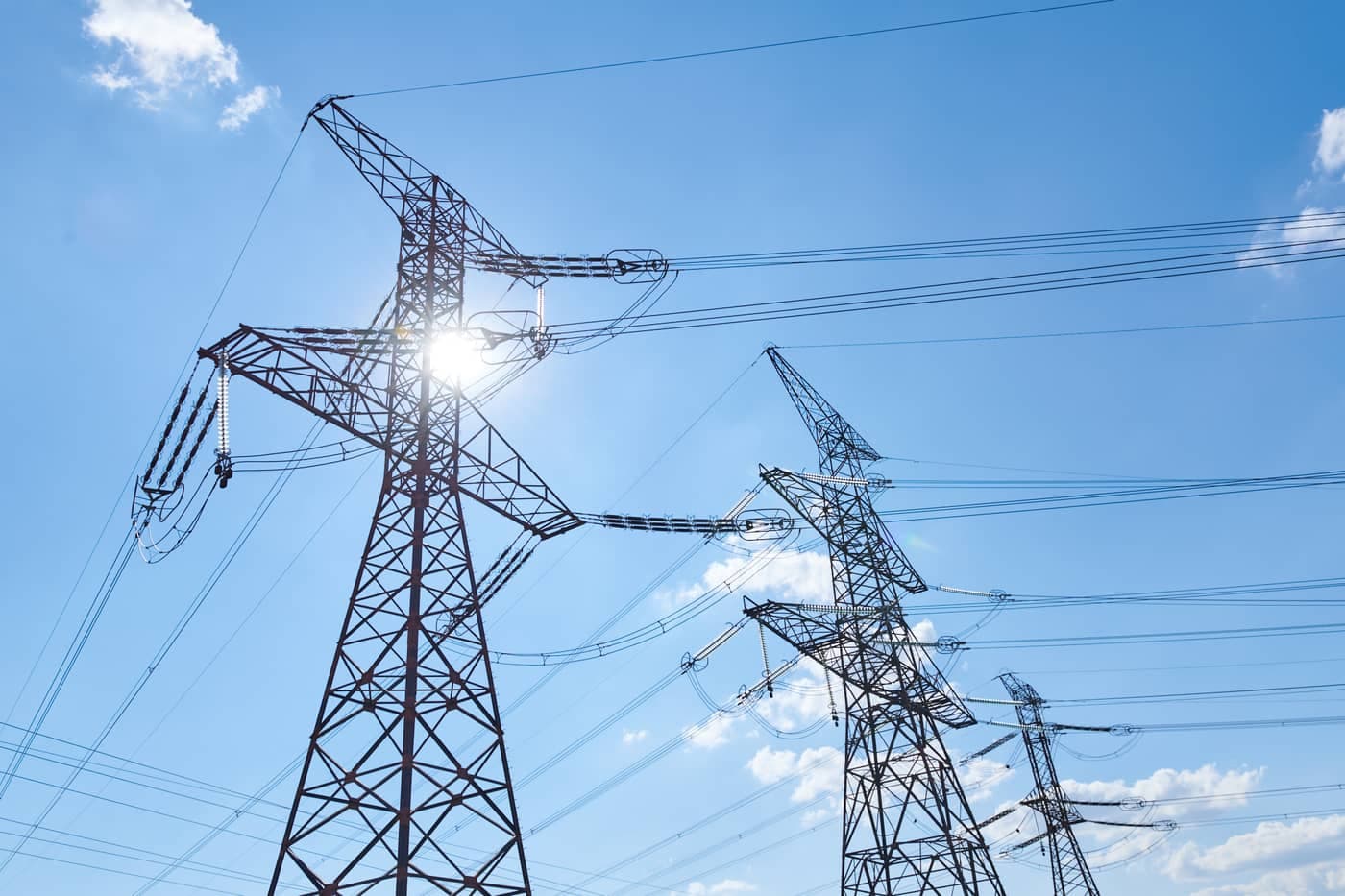
According to the European Union, investment in electricity infrastructure will exceed 550 billion euros by 2030. Analyses show that the expansion of transmission and distribution networks is a long-term trend in Europe and worldwide, and is gaining momentum as electrification increases, emissions-cutting efforts continue and the energy sector transforms. Europe is investing billions of euros in modernizing and digitizing existing infrastructure. Meanwhile, millions of kilometers of new networks are being built in China, India and Brazil. Czechia is no exception: it faces a fairly dramatic increase in investment in electricity distribution and transmission over the coming years.
Many experts and institutions now agree that the energy transition cannot happen without investment in energy infrastructure. Rising electricity consumption, the construction of new renewable sources and the growth of electric mobility place such high demands on modernizing, strengthening and expanding the grid at all voltage levels that investment will require budgets running into billions and greater attention from public institutions and companies in the coming years.
Read the full article HERE.
8. IAEA chief: It would be rational for Germany to return to nuclear energy
A return to nuclear energy would be logical and rational for Germany, according to Rafael Grossi, head of the International Atomic Energy Agency (IAEA). He told the DPA news agency that Germany was the only country to have nuclear power plants and then completely stop using nuclear energy.
Other countries that had initially announced plans to do so have since changed their minds. Grossi said it was therefore “no surprise” that some German parties are calling for a return to nuclear energy. Countries that use nuclear power want to use more of it, he said, while countries that do not use nuclear power want to start. “There is only one country that has completely withdrawn: Germany,” the IAEA chief noted.
Read the full article HERE.
9. Deloitte: Cutting support for renewables will lead to facilities being shut down, with major losses at stake

The government’s proposed cuts to subsidies for supported energy sources (POZE) would lead to the closure of up to two gigawatts (GW) of existing photovoltaic power plants (PV) and put the construction of additional facilities at risk, according to the solar industry. Public budgets would lose around 141 billion Kč in revenue by 2030. The problems could also spread to other sectors, including banking. This is according to a study by Deloitte published by the Solar Association. CTK is seeking comment from the Ministry of Finance and other experts.
The state has paid subsidies for POZE since 2006, disbursing a total of more than 538 billion Kč by last year. Consumers have paid billions of crowns more through their electricity bills.
Read the full article HERE.
10. ČEZ to cut fixed-price energy tariffs from Friday, down by tens of percent from the start of the year
Energy company ČEZ will cut its fixed-price gas and electricity tariffs from Friday. It will offer energy supplies under fixed-term contracts at prices tens of percent lower than at the start of this year. From January, the company will also cut prices for non-fixed products. ČEZ said in a press release today, according to CTK. Other suppliers are gradually cutting prices too.
This is the fourth time this year that ČEZ has cut prices for fixed-term energy contracts; the previous reduction was in May. From 15 November, it will offer two-year gas contracts for 1150 Kč per megawatt-hour (MWh), including VAT. The price of a two-year fixed contract will thus be half what it was at the start of the year. The company says this is currently the lowest available gas price on the market. A one-year gas contract will cost 1390 Kč per MWh including VAT, a 38 percent reduction compared with January 2024. A one-year electricity contract will cost 3255 Kč per MWh including VAT, down 26 percent from the start of this year.
Read the full article HERE.
Opinion
The Dukovany game: Can the Koreans afford another loss-making project?

When the Czech government announced in July that South Korean company KHNP had won the tender to build new nuclear units, the public breathed a sigh of relief. A decision at last, after years of delays! After all, given the current situation, no one disputes the exclusion of the Russian and Chinese bidders. US company Westinghouse disqualified itself by failing to submit a bid in the required form, so the final stage of the competition was effectively between just two bidders. Alongside KHNP, France’s EDF also submitted a bid.
The tender result nevertheless came as a surprise to many. EDF had a number of trump cards that the Koreans lacked. France is a European power that could help Czechia secure so-called state aid notification—the approval of the nuclear project’s state financial support scheme by EU institutions. It also has an ambitious program to build a number of nuclear power plants, whose scale makes the involvement of external suppliers a necessity. Moreover, the French company’s cooperation with Czech companies is backed by practical experience, not just legally non-binding memorandums.
Read the full article HERE.
Energostat: electricity generation in the Czech Republic
Data in this chart is also available in 15-minute resolution60min15min
Energostat: electricity generation in Germany
Data in this chart is also available in 15-minute resolution60min15min
Find more up-to-date charts and data on Energostat
Translation disclaimer
This article is a machine translation of the Czech original and has not yet been fully reviewed. In case of any doubt, please refer to the Czech version.
Sdílejte článek prostřednictvím:
Topics:Energy Weekly
You might also like



23 October 2026, 14:38