


28 October 2026, 15:10
Loading...
Top 10 energy stories of the past week
oEnergetice.cz
7 April 2024, 20:06

1. Germany shuts down seven lignite-fired units over Easter
At the end of March, seven lignite-fired power plant units in Germany were permanently shut down. The decommissioning of all the units had been planned earlier, but was postponed to save gas after the energy crisis broke out.
Germany shut down seven lignite-fired units with a total installed capacity of 3.1 GW at the end of March, as planned. Their operation had been extended during the energy crisis to save natural gas used for power generation.
2. Russia struggles to access oil sale proceeds as banks fear sanctions
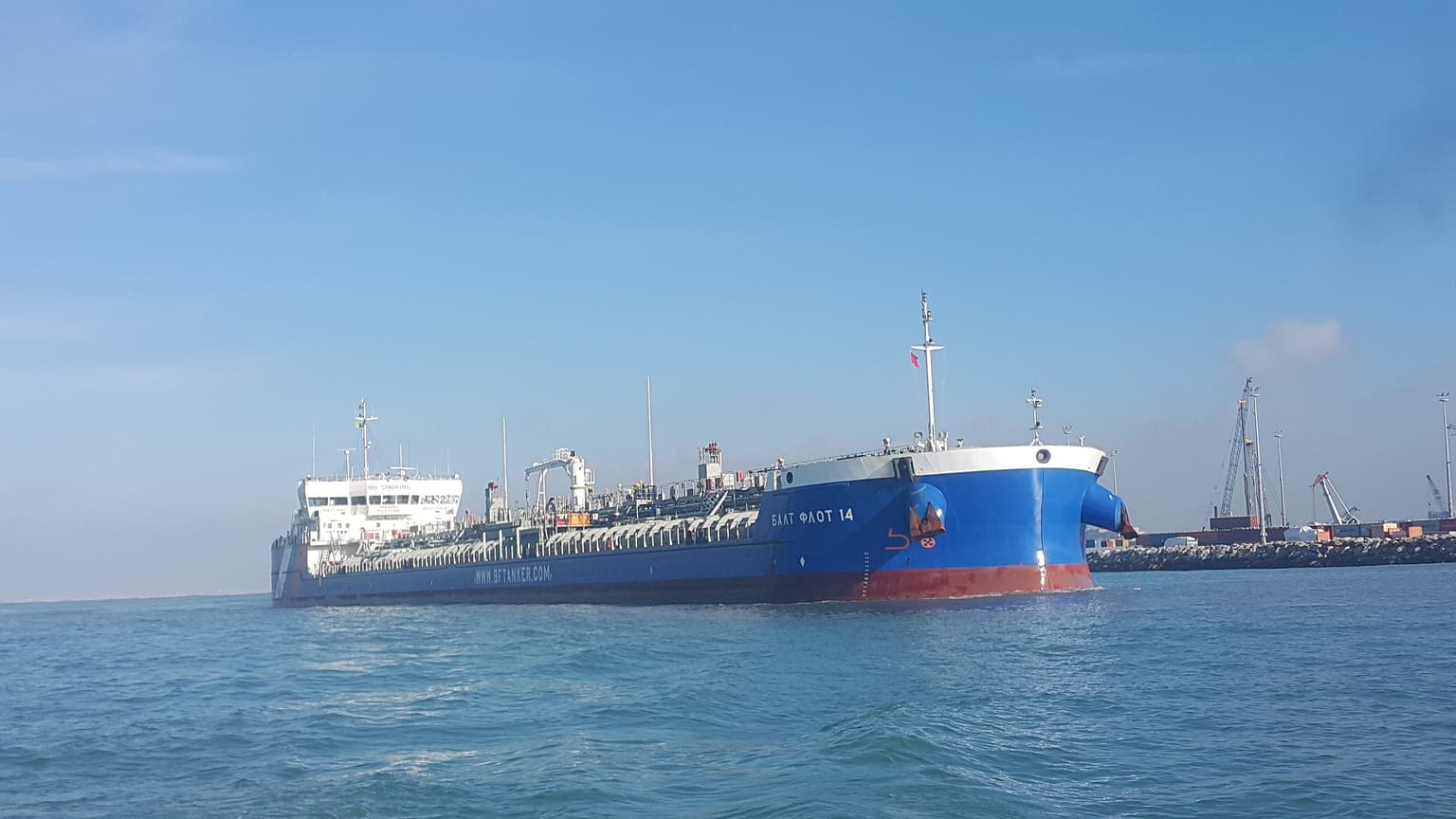
Russian oil exporters have faced further complications in recent months after the United States tightened sanctions at the end of last year. According to Reuters sources, Russian oil companies now have to wait up to several months to receive payments for oil sold to China, Turkey and the United Arab Emirates. Banks in those countries have tightened the process for releasing funds or even frozen several accounts over fears of secondary sanctions.
After some of Russia’s traditional oil buyers banned imports of the commodity, Russian exporters began turning to new markets. The loss of demand for Russian oil from the United States, the United Kingdom and most EU countries was largely offset by India, China, Turkey and others, including countries in the Middle East. At the end of 2022, the G7 countries, together with the EU and Australia, also introduced a price cap on Russian oil. Since most countries no longer buy Russian oil, the cap is enforced through Western oil shippers and insurers.
3. Electricity prices again turned negative over Easter
Last year over Easter, ČEPS, the operator of the Czech electricity transmission system, had to shut downsolar power plants with a capacity of around 400 MW for two hours to maintain balance in the system. This attracted widespread attention because the shutdown occurred at a time when spot market electricity prices would normally have exceeded 150 EUR/MWh. Despite this, prices also turned negative over Easter last year: lower holiday demand left the market with a surplus of energy. The same situation occurred again this year, with an energy surplus on the market and spot prices once again falling into negative territory.
Last year, the disconnection of solar power plants with a capacity of around 400 MW for two hours over Easter caused a stir. Spot electricity prices at the time were usually above 150 EUR/MWh, and Europe was anxiously looking ahead to the coming winter. There were particular concerns about having enough natural gas, which is also burned to generate electricity. The shutdown of solar power plants therefore came as a surprise to many.
4. State-owned Diamo plans to extract gas at a former mine in the Frenštát area using a controversial method
State-owned company Diamo plans to extract gas at the site of the former Frenštát hard coal mine in the Beskydy Mountains. It wants to pump a solution of unknown composition underground through boreholes at high pressure. Czechia previously “put a freeze” on the use of this method, which poses environmental risks. Local municipalities learned of Diamo’s plans by chance.
Simona Janíková’s article was originally published by the independent regional website Okraj.cz.5. US seeks to restart Palisades nuclear power plant, shut down in 2022
Through its Loan Programs Office, the US Department of Energy has conditionally committed to backing a loan of up to USD 1.52 billion (approx. CZK 35.56 billion) for Holtec Palisades. The move is intended to enable the restart of the Palisades plant, which was shut down in May 2022. The project could become the first case in the US of a nuclear power plant resuming commercial operations after they have ended.
Holtec agreed to buy the 800 MWe pressurized water reactor from its then-owner and operator Entergy in 2018, before its planned retirement, with the aim of decommissioning the plant. The acquisition was completed in June 2022, shortly after the reactor was permanently shut down. At the time, Holtec planned to complete the plant’s decommissioning by 2041.
6. Several major players pull out of Norway’s offshore wind auction, citing high risks
Norway held its first-ever auction to support the construction of offshore wind farms in March. Due to the specific conditions, several established developers did not take part, saying that the risks and uncertainty were too high. A Belgian-Swedish consortium ultimately won the auction with a bid of nearly 100 EUR/MWh.
An increasing number of countries have in recent years shifted to auction-based support for renewable energy. Developers typically compete for support in these auctions, with competition intended to secure the lowest possible price. Norway is no exception: in March this year, it concluded its first auction to support the construction of offshore wind farms.
7. EU electricity markets saw an “explosion” in negative prices in 2023
2023 was a record year for negative electricity prices across EU member states. A total of 6,470 such instances were recorded, according to an analysis by the European Union Agency for the Cooperation of Energy Regulators (ACER)—more than three times the previous record set in 2020.
The occurrence of negative electricity prices, which indicate insufficient flexibility in the grid or in the facilities connected to it, rose at an unprecedented rate last year. The number increased almost twelvefold year on year and was more than three times higher than in the previous record year, 2020.
8. ČEZ to build two large solar power plants in the Chomutov area for a total of CZK 4.2 billion
Energy company ČEZ will build two large solar power plants in the Chomutov area. Each is expected to have a capacity of more than 100 megawatts (MW), over three times the capacity of the largest solar plants currently operating in Czechia. The company will receive more than CZK 1 billion in grants from the Modernisation Fund toward the projects, which will cost a total of CZK 4.2 billion. This was reported today by Ekonomický deník, citing contracts signed by the State Environmental Fund (SFŽP) and ČEZ at the end of March. ČEZ spokesperson Barbora Peterová told the Czech News Agency that construction is expected to begin around the turn of 2025 and 2026.
The planned solar power plants are to be built on reclaimed land formerly used for lignite mining in northern Czechia. ČEZ is preparing the larger project in Tušimice, where the plant is expected to have a capacity of 126.7 MW. The second project, called Vysočany–Plató, is to have an installed capacity of 115.7 MW.
9. Opatovice power plant aims to stop using lignite entirely by the end of 2030
Opatovice power plant in the Pardubice area aims to stop using lignite as a fuel entirely by the end of 2030. It is to be replaced by natural gas, biomass and municipal waste incineration, with solar panels also a possibility. Decarbonisation will be carried out in several overlapping stages, with coal-fired boilers gradually being shut down, the Czech News Agency reported, citing the project notice for the EIA screening process.
After moving away from coal, the power plant expects to have a total installed thermal capacity of at least 450 megawatts (MW). The facility currently has a total thermal capacity of 698 MW from its combined heat and power generation.
10. European Commission approves French package to support renewable hydrogen production
The European Commission has approved a EUR 900 million French support scheme for the use of renewable hydrogen in industry and transport. The support is permitted under the extended Temporary Crisis Framework for state aid measures to support the economy following Russia’s aggression against Ukraine, the H2 View website reports.
France plans to install 6.5 GW of low-carbon electrolytic hydrogen production capacity by 2030, rising to 10 GW by 2035. To meet this target, it introduced a EUR 4 billion subsidy package in 2023 to support low-carbon hydrogen projects through so-called contracts for difference (CfDs). France has also introduced broader EU rules mandating the use of hydrogen in transport and industry.
Feature
Expansion of the Dukovany plant: What will the impact on the region be?
A meeting was held in Třebíč at the end of March between representatives of the Vysočina and South Moravian regions, mayors, members of the Czech government and members of the Czech Senate. The planned expansion of the Dukovany nuclear power plant and its impact on the region were the main topics of the meeting.
The regional impacts of such construction are often overlooked in discussions about planned expansion, despite their potentially significant effects on quality of life in the area. For this reason, Prime Minister Petr Fiala asked Regional Development Minister Ivan Bartoš to prepare a socioeconomic study mapping the impact of the planned construction on the region.
Europe’s path to carbon neutrality: Where could the EU import green hydrogen from?
Renewable energy is a key resource for the transition to a zero-emission energy system, but its development and full deployment are currently constrained primarily by distribution and transmission grids. The European Union is therefore, among other things, relying on the rapid development of renewable gases and green hydrogen, which it also plans to import from abroad. Researchers at the Oxford Institute for Energy Studies assessed the options for importing it into Europe. Chile, Morocco and Australia are the leading candidates.
Two years ago, the European Union unveiled its Fit for 55 plan, which calls for a substantial reduction in emissions by 2030 and, ultimately, by 2050, when the EU as a whole is to achieve climate neutrality.
Energostat: electricity generation in Czechia
Energostat: electricity generation in Germany
Translation disclaimer
This article is a machine translation of the Czech original and has not yet been fully reviewed. In case of any doubt, please refer to the Czech version.
Sdílejte článek prostřednictvím:
Topics:Energy Weekly
You might also like

28 October 2026, 13:08

28 October 2026, 11:10

28 October 2026, 09:08
