25 October 2026, 08:20
Loading...
Top 10 energy stories of the past week
oEnergetice.cz
21 July 2024, 20:05
1. Is the nuclear tender result approaching? Ministry seeks change to key deadline
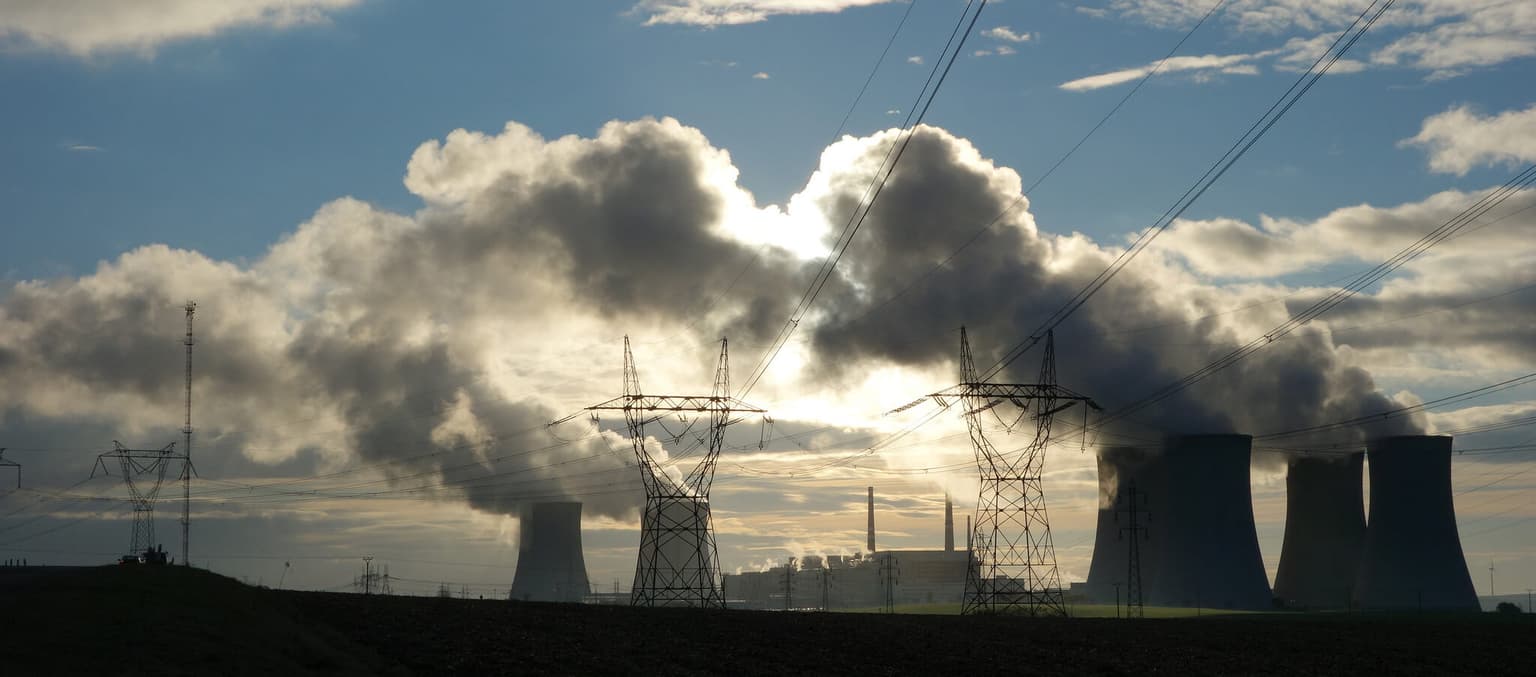
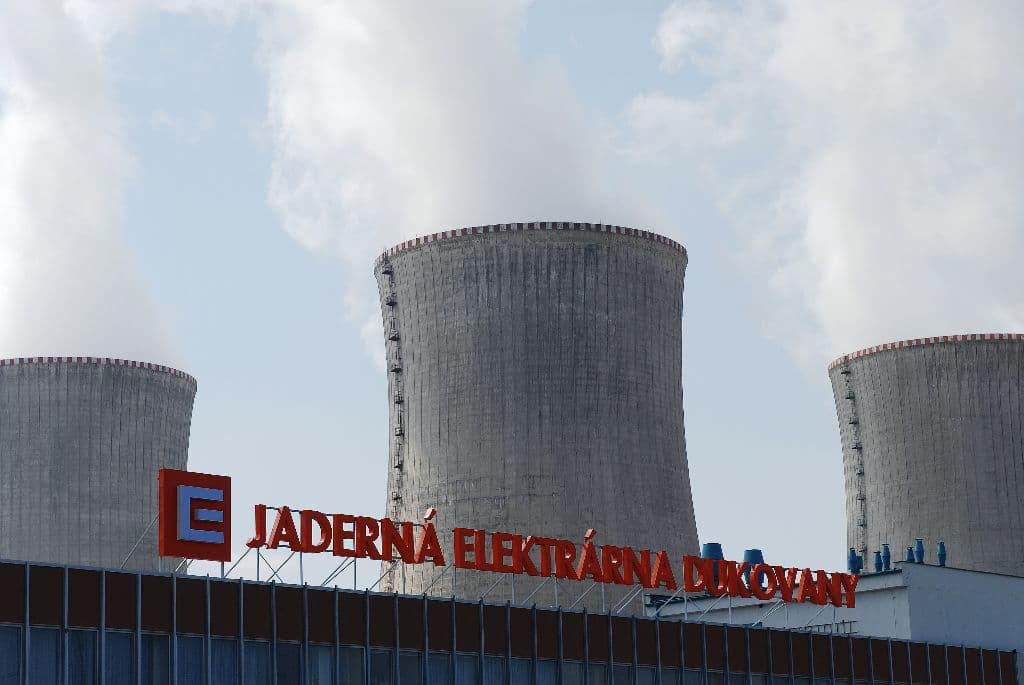
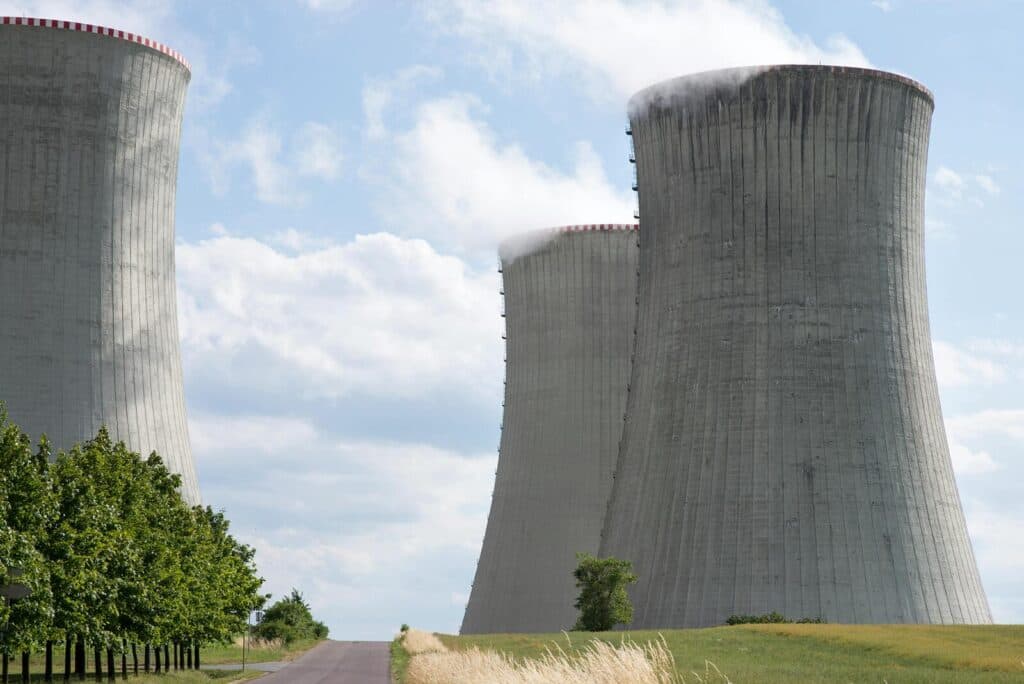
The Ministry of Industry and Trade has asked ČEZ to adjust the deadline by which the state can exclude a bidder from the tender for the completion of up to two units at the Dukovany Nuclear Power Plant and up to two units at the Temelín Nuclear Power Plant. The deadline for excluding a bidder has been moved to 26 July this year. Will we learn the winner of the billion-crown contract this month?
The announcement of the winner of the Dukovany tender appears to be fast approaching. In mid-June, ČEZ handed the government an evaluation report in which it recommended a winner for the nuclear tender. Under the contract, the government had one month to assess the report and, if necessary, exclude one of the bidders from the tender.
2. Foundation concrete pouring for Russia's Leningrad 7 nuclear unit completed ahead of schedule
Construction of a new Russian nuclear unit at the Leningrad power plant has reached its first major milestone. After three months, engineers completed pouring the concrete reactor foundation slab more than two months ahead of schedule. Rosatom officially began construction of the Leningrad plant's seventh unit this March. The unit, with an installed capacity of 1200 MW, is due to enter commercial operation in 2030.
Russian energy company Rosatom announced that its engineers had completed pouring the foundations for the reactor building of the seventh unit at the Leningrad Nuclear Power Plant. Builders used around five and a half thousand cubic metres of concrete for this phase. Official construction of the VVER-1200 unit, with an installed capacity of 1200 MW and a 60-year service life, began this March.
3. Austria explores options for cancelling gas contract between OMV and Russia's Gazprom
Austria has set up a working group of independent experts to examine options for terminating the long-term gas supply contract between OMV and Gazprom. The aim is to find a legal basis for cancelling the contract and assess the political context of its signing in 2018. With autumn elections approaching, this is a politically sensitive issue, reportsthe Euractiv and Montel websites.
Austria still imports more than 90 % of its gas from Russia, despite a fall in overall demand. The long-term contract with Russia's Gazprom obliges OMV to take 6 billion cubic metres (bcm) per year until 2040, almost all of Austria's gas consumption. The contract is based on a “take-or-pay” principle, meaning OMV must pay Gazprom whether or not it takes the gas.
4. German economists call for a split of the country's single bidding zone
Leading energy economists have called for Germany's single bidding zone to be split to reflect regional differences in electricity availability. They say this would eliminate decisions that are physically impossible given the grid and make no economic sense.
In an article published in the Frankfurter Allgemeine Zeitung, twelve economists argue that the value of electricity often differs significantly between parts of Germany because the country's transmission capacity regularly reaches its limits.
5. At least 200 MW of solar capacity added in Czechia this year, with hundreds more possible in small installations
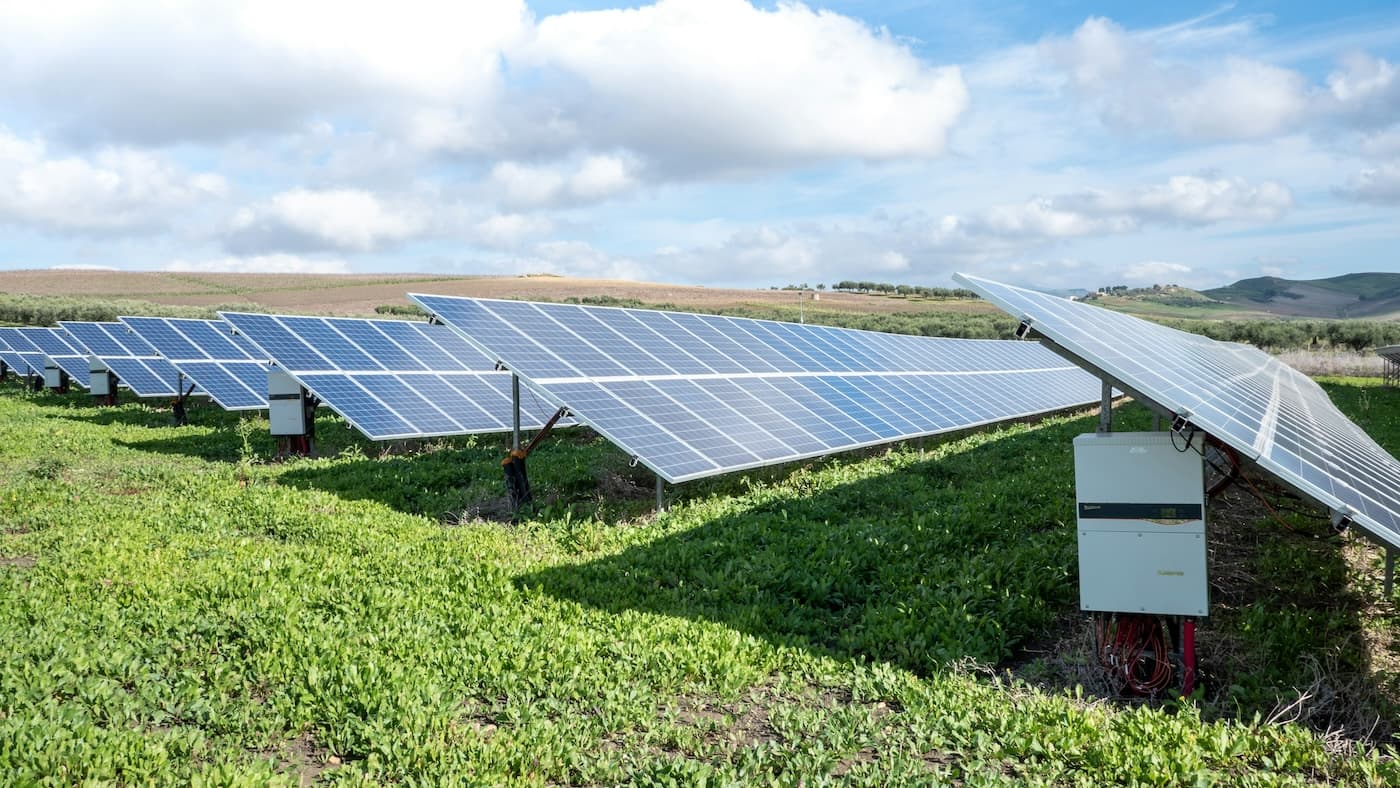
According to statistics from the Energy Regulatory Office, licences were issued this year for solar power plants with a capacity of 203 MWp. In reality, however, the increase in new solar power plants will be even greater. The Office's statistics are based on licences issued for electricity generation. However, installations with a capacity of up to 50 kW do not need a licence. These smaller installations may therefore be missing from the statistics.
After years of stagnation, the Czech Republic is seeing a revival not only in solar power generation, but also in newly installed capacity. Last year was already a record year in this respect: according to statistics from the Solar Association, almost 1000 MWp of new solar power plants were added over the year.
6. South Korea's KHNP to build two nuclear units at Dukovany at a cost of CZK 200 billion per unit
South Korean company KHNP will build the new nuclear units at Dukovany. For now, the project will involve two reactors, but the government will also negotiate an option with the winner to build two more units at Temelín. At current prices, each reactor will cost CZK 200 billion if two units are built. The cabinet chose the South Korean company over France's EDF. Prime Minister Petr Fiala (ODS) announced the decision at a press conference following a cabinet meeting today. It will be the largest and most expensive contract in the modern history of the Czech Republic.
Construction of the first reactor is expected to begin in 2029, with trial operation due to start in 2036.
7. Westinghouse: KHNP is not authorised to use the reactor it offered to Czechia
South Korean company Korea Hydro & Nuclear Power (KHNP), which won the tender to build nuclear units in the Czech Republic, is not authorised to use the reactor technology it offered Czechia, according to US company Westinghouse Electric. The Americans accuse the Korean company of violating US export control rules and intend to pursue legal action. Westinghouse, which was also interested in building a unit in Czechia, told the Czech News Agency today. KHNP said it takes a different view of its right to use the technology and declared that it would comply with US rules. ČEZ said it had received confirmation from the Koreans that they own the technology.
South Korean company KHNP will build the new nuclear units at Dukovany. For now, the project will involve two reactors, but the government will also negotiate an option with the winner to build two more units at Temelín. At current prices, each reactor will cost CZK 200 billion if two units are built. The cabinet chose the South Korean company over France's EDF. Westinghouse also took part in the tender, but the government did not invite it to the next stage of the competition at the beginning of the year. It said the company's first bid did not meet the requirements.
8. Germany: Renewables covered almost 60 % of electricity consumption in the first half of the year
According to preliminary figures published by the German Environment Agency (UBA), renewable energy sources covered around 57 % of Germany's gross electricity consumption in the first half of 2024. However, Germany must accelerate the development of wind and solar power plants to meet its climate and energy targets.
Total renewable energy generation in Germany reached 147 TWh, up 9 % compared with the same period of the previous year. As electricity consumption this year was roughly the same as in the previous year, the share of renewables in gross electricity consumption rose significantly in the first half of 2024. According to calculations by the Working Group on Renewable Energy Statistics, the share was already around 57 %.
9. China outpaces the world in renewables, building twice as much solar and wind capacity
The volume of solar and wind capacity under construction in China is almost twice that of the rest of the world, reports The Guardian, citing research by the non-governmental organisation Global Energy Monitor (GEM). China is further consolidating its leading position in global renewable energy development and demonstrating its determination to maintain it.
In specific figures, this amounts to 180 GW of installed solar capacity and 159 GW of wind capacity, or 339 GW in total, far exceeding the rest of the world. The United States is a distant second, with the GEM report putting its combined capacity in the two technologies at around 40 GW.
10. France yields to Commission pressure on climate targets, but does things its own way
France submitted its final National Energy and Climate Plan (NECP) to the European Commission on Wednesday, 10 July, ten days after the legal deadline. The news portal Euractiv reports. This is hardly surprising, given that most EU member states failed to submit their plans on time. What is notable, however, is that the plan includes controversial renewable energy targets for 2030, which the French government had previously opposed.
Under European legislation, each member state is required to submit a plan setting out precisely how it will meet the Union's decarbonisation and CO2 emissions reduction targets by 2030.
Opinion
Commentary: The result of the tender for new nuclear units in Czechia
The Czech government has decided in recent days on the outcome of the tender to build new nuclear units in the Czech Republic. South Korea's KHNP, with its APR1000 reactor, emerged as the winner. The government also decided to build a pair of units at Dukovany, with the contract to include an option for a pair of units at Temelín. A decision on whether to exercise the option will be made over the next five years.
In my view, this is the best possible outcome. The issue was not so much which particular bidder would win. Both reactors on offer are high-quality Generation III reactors from a technical, safety and operational perspective, and fully meet all the tender requirements. Both bids have advantages and disadvantages. The companies bidding are also of high quality. To recall, the South Korean company is offering the APR1000 reactor, while France's EDF is offering the EPR1200. In both cases, these are state-owned companies with extensive, long-standing experience in building and operating nuclear units.
Energostat: electricity generation in Czechia
Energostat: electricity generation in Germany
Translation disclaimer
This article is a machine translation of the Czech original and has not yet been fully reviewed. In case of any doubt, please refer to the Czech version.
Sdílejte článek prostřednictvím:
Topics:Energy Weekly
You might also like

23 October 2026, 14:38