
25 October 2026, 08:20
Loading...
Top 10 energy stories of the past week
oEnergetice.cz
1 December 2024, 16:03
This week, we once again bring you a carefully selected list of the ten most important articles published on oEnergetice.cz. If you missed any of them, here is a selection of the articles that attracted the most interest from our readers. Good luck in the new week!
1. German government collapse puts planned gas-fired power plants at risk
Germany’s Ministry for Economic Affairs is pushing a law to support the construction of new power plants, so that tenders for new gas-fired power plants can be launched in 2025. The draft law, revised in response to criticism from energy associations, is now undergoing interministerial consultation. The opposition CDU has already announced that it will oppose the bill when it is debated in the Bundestag.
Germany’s Ministry for Economic Affairs and Climate Action (BMWK) presented a draft law to support the construction of new power plants in September. The law is intended to ensure that power plants are built in the coming years to guarantee security of supply in the future when renewable energy generation is low.
Read the full article HERE.
2. Trump is undermining US oil companies, industry says
According to sources close to US President-elect Donald Trump, the incoming administration does not intend to exempt oil from Canada and Mexico from its planned 25% import tariffs. The oil industry warns, however, that such a move would first put consumers at risk, followed by domestic industry and national security. Reuters reported.
According to the US Department of Energy, Canada and Mexico are the main suppliers of oil to the United States and together account for about a quarter of the oil processed by US refineries into fuels such as gasoline and heating oil.
Read the full article HERE.
3. EU court rejects Russia’s challenge to rules on unbundling Nord Stream 2

The General Court of the Court of Justice of the European Union has dismissed Nord Stream 2’s (NS2) challenge to a directive extending the internal market rules for natural gas to pipelines from third countries. The EU’s second-highest court announced this today on its website. In 2019, the European Union amended its Gas Directive to extend its rules to pipelines from third countries. Nord Stream 2 is a subsidiary of Russian state-owned gas company Gazprom.
The court ruled that Nord Stream 2 could have anticipated, when building its pipeline, that it would not meet the EU’s criteria. The pipeline was completed in 2021, but no gas ever flowed through it. It was completed before Russia’s invasion of Ukraine, which began in February 2022, but never entered commercial operation. One of the NS2 pipelines was blown up along with Nord Stream 1 (NS1) in September 2022. Nord Stream 1 had been in operation since 2011.
Read the full article HERE.
4. Germany to add a record 17.5 GW of solar this year, with grid problems looming as capacity grows
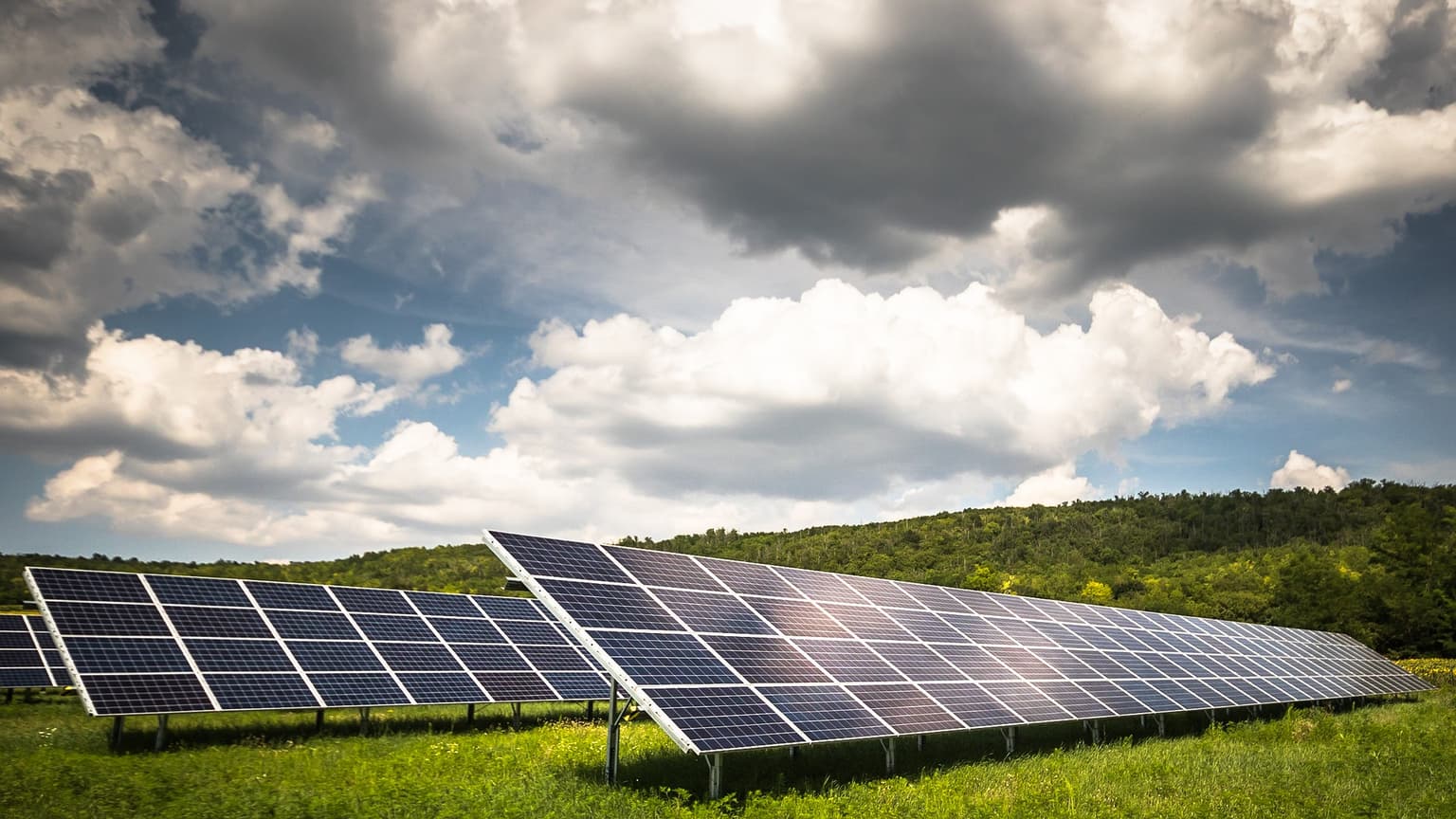
Germany is expected to add a record 17.5 GW of newly installed solar power capacity this year, more than 2 GW above last year’s figure. However, as installed capacity grows, so do the challenges of managing the electricity grid during hours when generation exceeds consumption. The German Association of Energy and Water Industries (BDEW) is therefore proposing that new installations be temporarily limited in the amount of power they can feed into the grid.
Solar power development in Germany continues at a rapid pace this year and, according to Clean Energy Wire, if BDEW’s forecast is met, the total installed capacity of these sources will approach 100 GW.
Read the full article HERE.
5. ČEZ to replace coal-fired plants in the Ústí nad Labem region with gas and biomass
By 2029, the Trmice heating plant, which supplies heat to Trmice and Ústí nad Labem, is expected to switch from coal to gas and biomass. New gas-fired plants will be built in the Střekov district of Ústí nad Labem, and heat from them is expected to reach households as early as the start of the 2025 heating season. Representatives of the region, the city, the ČEZ Group and the Ústí nad Labem municipal heating company (THMÚ) said this at a press conference today.
“The EIA screening process for the new plants in Trmice, which will supply the left bank of the Elbe, has been completed, and a tender to select contractors is currently underway,” said Rostislav Díža, CEO of ČEZ Teplárenská.
Read the full article HERE.
6. German regulator seeks lower grid connection fees for batteries and electrolysers in renewable-rich areas
New large battery systems and electrolysers producing green hydrogen could pay lower fees to connect to the electricity grid in German areas where renewable energy surpluses are frequent. The country’s grid regulator BNetzA is proposing the measure to reduce the amount of renewable electricity generation that has to be curtailed. Clean Energy Wire reported.
In 2023, Germany had to curtail around 19 TWh of renewable electricity generation due to bottlenecks in its electricity grid. This represents about 4% of Germany’s total annual electricity generation.
Read the full article HERE.
7. Experts: New regulated energy prices are good for consumers but bad for development

Analysts say the Energy Regulatory Office’s (ERÚ) decision on regulated energy prices for next year is good news for households but bad for the further development of the Czech energy system. They point to the need for extensive investment in developing and securing the grids. While many households are expected to save money next year compared with this year, they say planned investment costs will have an even more pronounced impact on regulated prices in the years ahead. This is according to comments made by analysts to the Czech News Agency (ČTK). Some warned of the upcoming election and its possible influence on state decision-making.
According to ERÚ, final energy prices will fall on average next year. It estimates that electricity for an average household will be 10.1 percent cheaper year on year, and gas 8.5 percent cheaper. An average household without a fixed-price contract should save thousands of crowns a year compared with this year. The regulated component of the price, set by the state, will nevertheless rise by several percent for households next year: by 1.4 percent for electricity and 8.6 percent for gas, an increase of tens of crowns per megawatt-hour (MWh) consumed. Overall energy prices will therefore fall as suppliers lower their prices.
Read the full article HERE.
8. The road from natural gas to green hydrogen is long, Czech industry representatives agree

Natural gas has an irreplaceable role in the decarbonisation of Czech industry, especially in sectors where decarbonisation through electrification is difficult, speakers said at an October panel discussion organised by the Alliance for a Zero-Emission Future.
Czech industry is working to move from coal to lower-emission energy sources. Representatives of Czech businesses say natural gas is important for several reasons in the transition to green hydrogen or biomethane: it is readily available, and burning it releases roughly half as much CO2 as burning coal. The natural gas infrastructure in Czechia is sufficient, and prices are now stable, having returned more or less to pre-war levels.
Read the full article HERE.
9. Czech companies have delivered dozens of cogeneration units to Ukraine and are discussing more
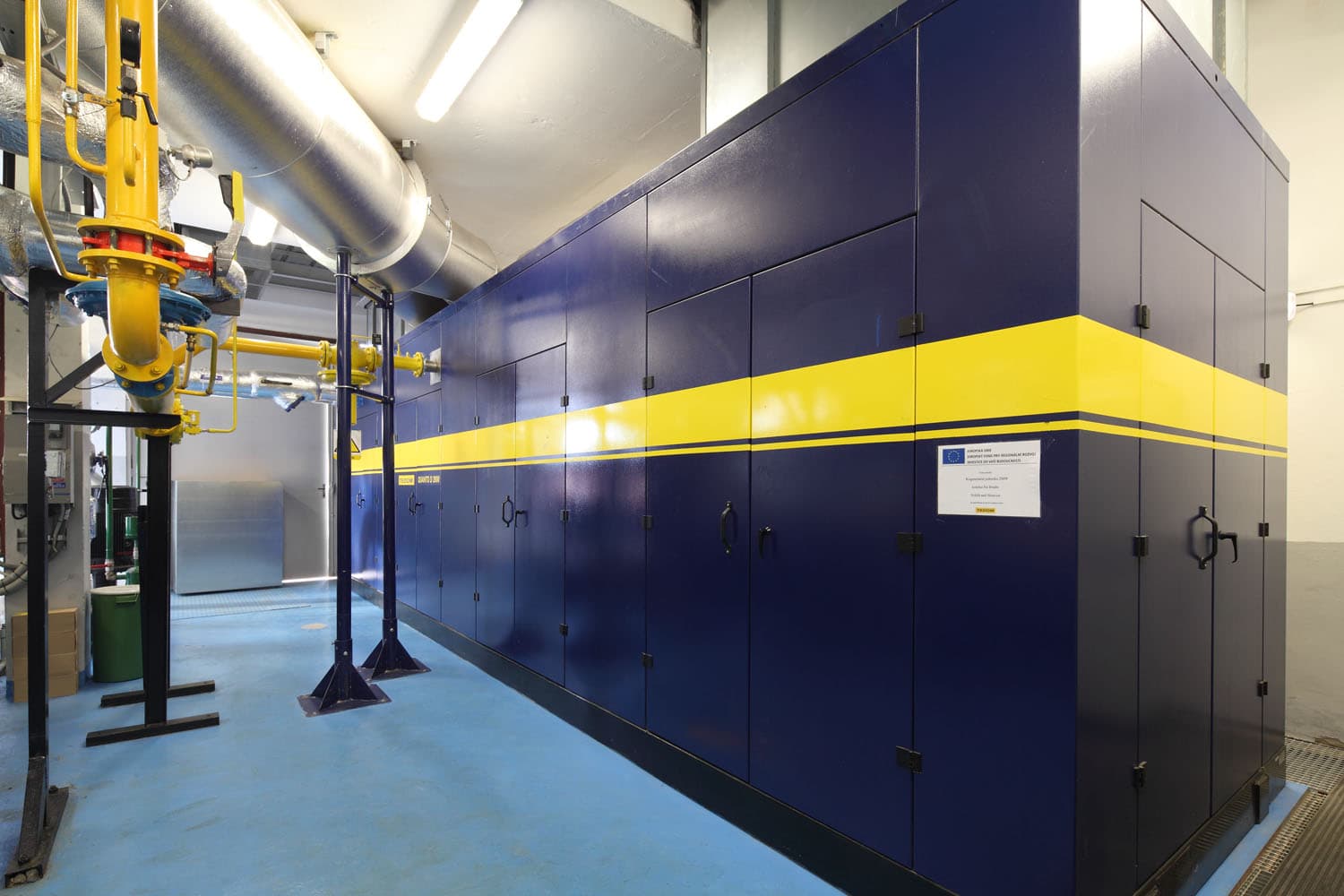
Czech companies have sent dozens of cogeneration units—facilities that produce electricity and heat together—to Ukraine, and are discussing further deliveries. For example, engineering and energy company Tedom will have delivered 60 cogeneration units to Ukraine from the start of the war through the end of this year. Tedom representatives said today that the company is discussing the supply of another 40 units. Brno-based GENTEC CHP delivered 30 cogeneration units between October last year and this summer and is preparing dozens more. The units are being installed mainly in hospitals, municipal boiler houses and other civil infrastructure buildings. Operators control them remotely.
Cogeneration units play a crucial role in the changes Ukraine’s energy sector needs. “Ukraine had to secure heat and energy very quickly for municipal boiler houses, hospitals and other parts of civil infrastructure. It managed to simplify customs clearance and administrative processes, making it easier to install the units and connect them to the grid. This means that the energy sector of one of Europe’s largest countries is being transformed and decentralised on a scale that is unprecedented so far,” said Jiří Janša, Tedom’s deputy sales director.
Read the full article HERE.
10. Small modular reactor factory could be built near an airport in South Bohemia
A factory for small modular reactors could be built near an airport in South Bohemia. ČEZ and UK-based Rolls-Royce SMR will build a small modular reactor (SMR) next to the Temelín Nuclear Power Plant. Construction is expected to begin in 2029 and be completed in 2034. Rolls-Royce SMR will also build additional service and development centres needed to ensure timely deliveries. This could create up to 3,000 skilled jobs in South Bohemia. Representatives of the South Bohemian Region, Rolls-Royce SMR and the ČEZ Group presented the opportunities for cooperation today.
“We want to be the first region in Europe to host a small modular reactor. As a region, we have several advantages. A nuclear power plant has been operating here for a long time, so there is a skilled workforce with expertise in the field. Secondly, this is the only place in Czechia approved for SMR construction. And thirdly, the airport has a huge amount of land ready for industrial development, all of it owned by the region, so we can offer it for something like an SMR factory,” said Martin Kuba (ODS), governor of the South Bohemian Region.
Read the full article HERE.
Energostat: electricity generation in Czechia
Data in this chart is also available in 15-minute resolution60min15min
Energostat: electricity generation in Germany
Data in this chart is also available in 15-minute resolution60min15min
Find more up-to-date charts and data on Energostat
Translation disclaimer
This article is a machine translation of the Czech original and has not yet been fully reviewed. In case of any doubt, please refer to the Czech version.
Sdílejte článek prostřednictvím:
Topics:Energy Weekly
You might also like



23 October 2026, 14:38