2 August 2026, 17:40
Fuel unloading completed at Dukovany. Unit 3 faces demanding outage

ČTK
30 July 2026, 09:01
This article is a machine translation of the Czech original and has not yet been fully reviewed. In case of any doubt, please refer to the Czech version.
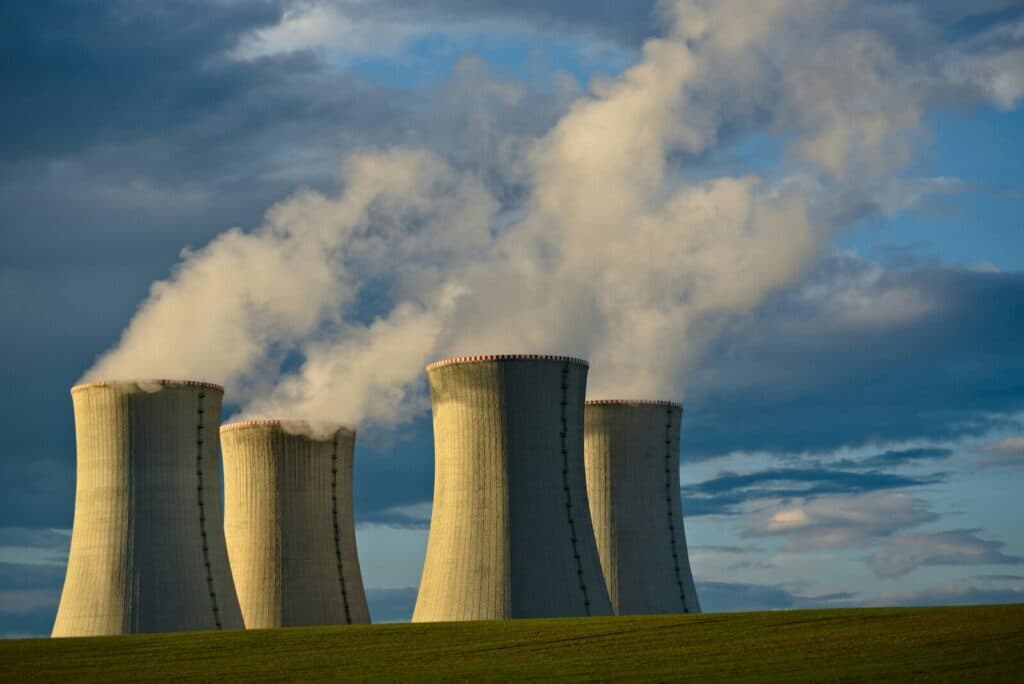
Fuel unloading from the reactor of the planned-outage Unit 3 at the Dukovany Nuclear Power Plant has been completed. During the outage, which began on 17 July, energy workers will replace part of the nuclear fuel and carry out hundreds of inspections, tests and investment projects, plant spokesperson Radek Doležal said.
“Completing the fuel unloading is an important outage milestone. It allows us to begin a number of demanding maintenance and investment works on equipment that is inaccessible during normal operation. All activities are aimed at ensuring that the unit continues to generate electricity safely and reliably in the years ahead,” said Roman Havlín, director of the Dukovany Nuclear Power Plant.
During the outage, energy workers replace around one-fifth of the fuel assemblies, but all of them must be unloaded to enable the other work. “The fuel assemblies are then placed in the spent fuel pool, where they remain during the work carried out with a reduced water level in the reactor. This provides space, for example, for maintenance of core cooling system valves or inspections of selected primary circuit equipment,” Doležal added.
According to him, this year’s outage of Unit 3 is among the most technically demanding in recent years. In addition to the standard replacement of part of the fuel and an extensive inspection programme, it also includes refurbishment of residual heat removal systems, cleaning of another steam generator, upgrades to the electrical protection systems of safety switchboards, replacement of cabling reaching the end of its service life, modifications to long-term heat removal systems and a ten-year inspection of a diesel generator.
In August, the neighbouring Unit 4 will also be shut down for around a month due to work on equipment shared by both units. The plan is for a similar simultaneous outage of two units at Dukovany not to be repeated until 2032.
ČEZ Group’s nuclear power plants have gradually moved to extended fuel cycles in recent years. Since 2024, the standard at Dukovany has been a sixteen-month fuel cycle, with units operating for 14 months between outages followed by an outage lasting more than a month. Temelín will complete its transition to an eighteen-month fuel cycle this year. The aim is to increase overall electricity generation, use nuclear fuel more efficiently and reduce strain on the technology.
Temelín and Dukovany generated a combined 32,066 terawatt-hours (TWh) of electricity last year, of which Dukovany accounted for 14,68 TWh. So far this year, the Dukovany plant has supplied 8,577 TWh of electricity.
The four Dukovany units were commissioned between 1985 and 1987. According to ČEZ estimates, they can operate for up to 80 years from their commissioning, i.e. until 2065 to 2067. Two additional units at Dukovany will be built by South Korea’s KHNP.
Sdílejte článek prostřednictvím:
You might also like
2 August 2026, 08:21
31 July 2026, 19:49