27 July 2026, 14:24
Heat and Calm Winds Send Electricity Prices Soaring. Czechia Sees Evening Peak Above EUR 692/MWh

Martin Voříšek
25 June 2026, 06:34

This article is a machine translation of the Czech original and has not yet been fully reviewed. In case of any doubt, please refer to the Czech version.
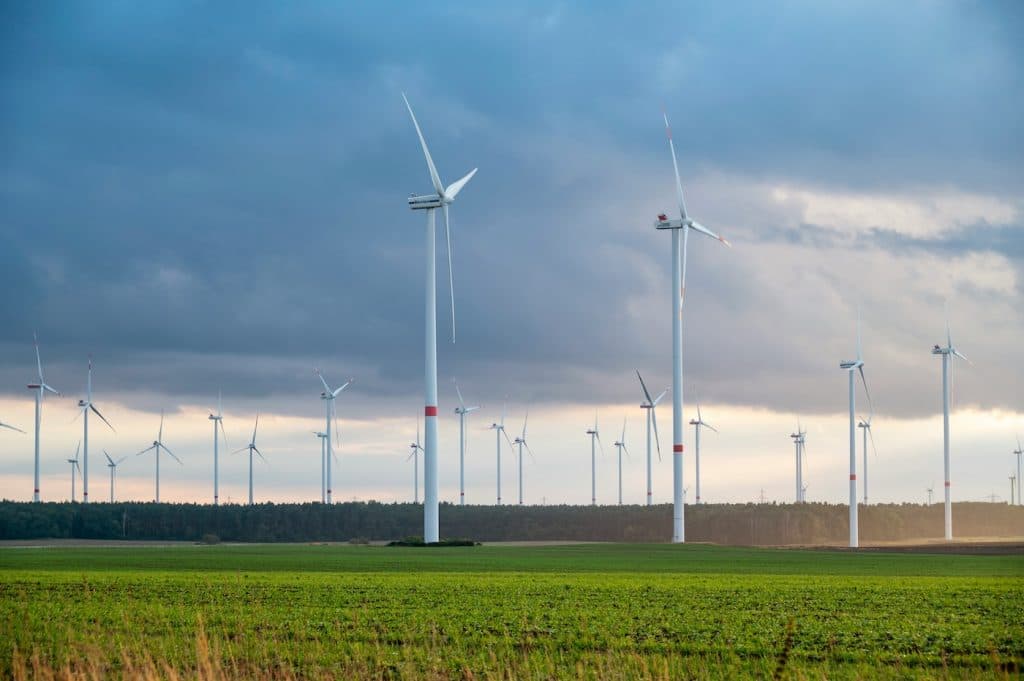
In recent days, European electricity markets have shown the opposite side of summer to that which solar investors have become accustomed to in recent months. Instead of midday drops in spot prices into negative territory, attention is being drawn to extreme evening peaks. In Czechia, prices rose above EUR 692/MWh on Wednesday, and the market expects similarly tight conditions on Thursday. The main reason for the sharp price increase is a combination of high temperatures, rising consumption due to cooling demand and weak wind power generation. While the prevailing weather over much of Europe supports solar generation, it also curbs output from wind farms. This raises electricity prices particularly during the hours when solar output is rapidly declining while demand remains high. High solar generation and low wind power output are clearly visible in the chart of electricity generation in Germany.
The situation is also being complicated by the availability of conventional generation sources. In France, some nuclear units had to reduce output due to high river water temperatures, which limit cooling options. According to Bloomberg, the restrictions affected, for example, the Nogent 2 and Bugey 3 units, while Golfech 2 was offline. Switzerland's Beznau nuclear power plant also reduced output. Higher temperatures additionally reduce the efficiency of some gas-fired plants and may also constrain transmission line capacity.
Tightness was also evident in Great Britain. The system operator, NESO, issued an exceptional summer warning over low capacity reserves for Wednesday evening. It initially expected a reserve shortfall of around 1.4 to 1.9 GW and called on generators to offer additional capacity. The warning was later withdrawn, but it nevertheless showed that extreme weather is no longer an issue confined to winter peaks.
Evening prices break away from midday levels
The strongest price signal came in the evening hours. In Germany, according to EPEX Spot data, electricity traded on the intraday market for as much as EUR 868/MWh on Wednesday evening; in France, prices exceeded EUR 414/MWh; and in Great Britain, evening contracts reached around £426 per MWh. French gas-fired generation climbed towards 5 GW on Wednesday, its highest level since April. Spot market prices were also record-high in Czechia. According to market data, prices rose above EUR 600/MWh on Wednesday evening. Crucially, this contrasts with midday hours, when solar generation continues to keep prices lower. The spread between midday and evening is becoming one of the most important signals for investment in short-term flexibility.
For battery storage, this is precisely the type of situation on which part of its business model can be based. The greater the difference between prices during high solar generation and the evening peak, the greater the scope for arbitrage. The Czech BESS market is still at an early stage, but licensed capacity is already approaching 40 MW, while projects totalling hundreds of MW are under construction or in advanced preparation.
Good news for solar power plants
The current wave of high prices is also unusually favourable for solar power plants. In recent months, they have primarily faced low capture prices because they generate precisely during the hours when day-ahead market prices fall the most. This spring has shown how quickly the problem can deepen. According to Energostat data, the capture price for Czech solar power plants reached just EUR 19.5/MWh in April. In May, after an extremely weak start to the month, it rose to EUR 41/MWh, while in June it has so far stood at approximately EUR 53.6/MWh. That is higher than in June last year, when it was roughly EUR 35.6/MWh, and at the same time substantially better than in months marked by sharp midday price drops.
This does not mean that the problem of solar revenue cannibalisation is disappearing. Rather, it shows that during periods of high demand and constrained output from other sources, solar generation can have substantially greater market value. However, the hourly profile remains decisive. If high prices only arrive after sunset, solar power alone benefits from them only to a limited extent.
For Czechia, this is both a warning and an investment signal
For the Czech energy sector, the current price episode is important for two reasons. First, it confirms that summer peaks may become more systemically significant in the future than they were previously. With growing use of air conditioning and the gradual electrification of consumption, pressure on the system will not be solely a winter issue. Second, it is a practical argument for faster development of flexibility. Czechia faces the retirement of some coal-fired capacity, is preparing new gas capacity, is considering a capacity mechanism and at the same time expects further growth in solar power. Without batteries, demand-side management and sufficiently flexible generation, similar price spikes will become more frequent. For storage investors, by contrast, this is another incentive to accelerate efforts to bring further facilities online, as the potential for price arbitrage may also soon diminish.Sdílejte článek prostřednictvím: