This article is a machine translation of the Czech original and has not yet been fully reviewed. In case of any doubt, please refer to the Czech version.
Electricity generation in the Czech Republic rose year on year by more than 1 TWh to 5.66 TWh in June. Growth was driven primarily by lignite-fired and nuclear power plants, while solar sources generated only slightly more than last year. Despite a hot end to the month, electricity consumption increased only marginally, with the main impetus for higher generation coming from the spot market and tight conditions in the region.
According to data published on Energostat, electricity generation in the Czech Republic reached 5.66 TWh in June. Compared with June 2025, when it stood at 4.51 TWh, this represents an increase of 1.15 TWh, or more than a quarter. This substantial year-on-year growth was not driven by renewable sources, but primarily by higher utilisation of conventional power plants.
The largest contribution to growth came from lignite-fired power plants, which supplied 1.44 TWh of electricity to the grid. This was around 660 GWh more year on year. Nuclear power generation increased from 2.12 TWh to 2.52 TWh, or by just under 400 GWh. Together, these two sources account for the overwhelming majority of the overall year-on-year increase in generation.
Gas-fired sources also recorded an increase in output, rising from 240 GWh to 301 GWh. In absolute terms, however, their contribution remained significantly smaller than that of coal and nuclear power. Hydropower plants, by contrast, generated less than last year, with their output falling from 121 GWh to just under 100 GWh. Biomass generation declined from 241 GWh to 210 GWh.
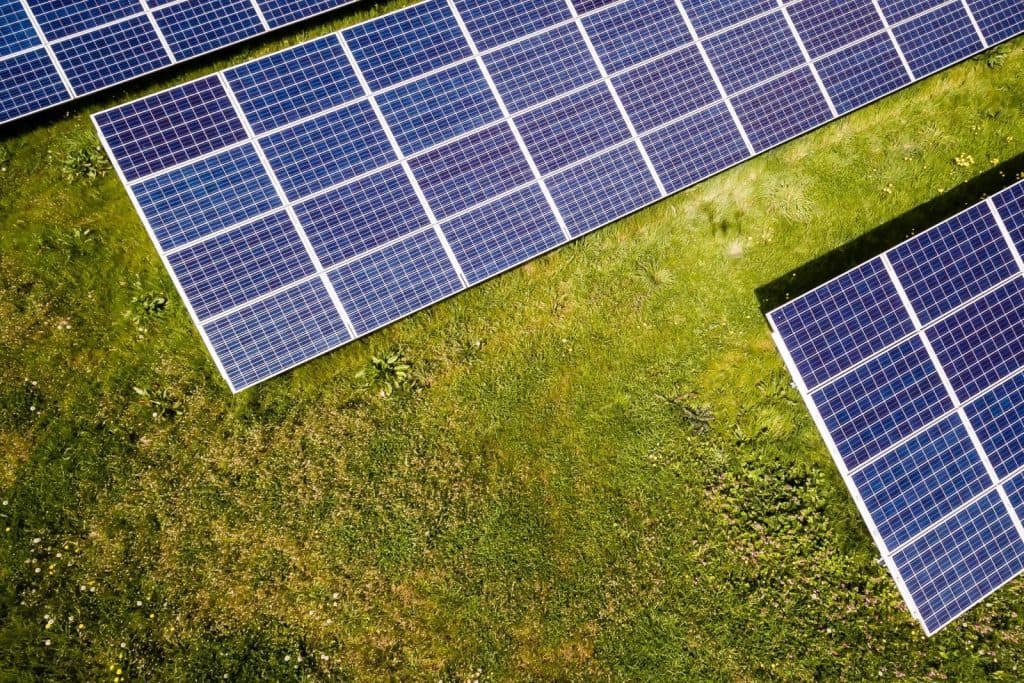
Solar power plants supplied 677 GWh of electricity to the grid in June. Compared with June last year, when their output was 655 GWh, this was only a modest increase. Following May's record output of 701 GWh, Czech solar remained at a very high level in the power mix, but it did not drive the increase in overall electricity generation in June.
Electricity consumption in the Czech Republic reached 4.84 TWh in June. Compared with June last year, it increased by only around 120 GWh. The monthly figure therefore does not appear dramatic, although demand was noticeably higher during hot days than in cooler parts of the month. This is also consistent with data from Amper Meteo, according to which grid consumption increased sharply during the heatwave, although part of the electricity used for cooling was simultaneously covered by on-site photovoltaic generation.
Regional market affected by low wind and nuclear constraints
The main cause of high spot prices was therefore not consumption, but regional conditions. Germany repeatedly experienced weaker wind power generation during June. When solar power output dropped rapidly in the evening, demand had to be met by more expensive dispatchable sources.
The strongest price signal came during Wednesday evening hours last week. According to EPEX Spot data, electricity traded on the intraday market in Germany for as much as 868 EUR/MWh on Wednesday evening; in France, prices exceeded 414 EUR/MWh, while evening contracts in the United Kingdom reached around GBP 426 per MWh. Spot market prices also hit records in the Czech Republic, approaching 700 EUR/MWh.
The situation was further complicated by the availability of conventional sources in Europe. In France, some nuclear units had to reduce output due to high river water temperatures, which limited cooling options. A similar restriction also affected Switzerland's Beznau nuclear power plant. Market tightness was also evident in the United Kingdom, where the system operator warned of a lower capacity margin during hot days.
June's developments showed that summer price spikes may become a more significant issue for European markets. It is not only a matter of high cooling demand, but of a combination of weather, generation availability, cross-border flows and limited system flexibility.
A signal for the Czech Republic ahead of the planned coal phase-out
For the Czech Republic, June's developments are important above all in the context of the planned phase-out of coal-fired capacity. Lignite-fired power plants in particular responded significantly to market conditions in June and helped increase generation at a time of tighter regional markets. As they are gradually phased out, a combination of new gas capacity, storage, demand-side management and cross-border trade will have to take over a similar role.
At the same time, the importance of battery storage is growing. The difference between low midday prices during high photovoltaic generation and evening peaks creates scope for arbitrage as well as ancillary services. If installed solar capacity continues to grow, then without faster development of flexibility, both the number of hours with very low prices and episodes of extremely expensive electricity after sunset will increase.