27 July 2026, 14:24
Government shrinks area for wind power acceleration zones

ČTK
27 July 2026, 14:24
This article is a machine translation of the Czech original and has not yet been fully reviewed. In case of any doubt, please refer to the Czech version.
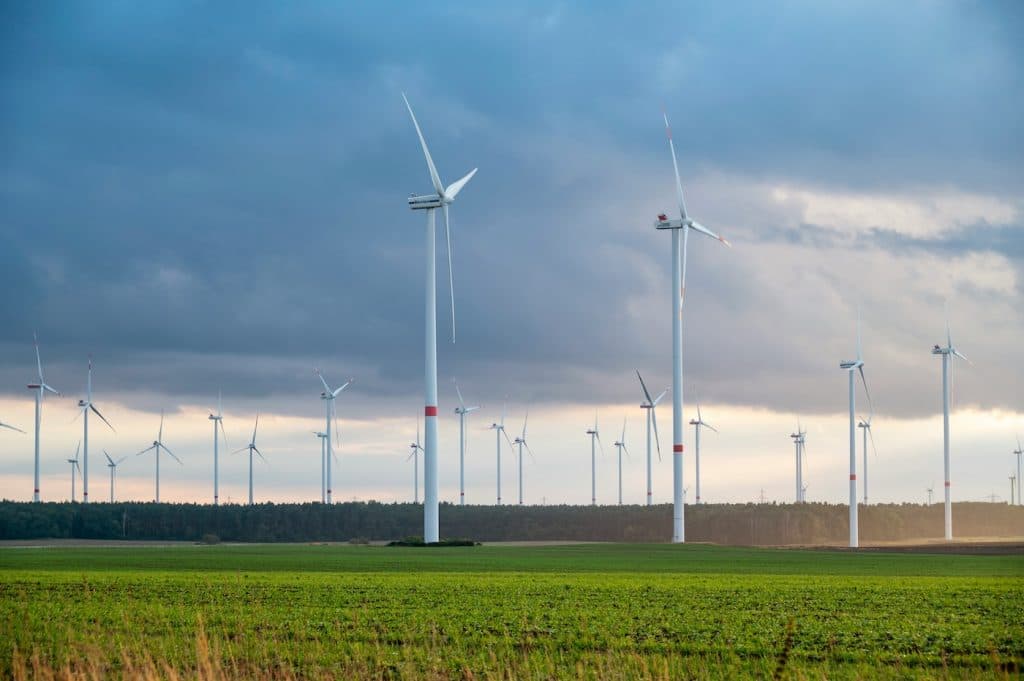
The government today approved the designation of so-called acceleration zones for renewable energy development on a significantly smaller scale than envisaged by the plan prepared by the previous government. The cabinet reduced the area earmarked for potentially accelerated permitting of wind power plants to around 11 percent of the originally proposed area, Industry and Trade Minister Karel Havlíček (ANO) said at a press conference after the meeting.
Havlíček said the previous government had committed to the European Union to designate acceleration zones covering 2685 square kilometres. According to him, the current government reduced the area to 297 square kilometres. Of the 110 locations originally identified, 61 remain, including 49 for wind power plants and the rest for photovoltaic plants. Some locations have been reduced in size.
"We have been working on this since our first day in government," Havlíček said, adding that they had dealt with thousands of comments from regions and municipalities.
The minister stressed that the cabinet had opted for a minimalist approach. He said acceleration zones do not automatically mean the construction of wind or photovoltaic plants, but merely allow for a faster permitting process. According to him, every project will still have to undergo standard permitting procedures.
"Municipalities remain parties to the building permit process, and construction will take place only where there is agreement and local support," Havlíček said.
According to him, the government also had to retain at least a limited extent of acceleration zones, as failure to meet the commitment to the EU would expose Czechia to fines running into billions through the National Recovery Plan.
The minister welcomed the fact that the cabinet had managed to find a solution which, in his view, significantly limits potential wind power construction compared with the original plan while still fulfilling the European commitment. According to Havlíček, the cabinet discussed the reduction of the original acceleration-zone plan with the European Commission.
Environmentalists from the Hnutí Duha movement have long criticised the government's decision. "Removing some of the acceleration areas, reducing the size of many others and introducing nonsensical restrictions – such as height limits for wind power plants – has meant that the acceleration areas will in practice fail to achieve the target Czechia has set," the movement's energy expert Jan Rovenský said in a press release. He added that these sites, which have the least conflict with other public interests, will be more difficult to use than other locations.
The Modern Energy Association said in a press release that it welcomed the government's and responsible ministries' adjustment of some of the originally proposed conditions during the preparation of the documentation.
"However, acceleration areas must not create the impression that wind and solar power plants can be built only in a few locations marked out by the government. Czechia needs to accelerate renewable energy development across the country," said the association's vice-chairman Marek Lang.
According to him, the zones can speed up permitting, but other projects outside the designated areas also need a faster approach that respects local needs.
Štěpán Chalupa, chairman of the Chamber of Renewable Energy Sources, said the proposal currently brings more harm than benefit. He particularly criticised the extent of the acceleration areas, restrictions on construction and the non-transparent way in which they were designated, which he said creates uncertainty and opposition.
Sdílejte článek prostřednictvím: