Licensed BESS capacity in Czechia continues to grow rapidly, nearing 40 MW. Who has already obtained a licence?

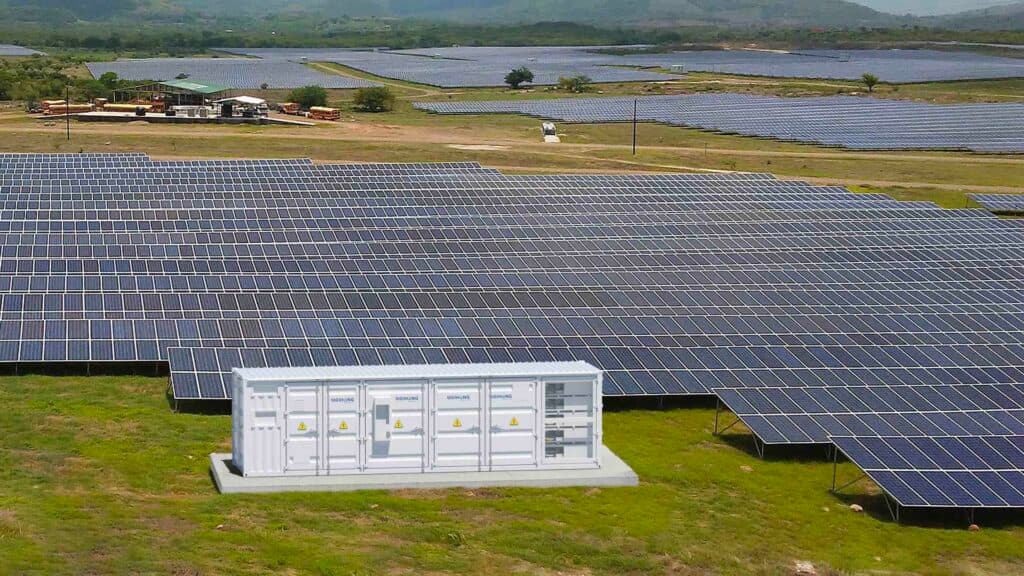
The Czech electricity storage market has rapidly moved from a phase of merely "announced plans" to real projects in operation. According to new data from the Energy Regulatory Office (ERÚ), facilities with a combined capacity of almost 40 MW already hold electricity storage licences. A further 27 licence applications are in administrative proceedings, indicating that the first wave of larger BESS projects is only beginning to gather pace.
According to the regulator's data, nine active electricity storage licences, with a total installed capacity of 39,7 MW, were registered at the beginning of June. The largest newly licensed facility is EC Velká Bíteš, with a capacity of 12,45 MW. It is also the largest licensed standalone battery to date. The second-largest installation is BESS Vítkovice in Ostrava, with a capacity of 10,345 MW. A more sizeable project has also been licensed in Kutná Hora, namely BESS Kutná Hora – Perštejnec, with a capacity of 4 MW.
The remaining new licences are for smaller but still industrially relevant storage facilities with capacities of several MW. Three projects with a combined capacity of 5,75 MW are registered in Kosořín in the Pardubice Region. Other batteries are appearing, for example, in Dívčice, Říčany and Staré Město.
| Name | City | Installed capacity |
|---|---|---|
| BESS SG SAS | Staré Město | 2,000 MW |
| BESS Hydrogreen | Kosořín | 2,300 MW |
| EI BAT1 | Kosořín | 1,150 MW |
| BESS VÍTKOVICE | Ostrava | 10,345 MW |
| BESS Kosořín | Kosořín | 2,300 MW |
| BESS – Kutná Hora, Perštejnec | Kutná Hora | 4,000 MW |
| EC Velká Bíteš | Velká Bíteš | 12,450 MW |
| BESS Mydlovary | Dívčice | 2,580 MW |
| BESS TSKA Říčany | Říčany | 2,580 MW |
Dozens more applications are in administrative proceedings
As of 5 June, a further 27 applications for electricity storage licences were in administrative proceedings. Applicants include E.ON Energy Solutions, PREenergo, SUAS BESS and several project companies apparently focused on standalone energy projects.
The list of licence applications itself does not include the capacity of individual projects, so it is not possible to calculate the future increase in installed capacity from it. However, the number of applications alone shows that the number of licensed storage facilities is likely to rise rapidly in the coming months. This development is primarily linked to new legislation introduced last year. Lex OZE III introduced separate provisions for storage into the Energy Act and removed some of the uncertainties that had held back project preparation. Licences from the ERÚ are among the first visible consequences of this change.
The market responds to negative prices and demand for flexibility
The emergence of larger batteries comes at a time when negative electricity prices are repeatedly appearing on the Czech day-ahead market. These occur particularly around midday, when photovoltaic generation is high and consumption is low. This price development creates scope for commercial flexibility, with batteries purchasing and storing electricity at low prices and supplying it back to the grid during hours when electricity prices are higher.
However, project economics do not rest solely on day-ahead market arbitrage. Balancing services also play a role, although both ČEPS and industry associations warn that the revenue potential of balancing services is declining rapidly.
In the European context, this is not an exceptional trend. Battery storage is growing rapidly in Germany, the United Kingdom, Italy and Spain. The reason is similar everywhere: a rising share of variable generation, more frequent price extremes and the need for rapidly available flexibility without the lengthy permitting procedures typical of conventional generation assets.
For Czechia, this is the start of a bigger change
The nearly 40 MW currently licensed remains a small volume relative to the entire Czech electricity system. However, the significance of these projects lies primarily in confirming the emergence of a new category of assets that has until now been virtually absent from the Czech energy sector.
Considerably larger battery storage facilities are in preparation. The market is discussing projects ranging from tens to hundreds of MW, including major plans by Second Foundation, Sev.en and SUAS Group. If at least some of these enter operation, the role of batteries could change within a few years from a marginal technology to a completely commonplace element of the system.
This is also important for the Czech energy sector because of photovoltaics. Without storage and demand management, every additional gigawatt of solar capacity will increase pressure on midday prices and reduce the realised value of generation.