The European Commission has issued recommendations on how to remove barriers to the development of direct electricity purchase agreements, known as PPAs. The Commission expects PPAs to provide greater certainty for investors in renewable energy sources as well as more stable prices for offtakers. In Czechia, however, the market for long-term contracts linked to specific electricity generation assets remains very limited. Only a handful of concluded agreements are known from publicly available information. PPAs can nevertheless be key to securing bank financing for projects.
The Commission's recommendation follows the reform of the European electricity market and earlier efforts to remove barriers to renewable energy development. In it, Brussels confirms that long-term contracts should be one of the main instruments for financing new capacity, alongside forward markets and contracts for difference. While forward products primarily cover short- and medium-term hedging, the Commission says PPAs and bilateral contracts for difference should offer long-term price stability.
This is particularly important for projects not covered by operating support. When financing new wind or solar parks, banks need to see that a certain share of future generation has a secured offtake at a predictable, ideally fixed, price. Without such a contract, a project is more exposed to the risk of price changes on the day-ahead market and to quarter-hour periods of negative prices. PPAs are therefore not merely a tool for corporate ESG strategies, or socially sustainable corporate development, but are often a condition for obtaining financing.
The PPA market in Europe is growing unevenly
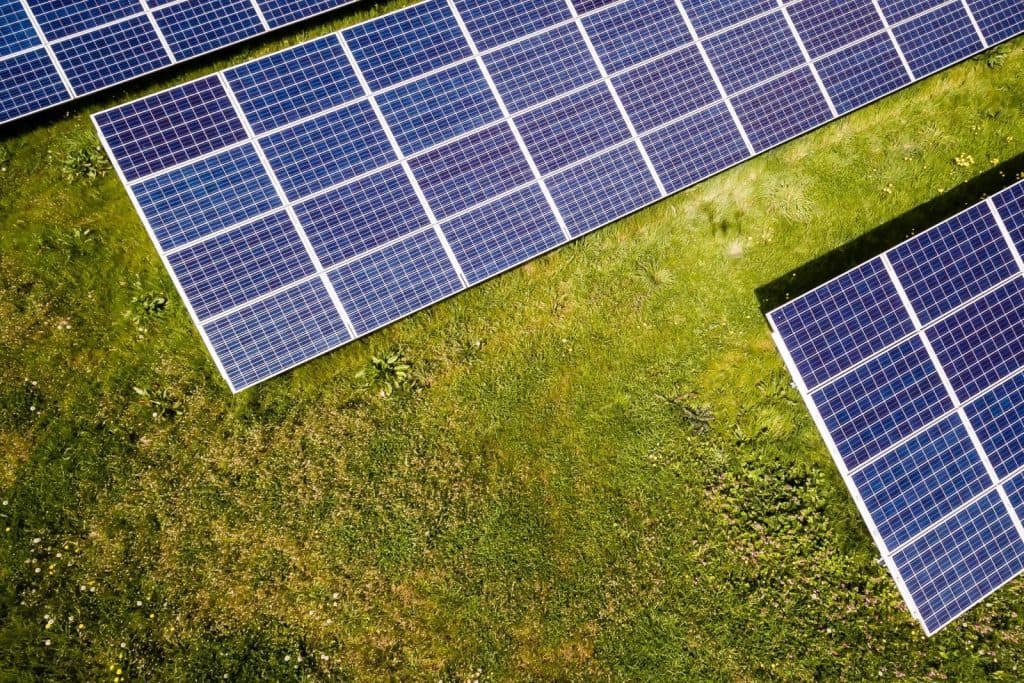
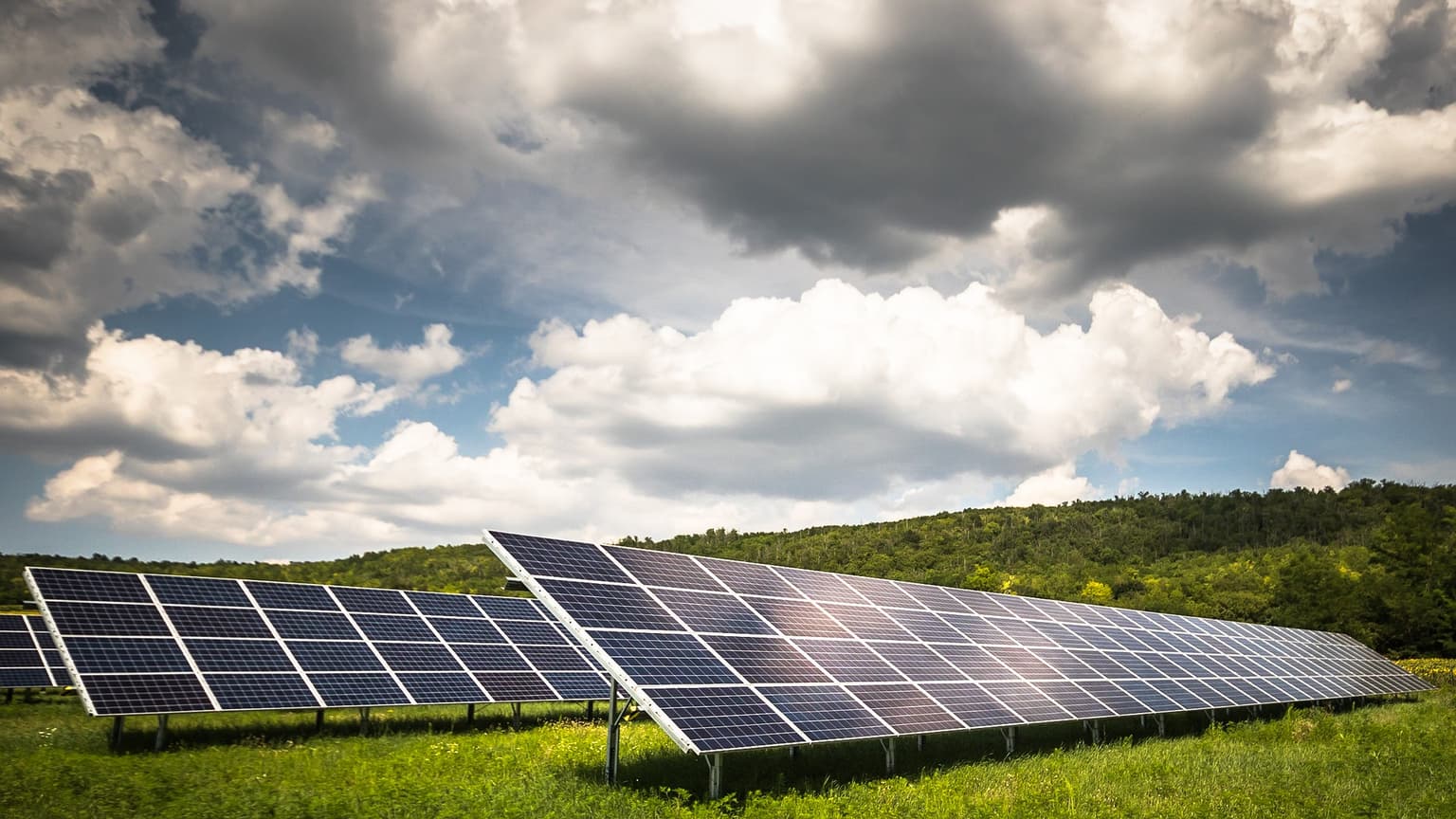 Solar power plant. Source: Pixabay
The Commission therefore recommends that Member States support projects through guarantees, remove barriers to market platforms for PPA trading, encourage multi-buyer contracts, and provide incentives for public institutions to enter into PPAs.
At the same time, however, the Commission acknowledges that regulation alone is not enough. The growing frequency of negative prices and the lower realised value of solar and wind generation
Solar power plant. Source: Pixabay
The Commission therefore recommends that Member States support projects through guarantees, remove barriers to market platforms for PPA trading, encourage multi-buyer contracts, and provide incentives for public institutions to enter into PPAs.
At the same time, however, the Commission acknowledges that regulation alone is not enough. The growing frequency of negative prices and the lower realised value of solar and wind generation during hours of high output complicate PPA development. This is precisely what is changing the nature of contracts: traditional pay-as-produced agreements are becoming riskier for both offtakers and generators, while structured products, aggregation, batteries, or combinations of PPAs and flexibility may play a greater role.
The Czech market has only a few visible examples so far
Only a very small number of PPAs linked to specific domestic generation assets have been concluded in the Czech Republic to date. The first corporate PPA in Czechia was identified in 2021 as a 20-year agreement between Ambient Energy and ŠKO-ENERGO for electricity from a
planned wind farm near the municipalities of Moravice and Melč in the Opava region. The project comprises four wind turbines and has expected annual generation of 26,3 GWh.
Another visible example is a
2025 agreement between ČEZ ESCO and Třinecké železárny. This is a three-year off-site PPA for 4,4 GWh of electricity per year from the 4,78 MWp Vrskmaň
solar power plant. For ČEZ ESCO, this was its first larger solar PPA, meaning supply from a specific asset located outside the customer's site.
Alongside physical contracts, virtual PPAs are also beginning to emerge. R
ezolv Energy has, for example, concluded agreements with companies including T-Mobile Czech Republic and Slovak Telekom, involving cross-border vPPAs. This model may be important for Czech offtakers precisely because it enables them to purchase green electricity from projects in countries where renewable capacity can be built faster and more cheaply.
For Czechia, PPAs are a substitute for missing operating support
The importance of PPAs for Czechia is growing as the state currently does not envisage operating support for new large-scale solar projects. For 2025 to 2027, the government regulation sets a zero volume for both auctions and green bonuses for photovoltaics. Investors must therefore combine investment subsidies, equity, market revenues and, potentially, PPAs.
The problem is that the Czech PPA market is developing more slowly than installed solar capacity, while the price profile of generation is deteriorating. Midday price drops and more frequent negative prices reduce the value of purely solar contracts unless they are supplemented by storage or another form of profile management. This may increase the importance of batteries, aggregation and hybrid projects combining multiple types of generation and consumption.
The Commission's recommendation is not legally binding, but it indicates the direction European policy on long-term contracts will take in the long term. For the Czech market, the key question is whether PPAs will become a standard part of financing for new generation assets or remain individual contracts used by just a few large companies. Without their broader development, building new renewable energy capacity will be more difficult in an environment without operating support.