Possible scenarios and risks for the development of the Czech power sector
In the coming period, the Czech power sector faces several serious risks, and several possible scenarios can be identified, one of which will ultimately materialise. Which one it will be depends on local conditions as well as the situation and trends in our surroundings and across Europe. The Czech Republic has an approved energy strategy, but in the two years since its update, almost nothing has been done to implement it. It is therefore worth examining the potential risks and scenarios in greater detail.
The current state of the Czech power sector
The previous parts of this series examined the potential of individual low-emission sources (wind, nuclear and photovoltaic) and the various paths that can be used to transition to a low-emission power sector. Let us now look at the situation in the Czech power sector. At present, the largest share of electricity is generated by plants burning domestic lignite, which supply nearly 50%. Gas-fired units add a few percentage points, meaning fossil-fuel sources provide slightly more than 50%. Another source is the nuclear units at the Temelín and Dukovany power plants, which supply around 35%. Renewable sources provide the remainder.
The Czech Republic is currently a net electricity exporter, with sufficient generation and capacity reserves. Its robust grid also helps ensure the transmission of electricity from northern to southern Europe and maintain stability in our region. Electricity storage options are considerably limited, so the required capacity must be covered at all times. This sees quite significant daily and seasonal changes, ranging roughly from 5.5 to 10.5 GW. Less capacity is needed at weekends and on public holidays, and demand also falls at night. Lower capacity is required in summer, while demand is high in winter. At present, coal-fired units provide just over 10 GW, gas-fired units around 2 GW and nuclear units more than 4 GW. Hydropower and pumped-storage facilities together have 2 GW. This covers demand with a substantial reserve. In recent years, net generation was 80 TWh and exports around 13 TWh, or roughly 16%.
The first turning point around 2022
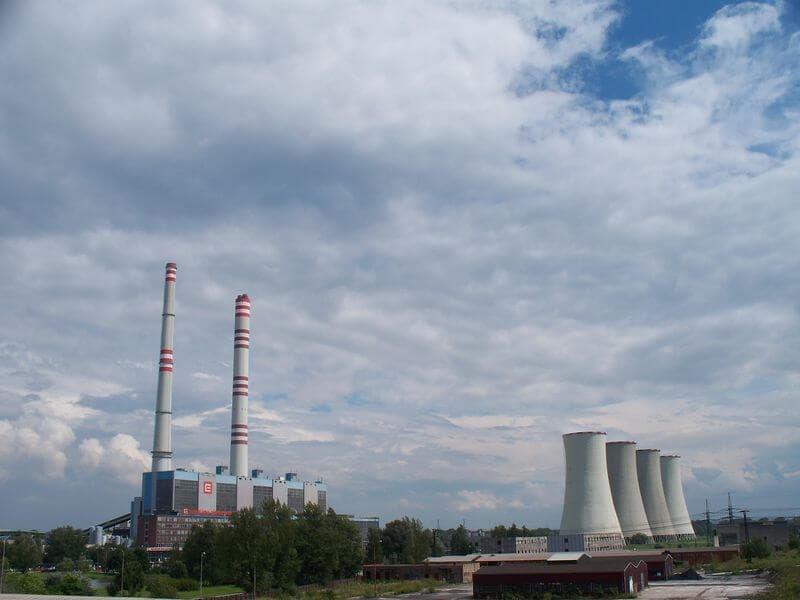
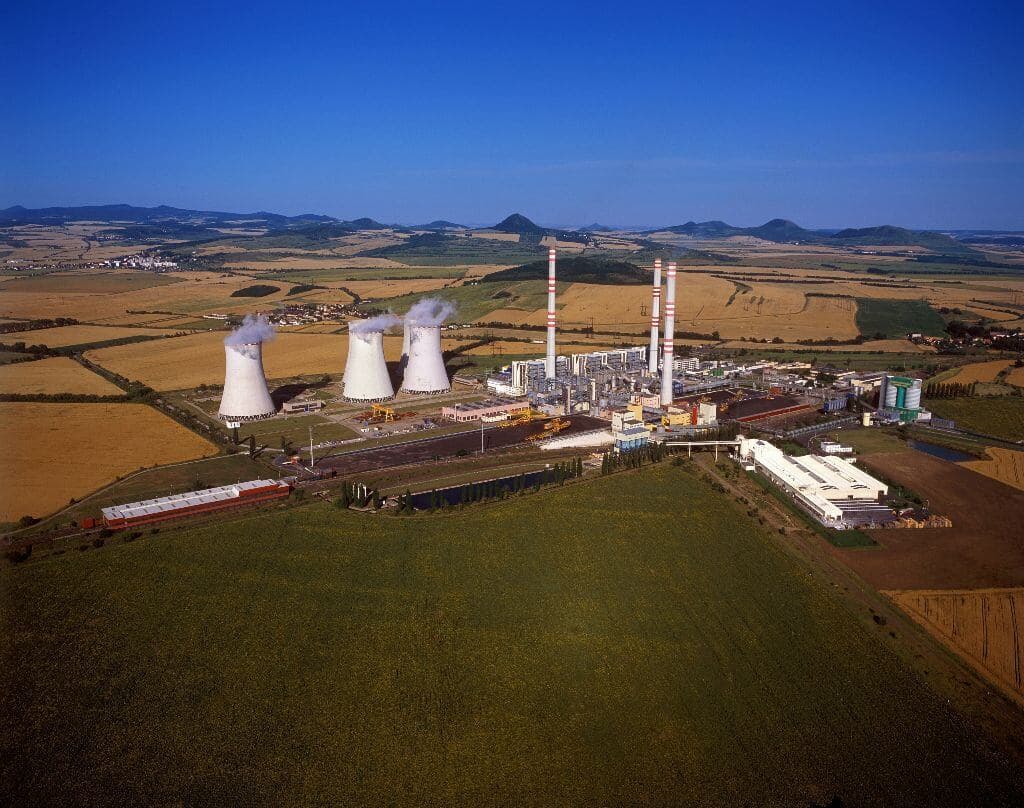
Unfortunately, the Czech Republic has not made use of its inherited advantage of a robust energy sector and its readiness to build low-emission sources. By delaying the necessary steps for so long, it has reached a situation where this may become a problem. A large share of Czech power plants is already relatively old, so the country is mainly drawing on what was built earlier. Only some coal-fired units have undergone environmental upgrades to a level that would meet the criteria for operation beyond 2022. For example, the Počerady power plant does not meet these criteria. Before that year, coal-fired sources could gradually see up to 40% of their capacity shut down. In that case, we would cease to be an electricity exporter and problems could arise in covering seasonal peaks.
The situation would not pose too great a problem if a similar process were not taking place among our neighbours at the same time. Common European rules apply to coal-fired sources. Germany will close all its nuclear power plants as well as a number of coal-fired sources. Coal-fired sources have also been or will be shut down in a range of other European countries. Across Europe, recent years have seen a decline in the construction of sources other than weather-dependent renewables. After 2022, there will therefore be surplus output when winds are strong and the sun is shining, but it will probably be difficult to import electricity, for example during a winter inversion, when electricity consumption in Europe is high and there is neither wind nor sunshine.
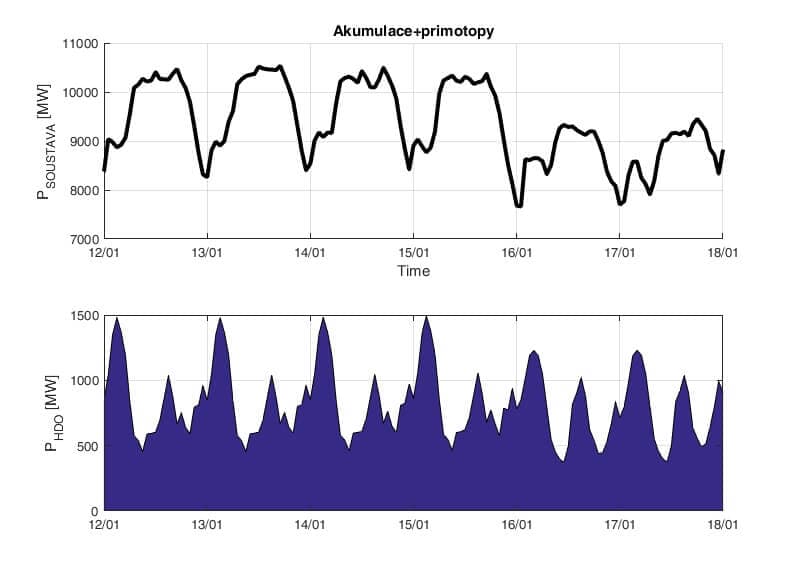
2022 is already very close, and the Czech Republic should start preparing for this period now in order to get through it without harm. It will be difficult to build any major units by then. Nor can a more widespread installation of smart elements enabling greater demand-side management be expected. However, it would be highly beneficial to make the most effective use possible of the existing ripple-control system (HDO). What can be achieved is the construction of a certain amount of decentralised smaller sources and some improvement in the grid's regulation capability.
The second turning point around 2035
In theory, Dukovany could be operated for more than 50 years, but this is highly unlikely, not least because of the attitudes of our neighbours. Its shutdown will therefore begin in 2035. The operating life of some remaining coal-fired sources will also end. By then, it will be necessary to secure replacement capacity from stable sources capable of contributing to grid regulation and stability. In this case, however, unlike the previous one, failing to take fundamental action and make investments would lead to a genuinely critical situation.
There is agreement in Europe that coal power needs to be phased down, and many European countries no longer count on coal power at all, including France, the United Kingdom, Sweden, Denmark and many others. In the Czech Republic, coal reserves accessible without breaching mining limits will also decline. It is therefore unlikely that the replacement of retired sources could be resolved with coal-fired units. As described in the previous parts of the series, the potential for renewables in the Czech Republic is limited. The replacement of ageing units will thus have to be provided predominantly by nuclear and gas-fired units, supported by decentralised renewable sources and smart grid management involving “prosumers” — consumers who are also decentralised electricity producers or contribute to energy storage.
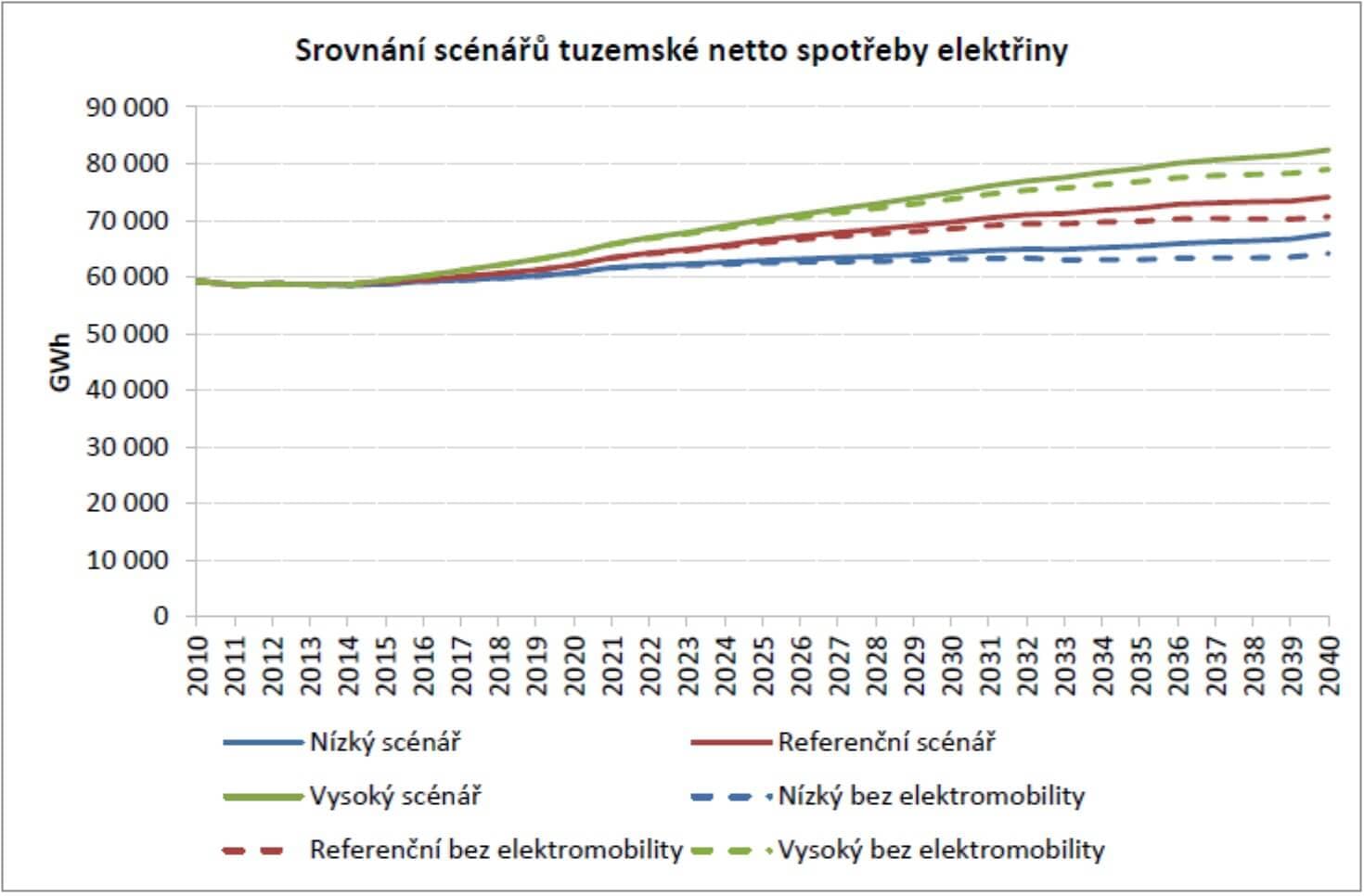
It should be stressed that both critical periods will occur if required capacity and consumption remain at their current level. If demand increases, for example through a rapid expansion of electric mobility or through industrial decarbonisation and pressure to reduce overall energy consumption using electrification, such as a more widespread deployment of heat pumps, the expected risks will deepen further.
Four scenarios that may occur
The options for electricity generation provided by geographical and other conditions in the Czech Republic were examined in detail in the previous parts of the series. They suggest four basic scenarios for the development of the Czech power sector. We will describe them in order of the extent to which they can help the Czech Republic reduce carbon dioxide emissions. The first would be a “Super-low-emission” scenario, which the Czech Republic would have to pursue if it wanted to make the maximum contribution to reducing emissions in Europe.
The second is the scenario referred to as “ASEK”, which would follow the objectives of the Updated State Energy Policy (ASEK) adopted two years ago. The third and fourth scenarios are “Second Bavaria” and “Rapid Second Bavaria”, which would occur if new nuclear units cannot be built and the power sector relies predominantly on gas-fired units and imports of wind power from northern Germany. The “Rapid Second Bavaria” scenario would occur if the Dukovany power plant were also shut down prematurely, for example under intense political pressure from Germany and Austria.
Super-low-emission scenario
As the overview of possible sources showed, the Czech Republic has relatively very limited potential for all low-emission sources except nuclear power. Wind, solar, biomass and hydropower each offer potential amounting to only a few percent of the required electricity generation. Together, they would therefore struggle to reach even half of the need. If the Czech Republic wanted to replace fossil-fuel sources relatively quickly and contribute intensively to low emissions in Europe, it would have to build several new nuclear units. This is particularly the case because some of them would also gradually have to replace the ageing Dukovany plant.
A prerequisite for implementing this scenario is operating Dukovany for at least 50 years. It is clear that completion of the first new unit cannot be expected before 2030, so they cannot help address the situation described above that will arise after 2022. At that time, the Czech Republic should have no problem with total electricity generation, even though the period of net exports will end. However, covering daily and annual load profiles and ensuring regulation may prove challenging.
For this reason too, intensive development of the grid's regulation capability will be needed, primarily by exploiting the potential of smart grids and smart management, although initially using the HDO system. Cooperation with neighbours and the construction of stable interconnections that would strengthen our role in electricity transmission and maintaining regional grid stability are also important. This would make it possible to share capacity backup and use generation surpluses at different times. Effective and substantial energy savings could also offset growth in electricity consumption resulting from rising living standards and the transition to electric mobility.
If we used our experience and tradition in nuclear power to expand it, for example in Poland, we could make a very significant contribution to reducing emissions in the region. The same would apply to possible cooperation with Slovakia in building new units at the Jaslovské Bohunice power plant, just as we are participating in the completion of the third and fourth units at the Mochovce power plant. At a later stage, more likely only after 2040, a decision could also be made, if needed, on the possibility of constructing an entirely new nuclear power plant. Likewise, if technologically available, small modular reactors could be deployed in district heating and in producing electricity and heat for industrial processes.
Such a scenario could in principle lead very quickly to a transition to low-emission energy, as happened in France, Sweden and the province of Ontario, and as is planned in the United Kingdom, Finland and Slovakia. However, it must be stressed that this scenario is highly unlikely under current political and social conditions. It would require very decisive and rapid steps to support all low-emission sources. This cannot be expected, especially in a situation where the groups that are the strongest advocates of emissions reductions are also radical opponents of nuclear energy. The scenario described would require genuinely strong support and consensus across society as a whole, roughly comparable to that surrounding Germany's Energiewende. Let us therefore look at the more likely scenarios.
ASEK scenario
Like the previous scenario, this one has a number of variants that fall within the specified ranges for individual sources. It too assumes that Dukovany will operate at least until the second half of the 2030s. At the same time, units will gradually begin to be built to supplement existing capacity and partly replace the capacity of the retiring Dukovany plant. Let us recall that, according to ASEK, nuclear power should provide between 46% and 58% of electricity generation in 2040, renewables between 18% and 25%, coal still between 11% and 21%, and natural gas between 5% and 15%.
The specific values depend very strongly on how quickly new nuclear sources can be built. A higher share of renewable sources could be enabled by faster progress in energy storage. Developments in overall electricity consumption, as well as any transition to electrified transport and industry, will also have a significant impact.
During critical winter months, the daily profile of required capacity on a working day varies between 8 and 10.5 GW; in summer months, it ranges between 6 and 9 GW. It is apparent that, depending on the period, baseload can be deployed at roughly 6 to 8 GW, while regulation must provide changes of up to around 3 GW. Nuclear units can in principle be used for regulation, and the mix would be sufficiently diverse if ASEK is implemented. All possible variants of the ASEK scenario are therefore in principle capable of covering these changes in capacity. The more effective the options for regulation through smart grids and storage become, the easier regulation will be.
Around 2022, nuclear power should have its current capacity of nearly 4.2 GW, coal-fired units should retain more than 6 GW, gas-fired units should have around 2 GW, and hydropower, including pumped storage, should account for roughly 2 GW. However, it must be taken into account that part of capacity will always be offline for maintenance, repairs or, in the case of nuclear units, refuelling. A comparison of required and available capacity therefore shows that the situation at that time with weather-independent sources will be right at the limit. Any further unexpected outage at that time could be a problem.
Second Bavaria
This scenario would occur if new nuclear units cannot be built. Retiring coal-fired power plants would need to be replaced. This can partly be done using renewable sources, but without effective long-term energy storage only to a very limited extent. This can also be seen in the example of Bavaria. Nuclear units there provided up to around 50% of electricity needs. They are now gradually being replaced by wind turbines in northern Germany and gas-fired sources in Bavaria. Developments in Bavaria will show what will happen in the Czech Republic if it abandons nuclear power.
It is highly likely that nuclear replacement in the Czech Republic would proceed very similarly to Bavaria. The dominant electricity sources would be gas and imports of wind power from northern Germany. The degree of dependence on electricity imports from Germany and gas primarily from Russia would in that case be very significant, although its extent would mainly be affected by energy storage opportunities and the ability to install renewable sources domestically. One possibility for reducing the use of gas-fired units when replacing retired conventional sources could be imports of electricity from coal-fired sources in Poland. However, it must be stressed that, unlike Bavaria, Germany will not feel responsible for us, and if necessary we will be the first whose supplies are curtailed. Germany also has a far stronger position in negotiating gas supplies from Russia.
This scenario will also materialise if, as in the past two years, almost nothing happens in the energy sector. As with the preceding scenarios, the turning point around 2022 will need to be addressed. In this case, however, there will be a particularly strong need to strengthen the integration of the Czech electricity grid with the grids of neighbouring countries.
Rapid Second Bavaria
An even faster transition to the dominance of gas in the Czech Republic and wind power from northern Germany would occur if Dukovany had to be shut down prematurely. In that case, however, the turning point for generation would be more dramatic in the middle of the 2020s, and the transition to grids with a high degree of regulation capability and intelligence, as well as intensive integration of our grid with European transmission lines, would need to be addressed more quickly. New gas-fired sources would also need to be built rapidly.
Specific recommendations for overcoming critical periods
If we want to meet the objectives of the Czech State Energy Policy and overcome the problematic periods described, we must take a number of measures — and relatively soon. Let us first look at the recommendations that would help us overcome the first turning point around 2022. It must be stressed that these measures are necessary under any of the scenarios mentioned.
For coal power, the completion of environmental upgrades should be supported for units that will operate beyond 2022. The required European criteria must be met. If environmental upgrades have been carried out at these plants and they exceed limits only in certain values that have been set overly strictly and whose potential harmfulness is debatable, it may be possible, together with other European countries, to seek a reassessment of whether they are necessary. Coal-fired power plants will continue to be used for some time, and this must take place in an environmentally acceptable manner. For a very limited period covering the transition, it may be appropriate not to operate some environmentally more problematic units but to retain them in strategic reserve for crisis situations until the necessary replacements are built.
Create conditions enabling the effective construction of decentralised renewable sources and elements supporting grid regulation and storage capability.
Use HDO and other available smart-management elements to support grid stability and flexibility.
Place great emphasis on maintaining all equipment and increasing its reliability in order to prevent problems such as those involving welds at nuclear power plants, or failures and fires at coal-fired units.
To ensure the replacement of generation sources and sustainable development of the power sector after 2035 under the ASEK scenario, it is necessary to:
- Take concrete steps to build nuclear units. If they are to be in place by the time Dukovany is shut down, action must be taken as soon as possible.
- Ensure the development and support of renewable sources in a decentralised and efficient form, as well as energy storage facilities.
- Introduce smart grids and Industry 4.0 elements to ensure effective cooperation between centralised and decentralised sources as well as “prosumers”.
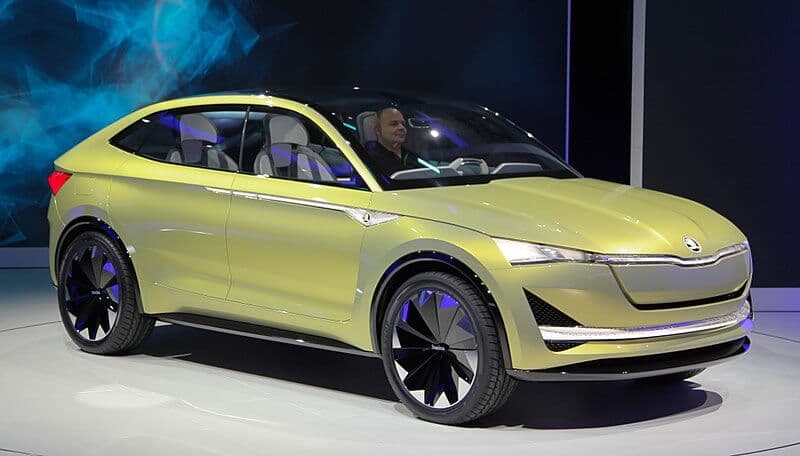
- Use effective opportunities for savings and integrate electric mobility and the electrification of industry into making the power sector more efficient.
- Work on integration into the European grid and make use of the potential for cooperation with both nearby and more distant neighbours.
Conclusion
We are now in a period when the Czech power sector needs to be renewed and rebuilt. As previous articles on individual sources have shown, there are companies in the Czech Republic that are successfully involved in producing energy equipment. A number of businesses operate in nuclear power, in manufacturing boilers and turbines for gas-fired sources and biomass power plants, and in producing components for wind and photovoltaic systems. Others are beginning to participate in the manufacture of batteries and smart-grid components. The Czech Republic is one of the largest car producers. It therefore cannot afford to remain on the sidelines of the move towards electric mobility. It is thus necessary to take its interaction with the electricity system into account.
Industry will need to gradually transition to 4.0 technologies. We therefore need to begin gradually developing elements of both Industry 4.0 and Energy 4.0. It is important for Czech industry to be involved as much as possible in this complex transformation of the Czech energy sector and to make use of its integration into international cooperation. The coming period is therefore a challenge not only for the Czech energy sector but also for Czech industry. Steps must be taken as soon as possible so that this challenge can be used positively to ensure environmentally and socially sustainable electricity for our society and thus for its standard of living.
Finally, it should be recalled that none of the above can be achieved without the necessary specialists and research in energy-related fields. Support for relevant universities and scientific research is therefore important. We must also think of our descendants and the period in the second half of this century, and support our participation in international fundamental energy research. We can build, for example, on strong traditions in fusion research and materials studies.
Note
This article is the fifth in a series examining the potential of individual energy sources in the Czech Republic, aimed at initiating a discussion on the future development of the Czech power sector, its pitfalls and its opportunities. This is particularly relevant given that several years have passed since the last update of the energy policy and, in practical terms, not much has been done in the Czech energy sector. At the same time, a number of risks are emerging, making it very important to gain an overview of energy developments and the state of the sector both globally and domestically. The first four parts covered possible paths to low-emission energy, photovoltaics, nuclear sources and wind energy.
Acknowledgements and disclaimer
I would like to thank all members of the Energy Commission of the Czech Academy of Sciences and other colleagues working on energy issues, especially Hynek Beran, for their discussions and input. Naturally, there are also a range of differing views among us and differing emphasis on various aspects.
It should be stressed that the article expresses the author's views and does not represent the official position of any institution with which he is affiliated.
The article was written for Osel.cz and OEnergetice.cz