
25 October 2026, 08:20
Loading...
Top 10 energy events of the past week
oEnergetice.cz
28 July 2024, 22:33
1. The number of balcony solar installations in Germany is rising rapidly, as is their capacity

Balcony solar installations are continuing to gain momentum in Germany this year. According to the regulator, more than 200,000 new systems of this kind were registered in the first half of the year alone. Around 300,000 new balcony solar installations were registered over the whole of last year. Their average installed capacity is also increasing.
Although ground-mounted and rooftop solar installations still account for the vast majority of the increase in solar capacity in Germany in the first half of this year, balcony solar is growing in popularity. Faster growth in this segment since April has also been supported by simpler registration in the central register of generating units. The next step is to draft legislation that would allow these systems to be connected without notifying distribution companies.
2. Europe on alert: Chinese wind turbines are gaining ground in the European market

Chinese wind turbine manufacturers are strengthening their position in the European market. This follows news of the first Chinese contract in Germany, reported by Reuters. European industry suspects China of unfair subsidies, while the Asian giant counters that the size of its domestic market allows Chinese manufacturers to cut costs. Could Europe face a similar reckoning to the one that followed the expansion of Chinese solar?
Although Chinese companies still have a relatively small share of Europe’s operating wind farms, their presence is growing. According to data from WindEurope, Chinese manufacturers account for less than one percent. However, Chinese orders over the past year totalled around 1.2 GW, a volume that previously took them ten years to build. Orders from China have added another 546 MW so far this year.
3. China continues to outpace the rest of the world in nuclear energy, starting construction on another reactor
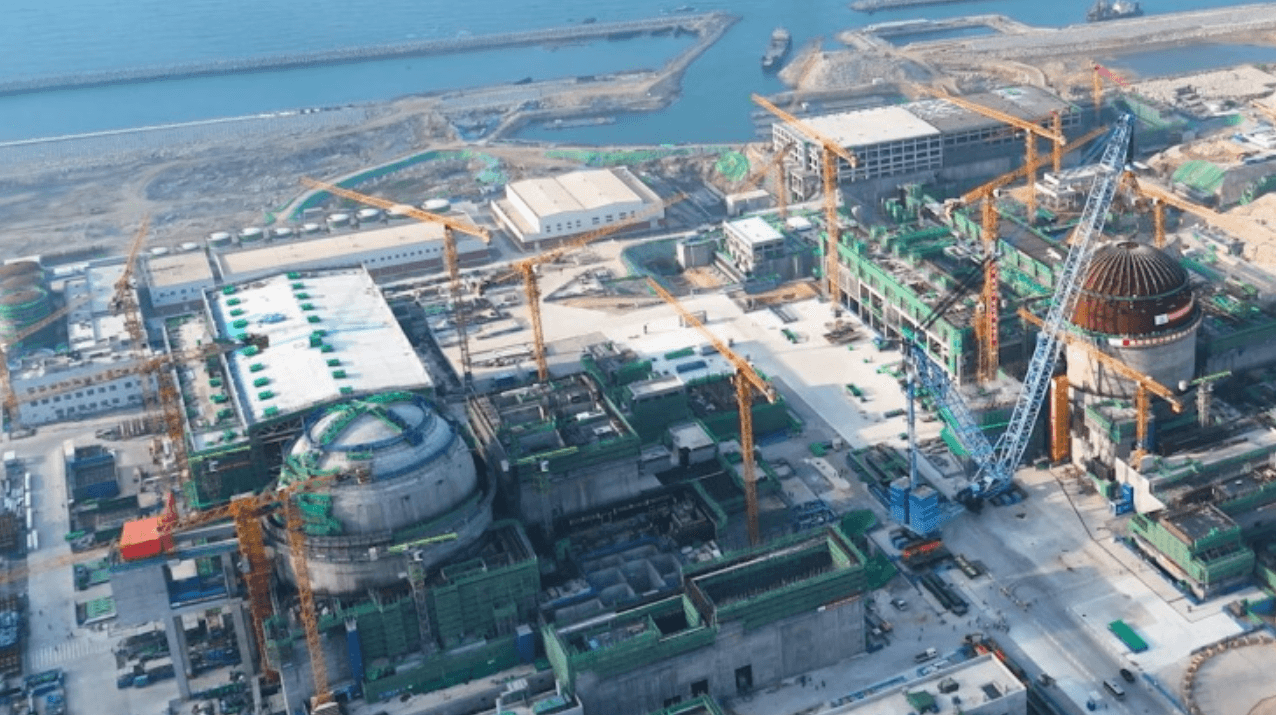
China has officially begun construction of the 1,250 MW Xudabao 2 CAP1000 nuclear unit. Once completed, the power plant in Liaoning Province will have four units in total, though not all will use the same technology. The country began construction of two Russian VVER-1200 units at Xudabao in 2021. They are due to enter commercial operation in stages between 2027 and 2029.
China National Nuclear Corporation (CNNC) announced that it had begun construction of another nuclear unit. On 17 July, construction workers began pouring concrete for the second unit at the Xudabao, also known as Xudapu, power plant in Liaoning Province.
4. Dutch regulator: Algorithmic electricity trading can lead to market manipulation

The growing use of self-learning algorithmic trading on wholesale energy markets could lead to market manipulation and price-fixing, according to a new report by the Dutch competition regulator.
The Netherlands Authority for Consumers and Markets (ACM), working with the Dutch Authority for the Financial Markets (AFM), conducted a market study on algorithmic trading on the spot electricity and gas markets.
5. Gas prices continue to fall as market awaits restart of Freeport LNG terminal

Natural gas prices on European wholesale markets fell further at the beginning of this week. Alongside stable pipeline supplies, the market is anticipating a recovery in liquefied natural gas (LNG) exports from the Freeport terminal, one of the largest LNG terminals in the United States. The terminal was shut down as a precaution early this month because of Hurricane Beryl, which hit the Gulf of Mexico region.
The Freeport LNG terminal, located on the coast of Texas, is the second-largest export terminal in the country. In recent years, the terminal has become notorious for a series of problems. One example is the explosion that knocked it out of operation in June 2022 for more than six months. Given the tight market at the time, the outage had an immediate and significant impact on gas prices in Europe as well.
6. Ursula von der Leyen sticks to her energy policy approach
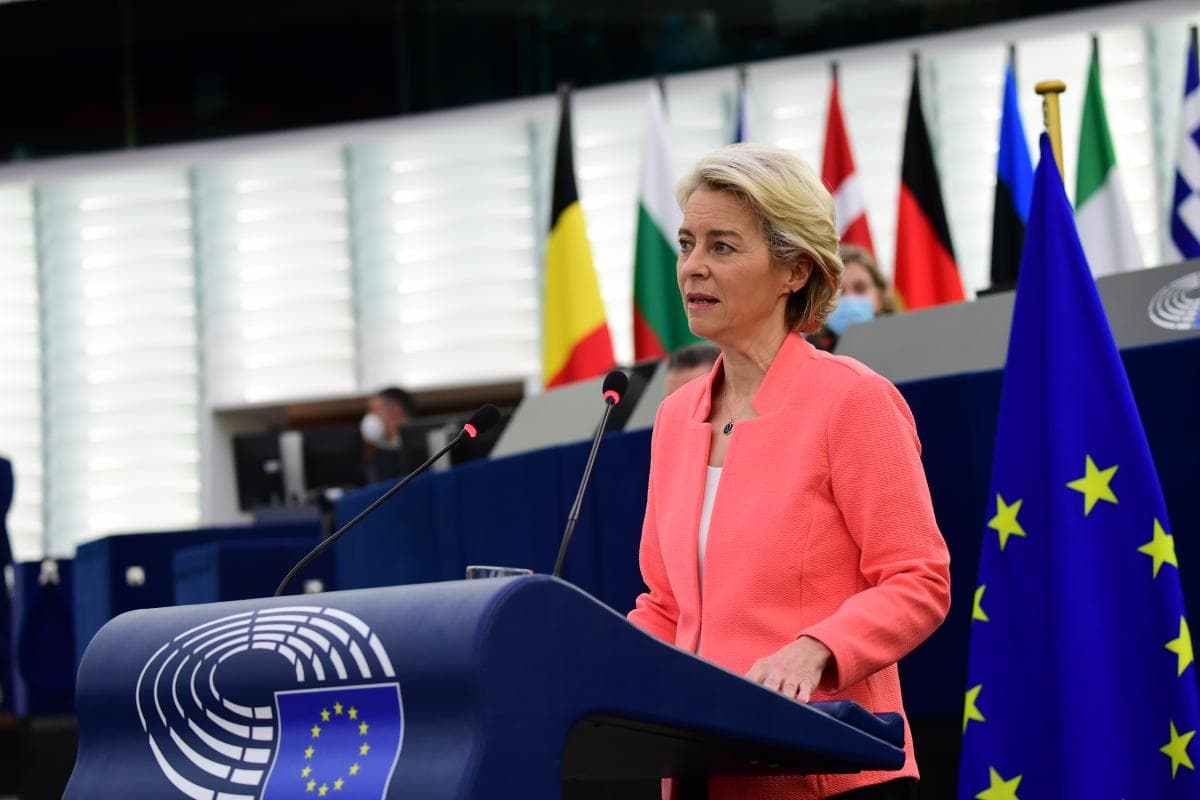
European Commission President Ursula von der Leyen, set to return for another term, reaffirmed her commitment to climate measures and clean industry in her so-called “political guidelines” ahead of the vote on her re-election. She also addressed agriculture.
Von der Leyen’s speech at the plenary session in Strasbourg began last Thursday shortly after 9 a.m. According to Euractiv, the speech, based on the “political guidelines”, was the result of several weeks of discussions with the Parliament’s main political groups. It was tailored to persuade MEPs across the political centre to support her bid, which they ultimately did.
7. Reuters: Poland’s first nuclear power plant is expected to cost USD 40 billion

Poland’s first nuclear power plant is estimated to cost USD 40 billion (CZK 936.7 billion). A senior US Department of Energy official told Reuters. The project’s financing structure has not yet been finalised, but the United States will participate through the US Export-Import Bank.
Warsaw plans to build six reactors with a combined capacity of six to nine gigawatts (GW) to reduce carbon emissions and gradually end its dependence on coal. The previous Polish government selected Westinghouse Electric in 2022 to build the plant. It is expected to be fully operational by 2040.
8. Prices in German rooftop solar auctions remain around EUR 90/MWh

Germany held its second auction of the year in early June to support the construction of solar installations on rooftops and noise barriers. The second round was very similar to the first, both in terms of the volume of projects submitted and the prices awarded. Average auction prices even edged up slightly, remaining nearly twice as high as for ground-mounted installations.
In the second auction this year for solar installations built on rooftops and noise barriers, the German regulator offered a total capacity of 258 MW. The volume of projects submitted was very similar to that in the first round, at nearly 362 MW. As in the previous round, competition was relatively healthy, with bids exceeding the auction volume by approximately 100 MW. However, the regulator had to exclude 19 bids from the auction.
9. Government approves updated hydrogen strategy

At its meeting in mid-July, the government approved the first update to the Hydrogen Strategy. The strategy highlights the need to import hydrogen into the country, the importance of producing hydrogen through electrolysis using renewable energy sources, and support for low-carbon hydrogen production, which its authors believe has significant potential in the Czech Republic.
The strategy, set out over 127 pages, develops one of the approaches to decarbonising the Czech economy: using low-carbon and renewable hydrogen in sectors that currently use hydrogen produced from fossil sources. This mainly concerns industry, as well as introducing hydrogen into new sectors such as energy and transport. The ministry is therefore aiming to reduce greenhouse gas emissions and support economic growth.
10. The Netherlands generated nearly half of its electricity from renewables last year
The Netherlands generated 48% of its electricity from renewable energy sources in 2023. The country is moving away from its traditionally fossil-fuel-based energy mix towards low-emission sources. The Statistics Netherlands reported the figures.
Renewable electricity generation rose by a full 21% in 2023 compared with the previous year. The share of electricity generated from fossil fuels fell, and the Netherlands exported more electricity to neighbouring countries than ever before.
In focus
New LNG projects in Europe are at risk due to low utilisation of existing facilities
There are currently 42 new LNG terminals planned in Europe, due to begin operation in 2025. However, these projects are threatened by the low current utilisation rate of existing regasification facilities, which stands at just 46%, according to an analysis by Platts Commodity Insights.
European regasification projects are expected to increase the continent’s capacity by 121 million tonnes of LNG per year by the end of the decade. Of the 42 projects scheduled to start operating in 2025, 11 are already under construction. However, with LNG demand falling and utilisation at existing terminals below 50%, questions are being raised about the risk of overinvestment.
Study outlines the benefits of district heating supplied by nuclear power plants
Nuclear power is much cleaner and has a smaller environmental impact over its life cycle than other energy sources for district heating in Finland and Europe. This is the conclusion of a study by VTT Technical Research Centre of Finland.
According to the study, 60 million people in Europe have their homes heated during the winter. This heating is provided by 3,500 local district heating networks. Heat production is a significant source of CO2 emissions, which is why decarbonising the energy system requires a wide range of alternatives to fossil fuels, VTT says.
Energostat: electricity generation in Czechia
Energostat: electricity generation in Germany
Translation disclaimer
This article is a machine translation of the Czech original and has not yet been fully reviewed. In case of any doubt, please refer to the Czech version.
Sdílejte článek prostřednictvím:
You might also like

23 October 2026, 14:38