
28 October 2026, 15:10
Loading...
Top 10 energy events of the past week in Czechia
oEnergetice.cz
31 March 2024, 18:00

1. Bavarian Isar 2 nuclear unit receives dismantling permit; minister regrets its shutdown
Bavaria’s environment ministry has issued a permit to dismantle and decommission another shut-down nuclear unit. The unit in question is Isar 2, with a capacity of 1410 MW, one of the last units still generating electricity in Germany. As dismantling gets under way, the minister expressed regret over the unit’s shutdown. It supplied almost a fifth of the state’s electricity consumption with low-emission power and could have remained in operation for at least another 10 years.
German company PreussenElektra announced that it had received the necessary approval from the Bavarian State Ministry of the Environment and Consumer Protection to dismantle the Isar 2 nuclear unit. The company submitted the required application in 2019, and approval has come less than a year after the unit was shut down. Isar 2, with a net capacity of 1410 MW, generated electricity from 1988 until 15 April last year. It was among the units that generated electricity until the very last day it was permitted to do so in Germany.
2. Uncertain outlook for European gas demand poses a challenge for US exporters
Europe’s efforts to reduce its dependence on Russian gas initially benefited the US liquefied natural gas (LNG) sector. However, long-term market trends and regulatory changes point to a decline in European demand as early as 2030. Scenarios based on the Fit for 55 and REPowerEU plans suggest a 29% to 52% reduction in supplies. The EU market is therefore unlikely to contribute to growth in demand for US LNG exports.
Russian gas supplies fell to less than 15% in 2023, triggering a sharp increase in demand for liquefied natural gas (LNG). As a result, the share of supplies from alternative sources to Europe increased. US suppliers benefited significantly from this trend: in 2023, the United States was Europe’s largest LNG supplier. Imports from the US reached 56.2 bcm, almost 50% of all LNG imports, while exports nearly tripled compared with 2023.
3. Above-average temperatures could affect conventional power plant operations as early as spring

Above-average temperatures, particularly those recorded in February this year, and the continued warm weather could affect the operation of conventional power plants as early as this spring. Different river temperature limits apply at different times of year, which could force thermal power plants to reduce output outside the traditionally critical summer months.
In Germany, the average air temperature in February was 5.1 °C above the long-term average. Higher air temperatures also lead to higher river temperatures. Some conventional power plants, whether coal-fired or nuclear, use river water for cooling. Limits are set for the temperature of each river at specific locations and during different times of year. To ensure these limits are not exceeded, power plants reduce their output or cut their intake of cooling water.
4. Rosatom officially begins construction of another unit at the Leningrad nuclear power plant
Russian construction workers officially began building another nuclear unit in the country with the first pour of concrete. The project is Unit 7 at the Leningrad nuclear power plant in northwestern Russia. The VVER-1200 unit, designed to operate for 60 years, is intended to help the country meet its target of generating 25% of its electricity from nuclear power by 2045. Russia is considering up to 30 new nuclear reactors at various stages of planning.
Russian energy company Rosatom announced the official start of construction work on Unit 7 at the Leningrad nuclear power plant. Engineers began pouring the foundations of the reactor building, which covers an area of 2,100 square metres. The entire concrete pour, which will use 5,500 cubic metres of concrete, is due to be completed in the summer. Russian President Vladimir Putin also attended the ceremony via video conference.
5. Czech Industry Ministry prepares support measures amid possible coal plant closures
The Czech government has begun preparing for the possibility that coal-fired power plants in the country could close earlier than expected. The Ministry of Industry and Trade is preparing legislation that would allow public support for continued electricity generation if necessary. David Hluštík of the ministry told the Czech News Agency (ČTK). Several energy companies have warned in recent weeks that coal-fired electricity and heat generation could soon become uncompetitive, and some are therefore considering closing their coal plants in the coming years. Coal currently accounts for around one-third of annual domestic electricity generation.
The government had previously expected coal-fired power generation in Czechia to end no earlier than 2033. “The situation in the energy sector has changed significantly in recent years when it comes to planning the phase-out of coal. Earlier plans were based on the assumption that using coal would be economically viable and that we could choose when to phase it out during the 2030s. Now, primarily due to the price of emissions allowances and falling wholesale electricity prices, coal is no longer profitable,” Hluštík said.
6. Czechia holds another auction to support wind power; four projects win
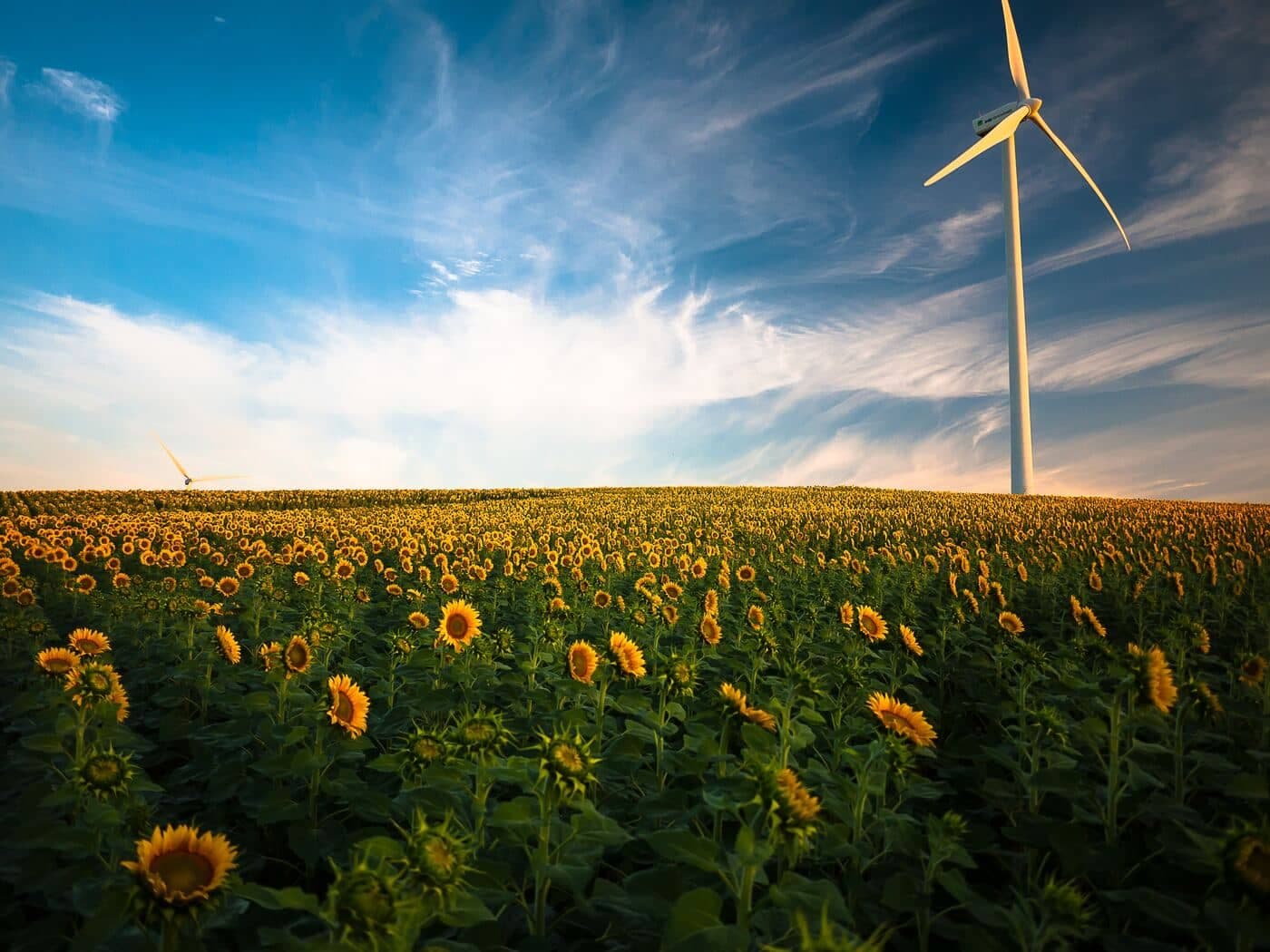
The Ministry of Industry and Trade has evaluated the second 2023 tender, which awarded operating support for wind power plants. Four projects with a total installed capacity of 24.75 MW were successful. Seven projects with a combined installed capacity of 44.05 MW entered the auction. This was the first time the auction’s capacity of 35.2 MW was exceeded.
To increase the share of renewable energy sources in final energy consumption, Czechia holds auctions in accordance with Act No. 165/2012 on supported energy sources, in which participants compete for 20 years of operating support.
7. Prague to buy and install 150 electric vehicle chargers in lampposts
The Prague City Technologies company (THMP) will buy and install 150 electric vehicle chargers in lampposts that it has already adapted for this purpose. It will use EU grants to fund the project. The company’s director, Tomáš Jílek, told the Czech News Agency (ČTK). The city is gradually upgrading selected lampposts to accommodate chargers; the first was installed on a trial basis in Vinohrady in 2022.
This week, THMP launched a tender for the equipment, with an estimated value of 15 million crowns excluding VAT. Jílek said the city plans to obtain most of the funding from EU funds, while company employees will carry out the installation, which should be relatively straightforward once the lamppost cables have been upgraded. After the tender is completed, installing the chargers will take a few months, he added.
8. Electricity imports to Ukraine rise sharply after Russian attacks

Daily electricity imports to Ukraine are rising and are set to reach their highest level since the start of the year today. A series of Russian missile attacks on critical infrastructure, which caused power outages in many regions, is to blame. Reuters reported the news, citing Ukraine’s energy ministry.
The attacks, the largest of which took place last Friday, caused extensive damage to electricity generation and transmission facilities. They also forced Kyiv to halt electricity exports.
9. Ukraine relies on Bulgaria and the US to build new nuclear units
Ukraine is preparing to build additional nuclear units and is relying on Bulgaria to supply the technology. The main reason for expanding its nuclear fleet is that the Zaporizhzhia plant cannot generate enough electricity. The plant is currently occupied by Russian forces, and there is a risk it could stop producing electricity altogether within a few months.
A decision is expected in June this year, Reuters reports. The plan involves two Russian-designed VVER-1000 reactors brought from Bulgaria. The new reactors are to be built at the Khmelnytskyi nuclear power plant in western Ukraine.
10. EU emissions target for 2040: which countries support it and which oppose it?

Progress was made in discussions on the EU’s target to cut emissions by 90% by 2040 at a meeting of environment ministers in Brussels. Ten countries supported the target, three opposed it, and 13 asked for further concessions at the meeting, Euractiv reports.
Under its climate law, the EU has committed to reducing carbon dioxide emissions by 55% by 2030 and to reaching net zero by 2050. In February, however, the European Commission proposed another milestone: a 90% emissions reduction by 2040, to be achieved through the member states’ joint efforts. EU countries have now set out their positions on the proposal.
In focus
Ostrava’s steelworks were supposed to go green, but five years after the plan was announced, they are no closer to the goal
Green steel was supposed to be the future of Ostrava’s steelworks when businessman Sanjeev Gupta brought the plan to the region in 2019. It is increasingly clear, however, that this “green steel game” was little more than a rhetorical exercise, and that even after five years the steelworks are nowhere near ready for emissions-free production.
Ondřej Stratilík’s article was originally published on the independent regional website Okraj.cz.Carbon capture will cost billions; in Czechia, only researchers are testing it so far

The European Union will not achieve carbon neutrality without carbon capture and storage. The technology, however, currently costs billions. That is one reason why there are no such facilities operating in Czechia yet; researchers are launching pilot projects.
Existing carbon capture and storage (CCS) facilities around the world can collectively remove around 40 million tonnes of carbon dioxide a year, according to the Facts on Climate project. The European Union alone, however, will need to capture up to 550 million tonnes a year by 2050, according to European Commission estimates. Otherwise, it will not meet its net-zero emissions target.
Energostat: electricity generation in Czechia
Energostat: electricity generation in Germany
Translation disclaimer
This article is a machine translation of the Czech original and has not yet been fully reviewed. In case of any doubt, please refer to the Czech version.
Sdílejte článek prostřednictvím:
You might also like

28 October 2026, 13:08

28 October 2026, 11:10

28 October 2026, 09:08
