
1 November 2026, 21:20
Loading...
Top 10 energy stories of the past week
oEnergetice.cz
26 November 2023, 20:05
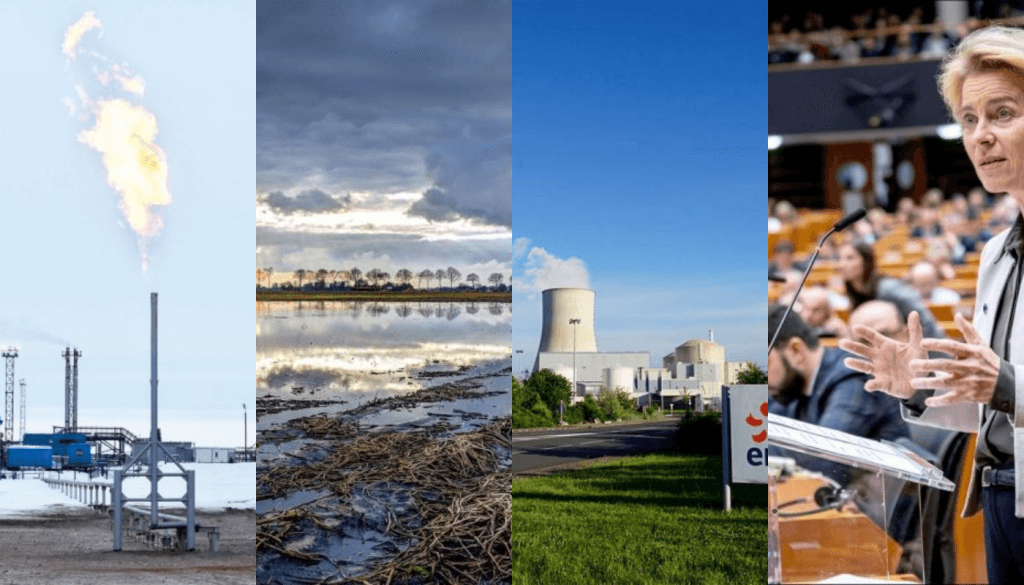
1. LNG supplies aboard tankers off Europe's coast are dwindling. The heating season is beginning
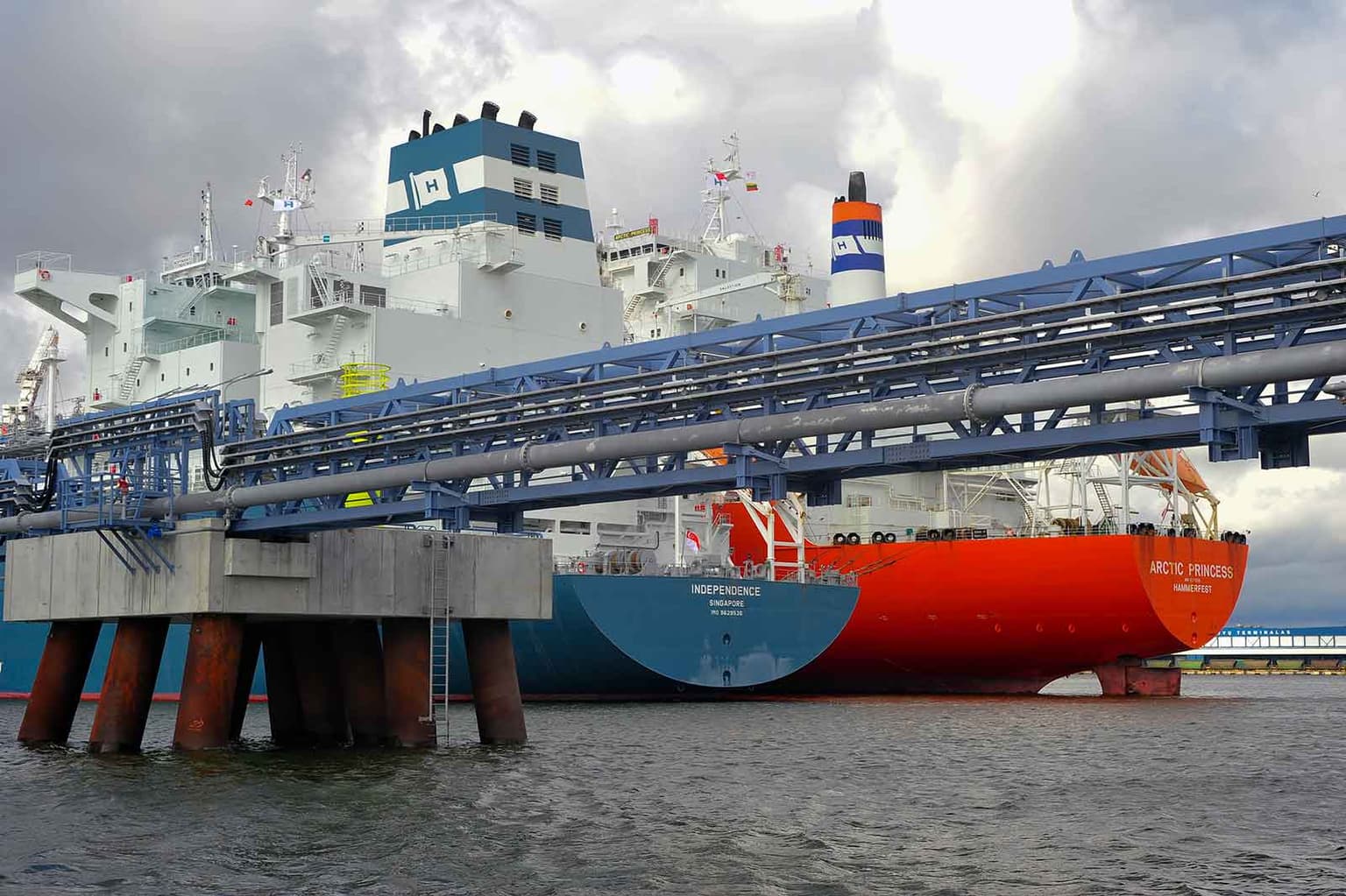
Supplies of liquefied natural gas aboard tankers off Europe's coast have fallen. Traders who chartered them have decided to take advantage of the start of the heating season and deliver the gas to European gas networks and storage facilities through LNG terminals. They were apparently also prompted by temporarily higher prices and the onset of winter and the heating season, as reflected in the decline in natural gas stocks in storage.
The growing volume of trade in liquefied natural gas has another effect that is not immediately obvious. A number of tankers carrying substantial stocks of natural gas are sailing the seas, waiting to deliver gas to a specific terminal. They generally wait for more favourable prices. According to the latest information from SP Global, such tankers held a total of 27 billion cubic metres of natural gas at the beginning of November. Some were also in coastal waters near the European Union.
2. Germany is now approving new power lines much faster. But this is creating new problems
Power lines are now being approved much faster in Germany, ILF, an infrastructure planning company, told Handelsblatt. This acceleration is, however, creating new bottlenecks.
Germany urgently needs new transmission lines to make full use of its renewable energy sources and prepare for the planned massive increase in their installed capacity. The German government has therefore made several attempts to speed up the approval process. This time, it has succeeded.
3. Unmet expectations: NuScale's small modular reactors could not withstand rising costs

As reported by Bloomberg, the first US project involving six NuScale small modular reactors, with a total installed capacity of 462 MW, has been cancelled. NuScale failed to meet a key requirement set by the Utah Associated Municipal Power Systems (UAMPS) for the project to proceed, primarily because of a steep rise in project costs and the high price of electricity offered to customers. The project was therefore deemed economically unviable, and an agreement was reached to terminate it. NuScale will, however, pay a huge fee for failing to meet its commitments.
NuScale became the first company to complete the certification of a small modular reactor in 2020 (we wrote about the certification here). In 2021, the company said electricity from a small modular reactor would cost USD 58/MWh, but the projected price has risen steeply since then.
4. Wind power is taking off after the solar boom. The government expects 220 turbines within seven years
While distribution companies receive thousands of monthly connection applications for solar power plants, until recently they could count wind turbines on the fingers of one hand. But interest in wind power has been growing in recent months. According to the government plan, around 200 turbines are to be built by 2030.
“Wind power plants were until recently marginal, given the character of the landscape and the more demanding permitting process. But the situation is changing, judging by what we have received from customers and investors. Regions and municipalities are also beginning to look at them differently and see them as a new area that can provide them with a stable source of energy,” Pavel Čada, vice-chairman of the board of distribution company EG.D, said at a press conference on the current state of renewable energy.
5. European Commission eases requirements for Czech gas storage, allowing lower fill levels in February
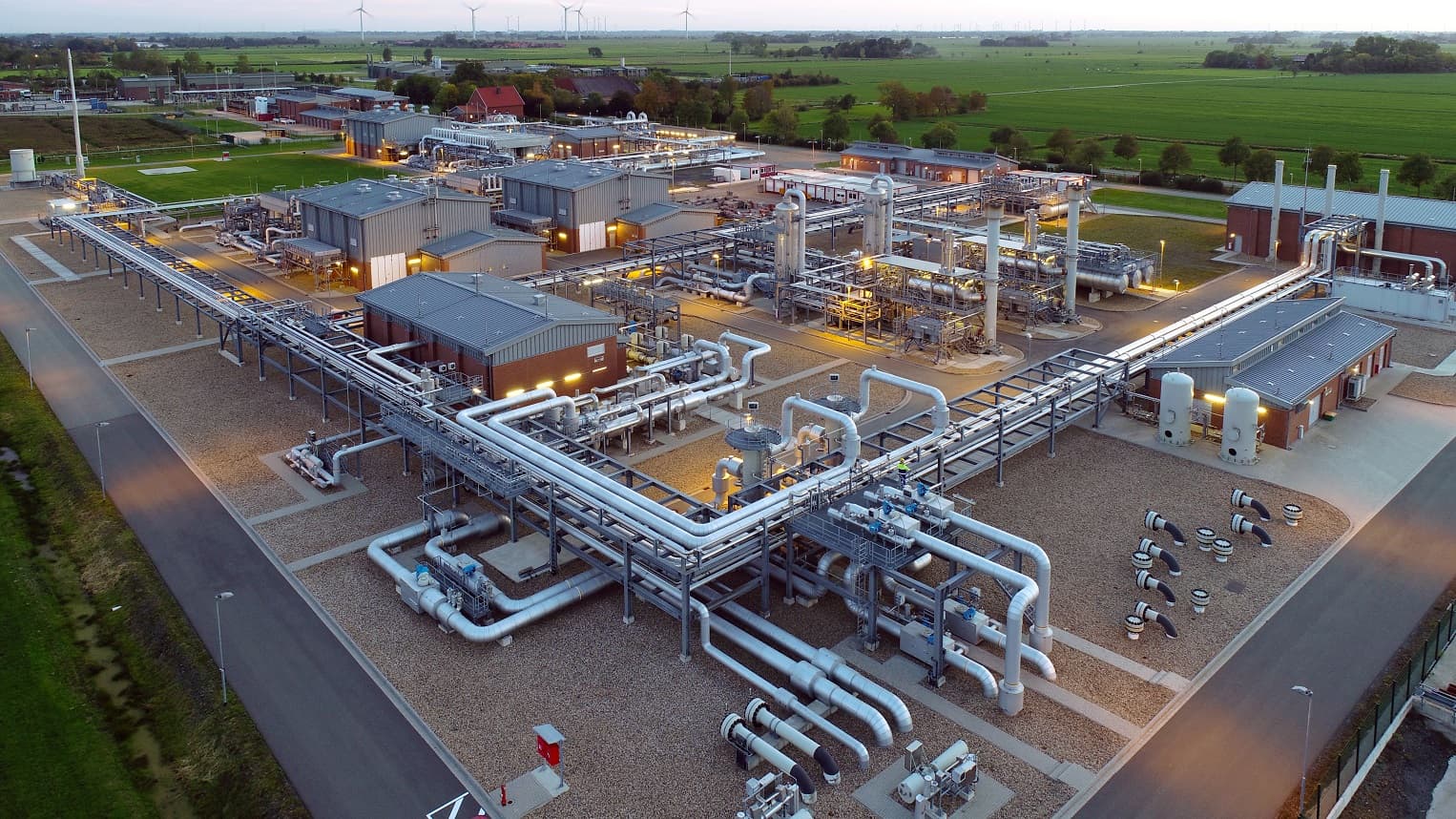
The European Commission has set the amount of gas each member state must store in its gas storage facilities during 2024. It has reduced the required amount for the Czech Republic in February by five percentage points. Czechia will therefore need to fill its storage facilities to just 40% of their capacity.
During the energy crisis, the European Commission adopted several measures to strengthen the energy security of the EU's 27 member states. One of the first measures required member states to ensure that their storage facilities were 90% full before the heating season (by 1 November).
6. Sweden plans a massive expansion of nuclear power
The Swedish government has presented a plan to develop nuclear power in the country, including the construction of new nuclear units. At least two large reactors are to be built by 2035, while a carbon-free energy scenario envisages up to ten reactors by 2045.
In October last year, Sweden's ruling right-wing coalition adopted a positive stance on nuclear power. The Christian Democrats, Liberals, Moderates and Sweden Democrats published their coalition agreement on joint policy, known as the Tidö Agreement. On energy, the agreement says the goal of energy policy is to “shift strategy from 100% renewable to 100% fossil-free”. The Tidö Agreement projects electricity consumption of at least 300 TWh in 2045, twice the current level.
7. Madeta to build a steam pipeline with ČEZ in Jindřichův Hradec for CZK 100 million, delivering 80 TJ of steam annually
Madeta, the largest dairy in the Czech Republic, will build a steam pipeline that will supply energy to its plant in Jindřichův Hradec from August 2024. It will run from the Jindřichův Hradec Energy Centre, which belongs to the ČEZ Group and burns biomass. The investment will amount to CZK 100 million and will be paid for by Madeta. The pipeline will be 2.5 kilometres long and will supply Madeta with 80 terajoules (TJ) of steam annually. Representatives of ČEZ and Madeta, who signed the construction contract today, told reporters that work will begin around the turn of the year.
Madeta expects its energy costs to rise by CZK 46 million year on year next year. The dairy's annual energy costs are around CZK 400 million, Madeta CEO Milan Teplý said today in response to a question from the Czech News Agency.
8. Rosatom receives permits for further units at the Leningrad nuclear power plant
The last two units at the Russian Leningrad II nuclear power plant have received permits to proceed to the next stages of construction. The plant near St Petersburg has a total of eight nuclear units: the first two have been shut down, four are in operation and two are in the preparatory phase of construction. Official construction of Unit 7, with the pouring of the reactor building's foundations, is planned for the near future. Rosatom expects to bring the new VVER-1200 units online in 2030 and 2032.
Rosenergoatom, a subsidiary of Russian energy company Rosatom, announced on 16 November that an important milestone had been reached. Units 7 and 8 of the Leningrad nuclear power plant, the third and fourth units of the Leningrad II project, respectively, have received permits for site preparation and further construction. Unit 7 can now officially begin construction.
9. Association: Biomethane could replace up to a fifth of Czech gas imports by 2030

Biomethane produced in the Czech Republic could replace up to a fifth of imported fossil natural gas supplies by 2030. Its development is important for decarbonising Czech energy. This is according to materials published today by the Modern Energy Association. It noted that, according to data from last year, around 1.2 million cubic metres of biomethane are produced annually in the Czech Republic.
The association said that under the latest update to the European Renewable Energy Directive (RED), Czechia should produce around 700 million cubic metres of biomethane annually by the end of the decade. It pointed out that achieving these targets will require substantial investment in new biomethane plants.
10. German economy minister: Funding for energy price caps is at risk

A ruling by Germany's Constitutional Court that the transfer of 60 billion euros (CZK 1.47 trillion) to the climate fund was unlawful threatens the future of regulated electricity and gas prices, which would mean higher bills for consumers. Federal Economy Minister Robert Habeck said this today in an interview with German public radio Deutschlandfunk. Last Wednesday, the Constitutional Court ruled that transferring money to the climate fund was unconstitutional; the funds had originally been borrowed for the 2021 budget but remained unused. The federal government is now missing 60 billion euros from its budget and cannot use the money. The government is assessing the extent of the ruling's impact.
“If a crisis were to occur, the federal government would no longer be able to fund caps on gas and electricity prices. Gas, electricity and district heating prices would rise significantly,” Habeck said of the possible impact of the Constitutional Court ruling.
Translation disclaimer
This article is a machine translation of the Czech original and has not yet been fully reviewed. In case of any doubt, please refer to the Czech version.
Sdílejte článek prostřednictvím:
Topics:Energy Weekly
You might also like

1 November 2026, 16:09
1 November 2026, 07:59

31 October 2026, 12:55
31 October 2026, 08:21