
28 October 2026, 15:10
Loading...
Top 10 energy stories of the past week
oEnergetice.cz
3 March 2024, 20:44

1. Denmark ends investigation into Nord Stream pipeline explosions

Denmark announced today that it had decided to end its investigation into the explosions on the Nord Stream pipelines, which Russia used and planned to use to send gas to Germany and further into Europe. Denmark is the second country after Sweden to end its investigation into possible sabotage of the pipelines in 2022, Reuters reported.
“Based on the investigation, the Danish authorities concluded that the damage to the pipelines was deliberate. However, they say there are insufficient grounds to open criminal proceedings in Denmark,” Danish police said in a statement.
2. China reaches major milestones in the construction of new nuclear power plants

China’s new nuclear construction programme reached two major milestones in the second half of February. The first was the start of preparatory construction work for the new Jinqimen plant, which will have a total of six Hualong One units. The second was the official start of construction of phase two of the Zhangzhou nuclear power plant, marked by the first concrete pour for unit 3. The country currently has more than 30 GW of nuclear capacity under construction, with a further 170 GW of projects planned.
China National Nuclear Corporation (CNNC) announced that it had begun construction work on the first phase of the new Jinqimen nuclear power plant. Across three phases, it is planned to include six domestically designed Hualong One nuclear reactors, with a total installed capacity of 6540 MW (net).
3. Bulgaria plans to strengthen its position in gas transit
If Russian gas transit through Ukraine ends as declared at the end of this year, the Balkan Stream pipeline will become Europe’s main supply route. In the long term, Bulgaria will therefore become an important transit country, ensuring supplies to Romania, Moldova and the countries of southeastern Europe.
At the end of 2024, a five-year agreement governing one of the oldest and largest economic links between Russia and Europe will expire: the transit of Russian gas through Ukraine. Kyiv has already said it will not extend the agreement, and Russian officials have confirmed that no talks on the matter are under way with either Ukraine or the EU.
4. Počerady accounts for 5% of Czech gas consumption; the country needs many more plants like it
The Počerady combined-cycle gas power plant, operated by the partly state-owned ČEZ, generated approximately 1.66 TWh of electricity last year. The plant needed 3.3 TWh of natural gas to do so, equivalent to almost five percent of total natural gas consumption in the Czech Republic. The State Energy Policy envisages the construction of additional gas-fired plants, which will have a significant impact on gas consumption. According to ČEZ, up to 5 GW of installed gas-fired capacity needs to be built by 2030—six times the installed capacity of the Počerady combined-cycle plant.
Electricity generation at the Czech Republic’s largest combined-cycle gas power plant has gradually declined for the fourth year in a row. Last year, the plant therefore operated at only around 25% of its installed capacity. This is considerably lower than for nuclear plants, but reflects the role of combined-cycle gas power plants in the grid: they are primarily used to bring capacity online quickly and cover peak demand.
5. Rule change: Germany to pave the way for carbon capture
Under current German law, the indefinite storage of CO2 on German territory—or even its transportation by pipeline alone—has been illegal since 2024. Berlin plans to amend the law after the European Commission presented its strategy for hydrogen capture, overcoming long-standing resistance in political circles.
Germany will amend its CO2 storage law to facilitate the transport of the gas and plans to introduce carbon capture in industry and the energy sector. The country is taking steps to achieve net-zero emissions after 2050, Euractiv reports.
6. Germany lacks a strategy to secure 11 GW of power plants so it can phase out coal

Germany needs an additional 21 GW of installed power plant capacity as it plans to end coal mining by 2030. Its current strategy envisages supporting the construction of 10 GW of gas-fired power plants. That will not be enough, says Tim Meyerjürgens, chief operating officer of transmission system operator TenneT.
Germany plans to gradually stop using coal-fired power plants by 2030. To achieve this goal without jeopardising the security of electricity supply, it will need around 21 GW of additional dispatchable capacity.
“To phase out coal completely, we need around 21 GW of additional reliable capacity,” Meyerjürgens told Montel in an interview this week.
7. Households to receive 40,000 less in solar subsidies, but prices have fallen since last year

People had just two weeks to adjust to the new conditions for subsidies for rooftop solar. For solar installations without home insulation, the subsidy has been cut by 40,000 crowns. The result? Customers began putting massive pressure on installers to submit applications under the old conditions, and government websites crashed.
At the last minute, the Ministry of the Environment changed the conditions of the New Green Savings (NZÚ) programme, including those for subsidies for rooftop solar. Until then, people could receive up to 200,000 crowns. Now they can only receive that amount if they combine the installation of panels with home insulation. The maximum subsidy for panels without insulation will now be only 160,000 crowns.
8. Seznam Zprávy: Tykač considers closing Počerady and Chvaletice as soon as next year
Sev.en Energy owner Pavel Tykač is considering closing his two coal mines and the Počerady and Chvaletice power plants in spring 2025, according to Seznam Zprávy. The reason is that coal-fired plants are uncompetitive. Tykač employs 3,000 people at the Vršany and ČSA lignite mines and the Počerady and Chvaletice power plants, which together meet almost 15 percent of domestic electricity consumption, the website reports. The group has informed the relevant ministries of the risk, and a working group set up at the Ministry of Industry and Trade (MPO) is now examining the possible closure of Počerady and Chvaletice.
“The situation in the energy sector is serious. Market conditions and other factors—for example, massive gas imports—are putting significant commercial pressure on coal-fired heat and electricity. Due to persistently high allowance prices and other factors, they are becoming uncompetitive, putting traditional coal-fired plants at risk of being shut down for economic reasons,” said Sev.en spokeswoman Gabriela Sáričková Benešová.
9. European gas storage levels are at their highest in 5 years

European natural gas storage levels at the end of February were the highest in more than 5 years, according to Energostat data. One reason for the current situation is the decline in natural gas consumption across the EU last year, when gas use fell by 7% year on year. In the Czech Republic, consumption fell by as much as 10.4%, reaching its lowest level since 1992. This was compounded by an exceptionally warm February this year. Lower-than-expected consumption then led to a decline in wholesale prices.
Wholesale gas prices fall
Warm weather across the EU during this winter season is reducing demand for heating and, consequently, natural gas consumption. In the Czech Republic, total gas consumption in 2023 stood at 73.7 TWh. By comparison, in 2021 consumption reached around 100.7 TWh.
10. Gas remains the dominant source of electricity generation in the US

Although the United States has expanded its use of renewable energy in recent years, it has also developed gas-fired generation. The growth in domestic gas production, which has driven down prices in the US market in recent years, is also pushing coal out of the market. Gas accounted for more than 40% of electricity generation last year and ranked second behind solar in new power plant capacity additions.
Over the past ten years, natural gas has established a dominant position in US electricity generation, previously held by coal. Last year, according to the government agency U.S. Energy Information Administration (EIA), natural gas accounted for 43% of electricity generation in the US. The EIA’s statistics generally cover power plants with an installed capacity of at least 1 MW, so the data may not include generation from small-scale solar installations.
In focus
Russian gas supplies to the EU fell below 15% in 2023 as LNG imports surged
Russia’s share of EU gas imports fell from more than 40% in 2021 to less than 15% in 2023. According to EU authorities, the sharp decline over the past two years was made possible primarily by a steep rise in LNG imports and an overall reduction in gas consumption. The United States was the largest LNG supplier, with total deliveries almost tripling compared with 2021.
Russia’s invasion of Ukraine prompted many countries to place greater emphasis on energy security and diversifying supplies. Diversification is a lengthy and costly process that requires investment in infrastructure. The crisis nevertheless forced European countries to accelerate processes that could otherwise have taken several years. The energy crisis peaked in August 2022, when energy commodity prices reached record highs and households and businesses across the EU faced steep energy bills.
Opinion
Oppenheimer: film and reality
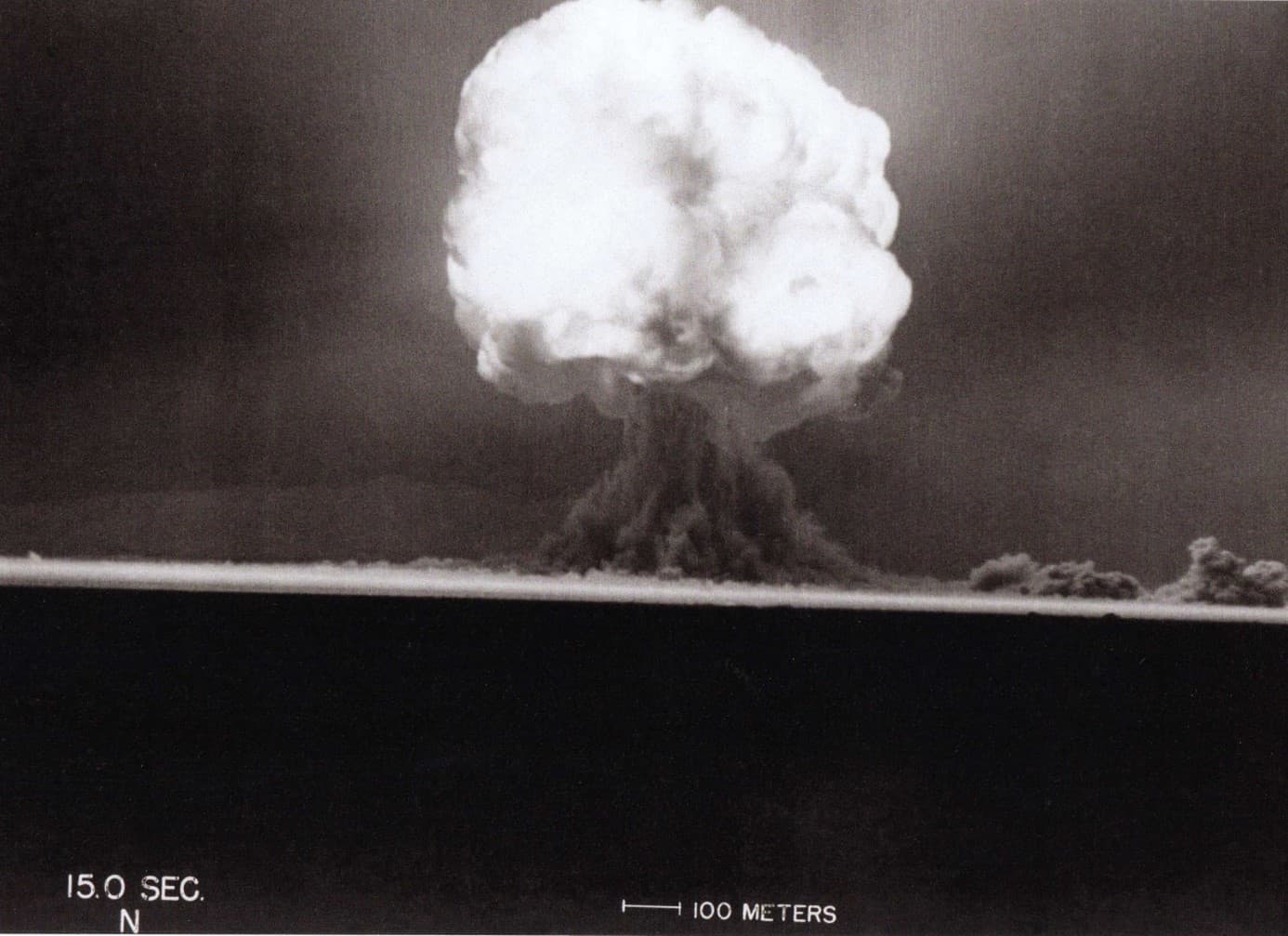
Christopher Nolan’s film Oppenheimer has received thirteen Oscar nominations. It is an excellent film depicting the golden age of nuclear physics, the birth of quantum physics and the development of the atomic bomb during the Second World War, as well as its political consequences. It is certainly interesting to compare the depiction of this pivotal period in human history with reality.
The 96th Academy Awards, known as the Oscars, will take place on 10 March 2024. Christopher Nolan’s film Oppenheimer has 13 nominations this year. The film depicts key events in the life of Robert Oppenheimer, one of the most prominent nuclear physicists of the golden age, who was among the founders of quantum physics and helped advance the field. He was the scientific director of the US Manhattan Project to develop nuclear weapons and a key figure in ensuring their rapid completion in the United States before the end of the Second World War and their use to defeat Japan.
Energostat: electricity generation in the Czech Republic
Energostat: electricity generation in Germany
Translation disclaimer
This article is a machine translation of the Czech original and has not yet been fully reviewed. In case of any doubt, please refer to the Czech version.
Sdílejte článek prostřednictvím:
Topics:Energy Weekly
You might also like

28 October 2026, 13:08

28 October 2026, 11:10

28 October 2026, 09:08
