25 October 2026, 08:20
Loading...
Top 10 energy stories of the past week
oEnergetice.cz
4 August 2024, 17:58

1. Hungary wants to relax limits on the Danube; Paks nuclear power plant is key to security of supply

Hungary’s Ministry of Energy announced late last week that it plans to relax regulations on temperature limits for the Danube. The Paks nuclear power plant uses water from the Danube for cooling, and during hot summer days it can heat the river excessively. The ministry says, however, that the plant is essential to ensuring security of electricity supply. Parts of southern Europe have faced far-above-average temperatures in recent weeks, driving up electricity consumption.
Parts of Europe are experiencing intense heatwaves this summer, with knock-on effects for the energy sector. These include increased demand for electricity for cooling and possible restrictions on the operation of thermal power plants. This situation is not unusual; in recent years, France, for example, has had to restrict the output of thermal power plants, mainly nuclear ones.
2. Romania delays its coal phase-out

The Romanian government has decided to extend the deadline for phasing out coal by another two years. Coal-fired electricity generation is currently helping the country meet increased demand for electricity.
Under the original plan, mines and coal-related activities were to be phased out by 31 December 2030; they will now continue until the end of 2032. However, changing the phase-out date does not mean that all existing mines in Romania will remain open until the new deadline.
3. DIHK: German industrial companies increasingly consider moving production abroad

More and more German industrial companies are considering moving production abroad because of high energy prices and uncertainty about future energy supply security. This is according to a survey whose results were published by the Association of German Chambers of Industry and Commerce (DIHK).
According to the survey, 37 percent of German industrial companies are now considering reducing production or moving it abroad. Last year, the figure was only 32 percent, and the year before that just 21 percent. Among industrial companies with at least 500 employees, the share considering production cuts or relocation rose to 51 percent, compared with 43 percent last year.
4. Municipalities and regions oppose proposed renewables bill, saying it harms them
Municipalities and regions oppose the current draft law to accelerate the use of renewable energy sources (RES). They say it will harm municipalities and burden regions. They also complain that the state did not consult them adequately. Representatives of local governments have therefore called for an expert discussion to be opened and the bill redrafted. This was stated today in a joint press release by representatives of the Association of Local Authorities of the Czech Republic, the Association of Regions of the Czech Republic and the Union of Towns and Municipalities of the Czech Republic.
The draft law was prepared by the Ministry of Industry and Trade in cooperation with the ministries of the environment and regional development. It is currently being reviewed. Its aim is to simplify the conditions for permitting facilities that produce green electricity. The Czech News Agency is seeking comment from the Ministry of Industry and Trade.
5. German transmission grid expansion gathers pace after years of delays
TenneT, which operates the northern and southern sections of Germany’s transmission system, has reached several important milestones in the necessary expansion of the grid, which is intended to help Germany meet its decarbonisation targets. The company said in a press release.
TenneT said it had made significant progress on the construction of the SuedLink backbone line, which began last September after years of delays. Progress includes the start of construction on two of the four converter stations.
6. Ekodefense sues Russia at European court over worsening climate crisis

Activists are asking the European Court of Human Rights to accuse Russia of causing a “climate catastrophe”. They say Moscow’s war in Ukraine is contributing to rising greenhouse gas emissions.
The Ekodefense organisation has asked the European Court of Human Rights (ECHR) to expedite its case against Russia, arguing that the country’s actions are worsening the global climate crisis and thereby violating human rights. The court rejected the request last week, however, meaning the proceedings could take a long time, Euractiv reported.
7. Framatome to supply fuel for Slovak VVER reactors alongside Westinghouse
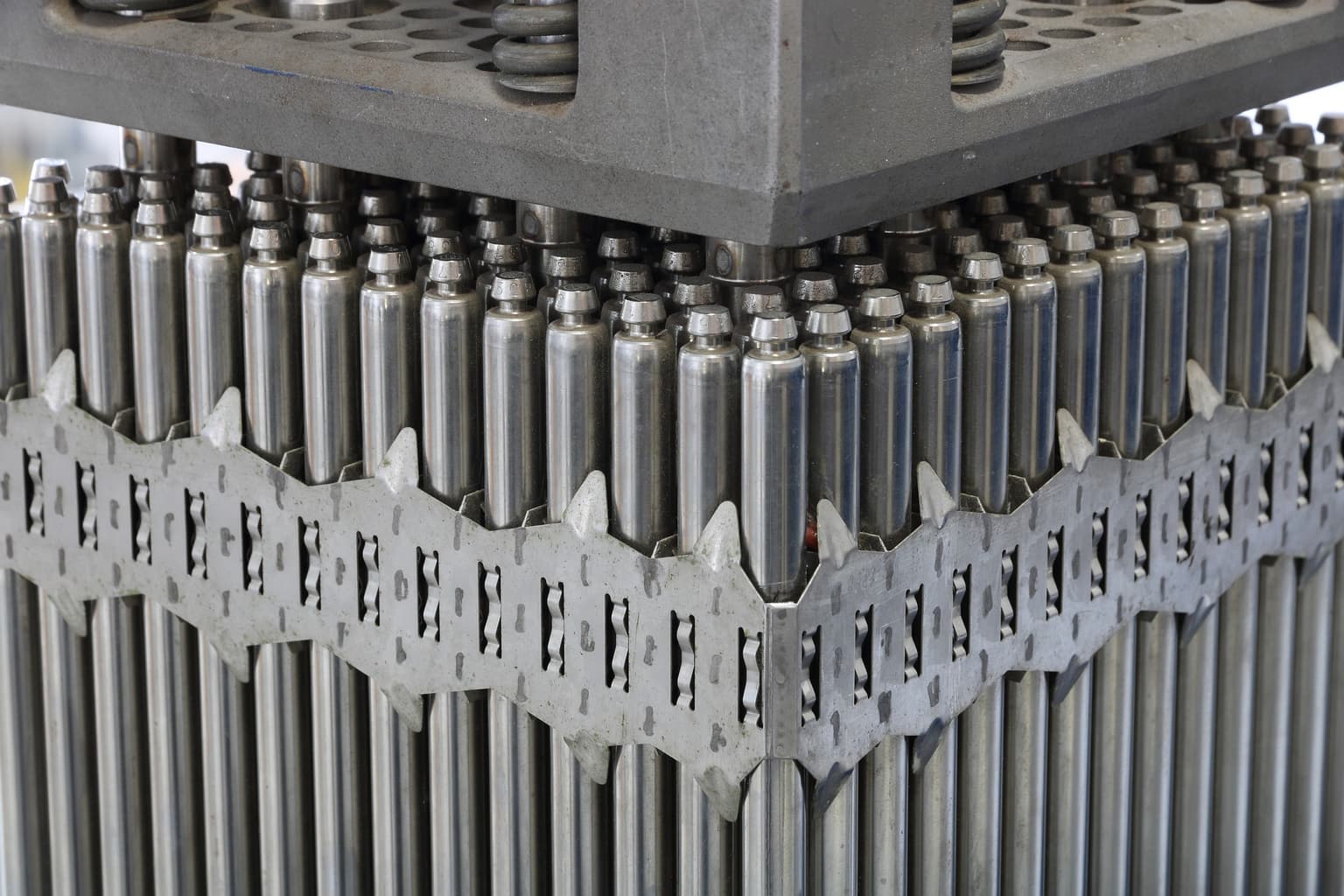
Representatives of Slovenské Elektrárne and Framatome have signed a contract to supply nuclear fuel for Slovakia’s VVER-type nuclear units. The contract further diversifies Slovakia’s fuel supplies, which are currently provided by Russia’s TVEL. Last year, the country also signed a fuel supply contract with US-based Westinghouse. Slovakia expects its first nuclear fuel deliveries from Framatome in 2027.
French company Framatome announced that it had signed a contract to supply its nuclear fuel to Slovenské Elektrárne. The company operates five Russian-designed VVER-440 nuclear units at the Mochovce and Bohunice power plants. The contract follows a memorandum of understanding signed by the two companies in May last year. The first fuel deliveries are expected to arrive in Slovakia in 2027.
Hydrogen pipelines could be operating in Germany as soon as next year

Germany’s network regulator (BNetzA) has received a joint application from transmission system operators seeking approval to create a hydrogen backbone network. According to FNB Gas, this is a key milestone in establishing the hydrogen network.
Germany plans to create a nationwide hydrogen network by 2032. The application proposes an optimised core network stretching 9 666 km. A further 802 km would consist of pipelines belonging to 16 other potential hydrogen network operators.
9. A third of planned offshore wind projects in the US were cancelled last year
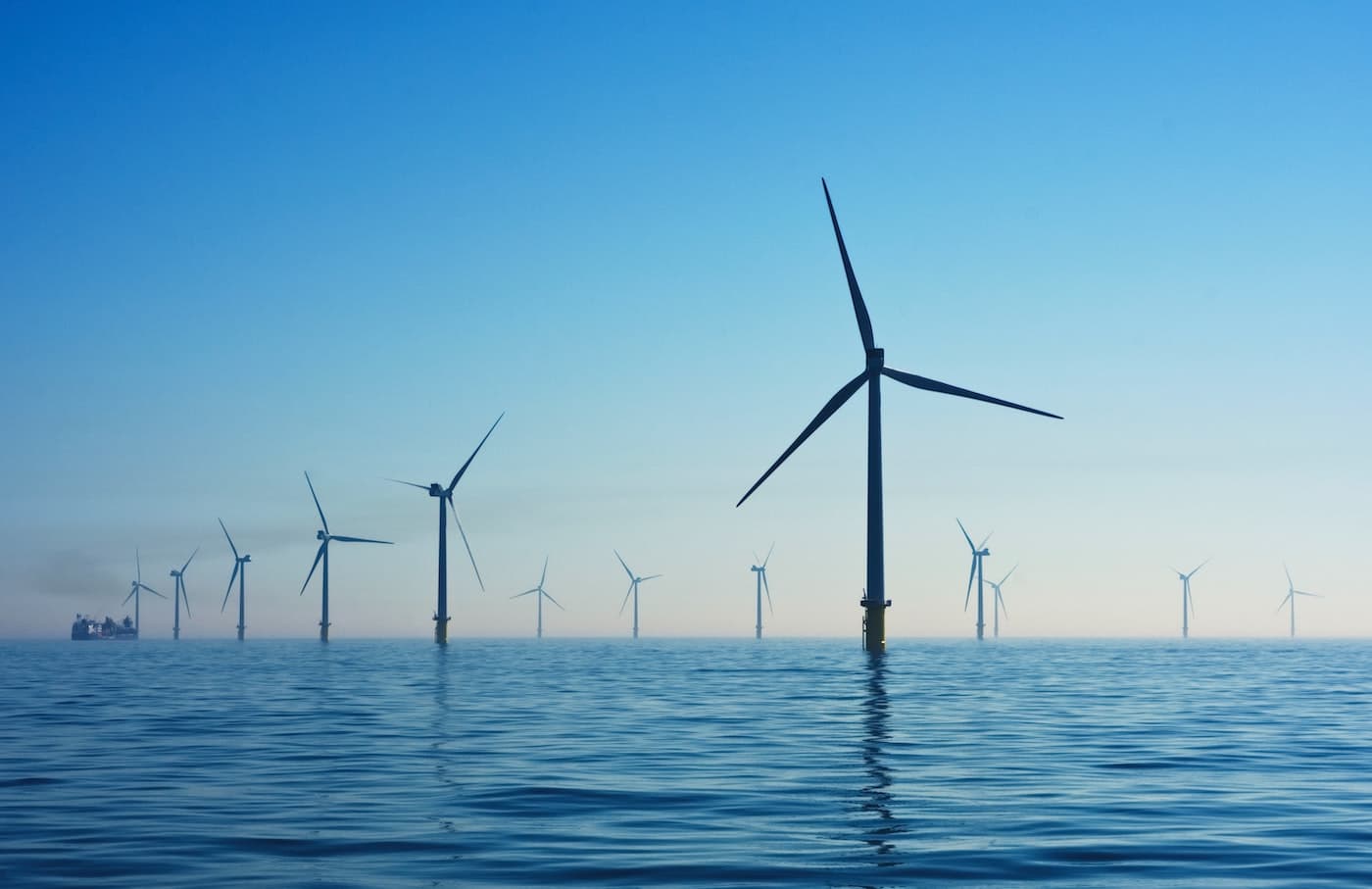
US offshore wind development suffered a major setback last year when two large wind farm projects were cancelled. According to data from a US government agency, the two projects accounted for roughly a third of the planned capacity of new offshore wind sources. Unlike in Europe, offshore wind energy in the US is still in its infancy, with just three wind farms and fewer than 20 turbines in operation.
While offshore wind sources are already a significant source of electricity in some European countries, the situation is different in the United States. Although plans for future wind energy development in US waters are ambitious, they are still far from becoming reality. Only three offshore wind farms have so far entered operation, with a combined total of 19 turbines and installed capacity of 174 MW.
10. Another 90 MW of wind farms in Czechia could receive operating support, but conditions have been tightened
The Ministry of Industry and Trade has launched another round of auctions for operating support for selected renewable energy sources. For this year’s first auction round, the ministry changed the rules, adding administrative requirements for successful applicants. The Ministry of Industry and Trade set stricter conditions for wind farms. It can also cancel an auction if more than 80 % of the submitted bids specify the same offer price.
Another round of auctions for operating support for renewable electricity sources is underway in the Czech Republic. After a lengthy pause during which new power plants were not eligible for operating support, support for selected sources was reinstated in 2022.
Topic
Spot electricity prices on the Czech market regularly turn negative at weekends
As we have previously reported, “free” electricity has appeared on the Czech market with record frequency this year. As of 27 July, negative prices had appeared on the OTE day-ahead market 234 times. One reason is the drop in demand at weekends. Another is the increase in installed capacity at photovoltaic power plants (PV plants). In the absence of operating support, this could threaten further development of the sector and the Czech Republic’s ability to meet its climate commitments.
Spot electricity prices have been regularly turning negative, particularly at weekends. The most recent occurrence was last Sunday. This is not unique to the Czech Republic; it is happening across all countries with sufficient photovoltaic capacity connected to the grid.
Gas transit from Azerbaijan via Ukraine—or just a cover for Russian gas imports?

The European Union is seeking alternative energy sources following Russia’s invasion of Ukraine and is considering importing gas from Azerbaijan via Ukrainian pipelines. The plan, however, risks concealing exports of Russian gas to the European market as Azerbaijani gas, the Financial Times reports.
Since Russia’s invasion of Ukraine, Europe has been looking for alternative sources of natural gas imports. The contract for Russian gas transit through Ukraine to Europe also expires at the end of 2024, and Ukraine does not intend to extend it. This could jeopardise European gas supplies and increase the risk of shortages in countries on the bloc’s eastern flank, including Slovakia, Hungary and Austria. The Czech Republic also imports some gas via this route, although it is not dependent on it.
Association: Dozens of biomethane plants could be built in Czechia in the coming years
Dozens of biomethane plants could be built in Czechia in the coming years. The growth in biomethane production will be driven mainly by existing agricultural biogas plants, of which there are nearly 400 in the Czech Republic. This was stated by the Czech Biomass Association, CZ Biom. Czechia currently lags behind the European average in biomethane production, with only a handful of plants in the country.
“The greatest potential for biomethane production lies in converting existing agricultural biogas plants and biogas plants at wastewater treatment facilities. These plants will keep their existing cogeneration units to produce electricity and heat for their own operations, or to provide flexibility to the electricity market operator, but they will use most of their biogas production to produce biomethane,” said Petr Novotný of the Institute for Circular Economy.
Energostat: electricity generation in the Czech Republic
Energostat: electricity generation in Germany
Translation disclaimer
This article is a machine translation of the Czech original and has not yet been fully reviewed. In case of any doubt, please refer to the Czech version.
Sdílejte článek prostřednictvím:
Topics:Energy Weekly
You might also like


23 October 2026, 14:38