Record June in EU: solar generated 25% of electricity, while Czech share fell
The European Union recorded a record share of electricity generated by solar power plants this June. Think tank Ember reported this. Over the past five years, both June generation from this source and its share of total electricity generation have increased 2.5-fold. In the Czech Republic, year-on-year comparison shows a decline in its share of electricity generation.
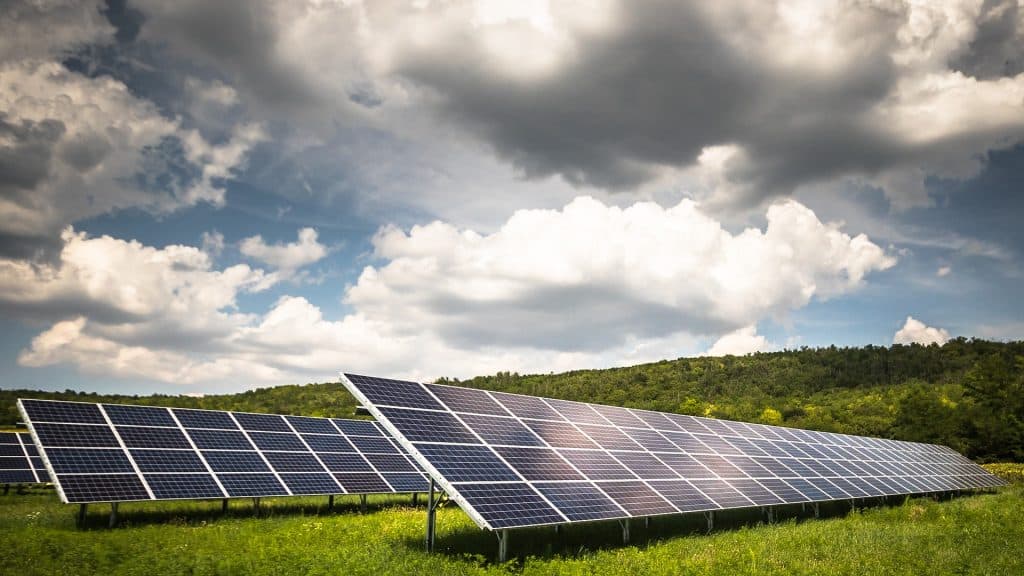
For the first time in EU history, solar power plants accounted for 25% of electricity generation. With 52 terawatt-hours (TWh) of electricity, they surpassed their previous monthly high from May 2026, when the figures stood at 23% and 47 TWh.
Year on year, this represents an increase of three percentage points. June 2025 was the first month in history in which solar power plants generated the most electricity among individual sources in EU countries. This was also the case this June. Solar generation exceeded that of nuclear power plants (21%), gas (15%), wind power (14%), hydropower (12%) and coal (8%).
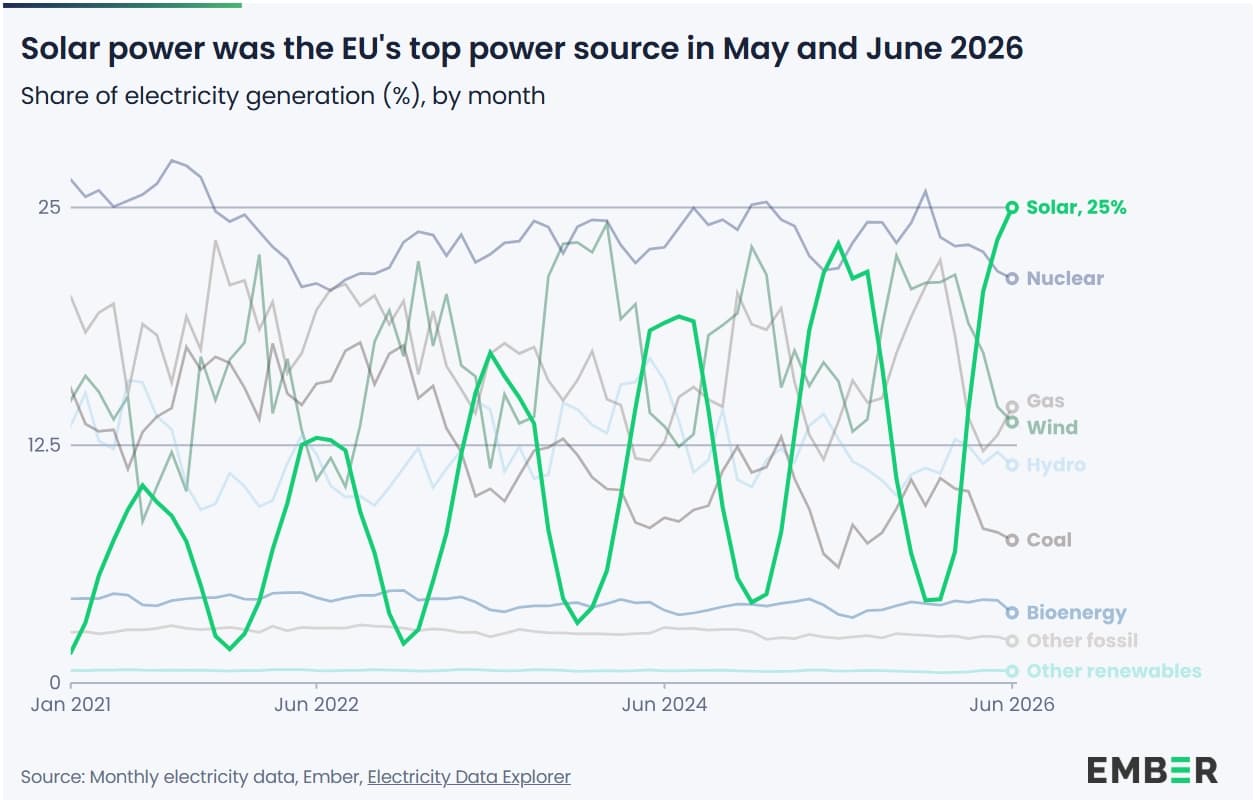
Just five years ago, solar power plants accounted for only 10% of electricity generation in June, producing 21 TWh. Solar generation grew by more than a fifth every year between 2021 and 2025, making it the fastest-growing source of electricity generation.
“The rise of solar power has been truly stratospheric, exceeding one forecast after another. Within a few years, solar power has transformed from a minor player into an essential part of Europe's energy system, as governments and citizens seek cheap, rapidly deployable domestic energy sources,”Chris Rosslowe, a senior analyst at Ember, commented.
Record generation was also supported by high summer electricity demand driven by extreme heatwaves and the associated cooling demand. Solar power thus helped cover consumption at a time when heat and low wind conditions constrained the output of other sources.
According to Ember, solar records are being set across Europe. As many as 18 EU member states recorded a new monthly record for the share of photovoltaic power plants in electricity generated. Germany achieved the highest share at 36%, followed by Spain at 34%.
Czech Republic recorded a year-on-year decline
Domestic photovoltaic power plants have yet to match the EU record holders. According to Energostat data, they accounted for 12% of generation last month, while nuclear power (38.6%) and lignite (25.4%) dominated.
In June last year, solar power accounted for 14.5% of generation. Year on year, solar generation increased only slightly, from 655 gigawatt-hours (GWh) to 677 GWh. Total electricity generation in the Czech Republic rose by more than 1 TWh year on year to 5.66 TWh, driven primarily by nuclear and lignite-fired generation.