Will a European wind ‘champion’ emerge? Turbine makers consider mergers amid growing pressure from China
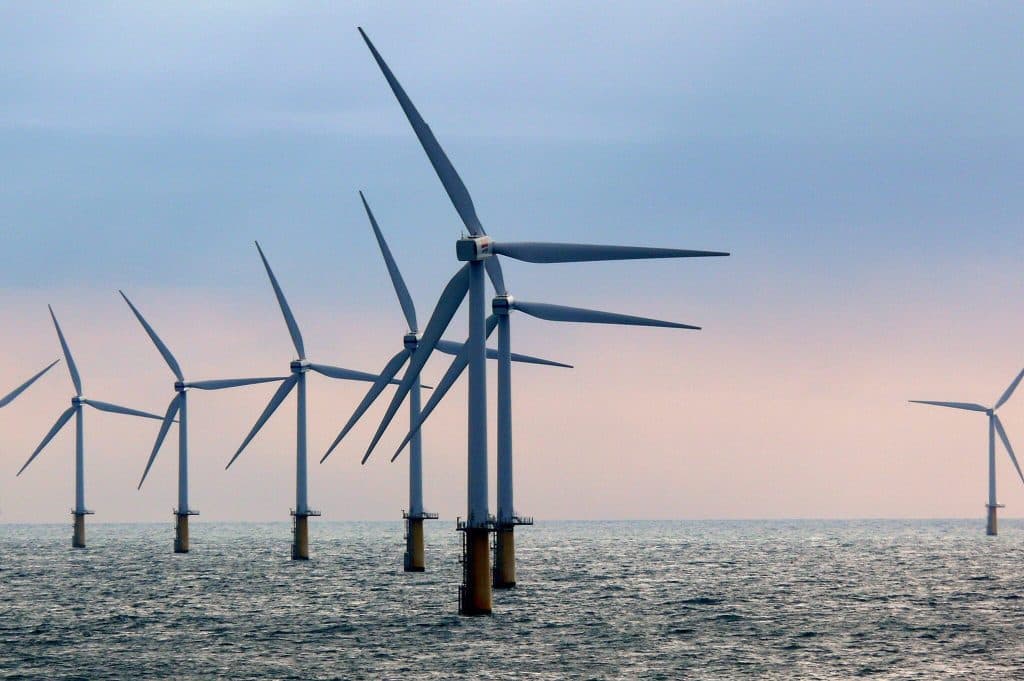
Leading European wind turbine manufacturers have recently been intensively considering mergers and the creation of a single European ‘industrial champion’. A potential combination of major European companies is intended to help the sector better withstand mounting pressure from Chinese manufacturers. The latter have long benefited from the size of their domestic market and threaten the global competitiveness of European firms. A loosening of EU antitrust rules could also help bring about consolidation.
Although domestic manufacturers dominate both the Chinese and European wind turbine markets, developments in the wind sector elsewhere in the world clearly show that Europe’s industrial giants are losing ground to their Chinese rivals.
Chinese ‘champions’ Goldwind, Envision, Windey and Ming Yang benefit significantly from the size of their domestic market, which they control to the extent of 99.6%. Last year, the four largest Chinese producers installed turbines with a total capacity of 120 GW, accounting for 70% of newly added global capacity. The rapid development of China’s wind sector enables these companies to offer onshore turbines on export markets at prices roughly 20 to 40 percent lower than those of their European competitors.
This advantage has become increasingly apparent in recent years in rapidly growing markets such as the Middle East and Latin America, where Chinese firms are expanding rapidly and gaining a lead. This could significantly help them achieve their openly declared goal of expanding in Europe. Such a scenario could have disastrous consequences for the European wind sector. The largest manufacturers are therefore seeking ways to withstand growing Chinese pressure.
According to industry representatives, the answer to China’s rise is scale, which could be achieved through the consolidation of major players. Following previous mergers, the European market is already largely concentrated. It is dominated by four manufacturers: Denmark’s Vestas, Spanish-German Siemens Gamesa, and German manufacturers Nordex and Enercon. The strongest among them is Danish giant Vestas, which still leads globally in cumulative installed capacity.
However, Chinese expansion could very easily strip it of this position in the coming years. According to data from the Global Wind Energy Council, all five of the fastest-growing manufacturers in terms of newly installed turbine capacity in 2025 were Chinese. Consultancy Wood Mackenzie expects Chinese manufacturers to reach a 27% share of newly installed onshore capacity outside the Chinese market over the next decade.
Will a European ‘super-manufacturer’ emerge?
Germany’s Nordex, a major player in the onshore segment, has so far emerged as the biggest proponent of consolidation. Its main shareholder, José Manuel Entrecanales, previously declared his support for combining with some other manufacturers to create a ‘wind Airbus’. The basis on which such a project could be established remains unclear.
Analytical scenarios consider several options, each with both advantages and major obstacles.
The first, and on paper strongest, scenario is a combination of Nordex and the largest European player, Denmark’s Vestas. The new entity would by far be the strongest Western OEM, with cumulative installed capacity of 270 GW. Vestas would bring extensive offshore experience and a strong presence in the US and Asia to the combination. Nordex would complement the partnership with its dominant position in Germany’s onshore segment, as well as its established presence in southern Europe and Latin America.
However, the Danish giant has long preferred organic growth, is a thriving market leader and, thanks to its premium position, apparently does not feel sufficiently threatened by Chinese pressure to have a strong incentive for such a merger.
A combination of Nordex and Siemens Gamesa appears more natural. The Spanish-German company is also highly established in the offshore sector, where Nordex has a weaker position. However, implementation may run up against the fact that Siemens views offshore as a highly strategic division.
A combination with Enercon would create a German ‘champion’. It would also be interesting due to the combination of two different technologies: gearless direct drive and DFIG, or doubly fed induction generators. The new German giant could therefore appeal to a broader range of customers and effectively cover different types of projects. An obstacle may be Enercon’s ownership structure, as it is tied to a foundation and, according to available information, a sale or merger is not currently on the agenda.
In all the scenarios considered, consolidation would bring scale and economies of scale, stronger bargaining power vis-à-vis customers and suppliers, and a better ability to finance the development of new technologies. At the same time, however, it would reduce the number of players in an already concentrated market.
The outcome would therefore depend not only on industrial logic, but also on whether regulators could be convinced that this would strengthen European competitiveness rather than merely create another overly dominant company.
New merger rules: EU seeks to avert a ‘solar scenario’
The European Commission, however, appears receptive to such a proposal. A few months ago, it announced changes to the rules for assessing major mergers in order to support and facilitate the creation of so-called ‘European champions’ capable of competing globally with China and the United States.
The European Commission’s proposed new rules indicate a willingness to ease antitrust rules if greater market concentration strengthens the technological base and resilience to Chinese pressure. The aim is to preserve competition protections while enabling the development of scalable companies in strategic sectors such as wind energy.
The impetus for this change came from the so-called Draghi report on European competitiveness, which calls for a more active industrial policy and the emergence of European leaders with sufficient scale, capital and technological capabilities.
Brussels now sees the experience of solar photovoltaics—where Chinese companies gradually took control of the global market and effectively forced European solar panel manufacturers out—as a cautionary example that must not be repeated in the wind sector.
Whether a merger of European companies of this size would actually help avert such a scenario, however, will be a matter for lengthy and undoubtedly highly complex negotiations.
Translation disclaimer
This article is a machine translation of the Czech original and has not yet been fully reviewed. In case of any doubt, please refer to the Czech version.