
1 November 2026, 21:20
Loading...
Top 10 energy stories of the past week
oEnergetice.cz
5 November 2023, 21:41
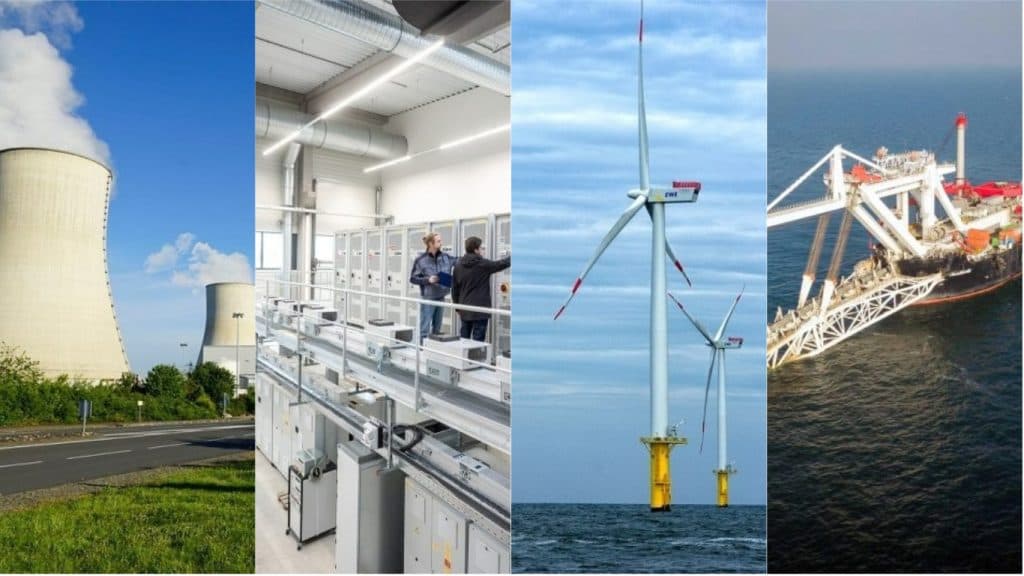
1. Ørsted halts offshore wind farm projects. Losses run into the billions, shares fall
The offshore wind industry has been going through a difficult period in recent months, as wind farm developers grapple with rising costs. This is also affecting their willingness—or unwillingness—to go ahead with projects that were originally planned but are no longer profitable. This week, two more major projects were halted, this time by Danish company Ørsted.
Building offshore wind farms appears to be a promising alternative to traditional onshore turbines, mainly because of lower public opposition. In recent years, more and more countries have begun to rely on faster wind power development, including the United States, which lags considerably behind Europe in this respect.
2. Germany had to curtail a quarter of offshore wind output in the first quarter
About a quarter of output from German offshore wind farms was curtailed in the first three months of this year due to transmission grid constraints. The figure was around 3% of output for onshore wind farms and just under 2% for solar power plants. The news was reported by international outlet Clean Energy Wire.
The need to curtail electricity generation from renewable energy sources has been a long-standing problem in Germany. The reason is the slow expansion of the transmission grid, which is lagging behind the pace of construction, particularly of wind farms generally located in northern Germany.
3. Germany considers extending coal plant operations to reduce gas consumption
The German government is considering extending the operation of lignite- and hard-coal-fired power plants that were brought back onto the market during the energy crisis. The plants, which would otherwise have been taken offline, could remain in operation beyond the currently planned spring 2024 deadline, helping to save gas and ensure security of supply if needed.
The Federal Ministry for Economic Affairs and Climate Action (BMWK) is currently discussing an extension of the relevant regulation, a spokesperson told Handelsblatt. Mirko Schlossarczyk, an analyst at consultancy Enervis, said the situation in Germany is much better this year than in 2022 and questioned whether extending the reserve of old coal-fired power plants is necessary.
4. Texas set to host the largest carbon capture facility to date
Oil company Occidental Petroleum is positioning itself as a leader in technologies for capturing carbon from the atmosphere. However, the company’s past experience suggests that the future of this technology may not be as rosy as it seems. Despite this, several major players have already invested in the new project, called Stratos, which has also received support from the U.S. government, which sees huge potential in carbon capture.
Occidental Petroleum’s large-scale technology complex is designed to capture carbon dioxide from the atmosphere and then store it deep underground. Companies including Amazon and Airbus, as well as the Houston Texans football team, are backing the project and have committed to paying in the future to store their emitted carbon through the Stratos project.
5. Curtailment of renewable energy output in California has surged over the past two years
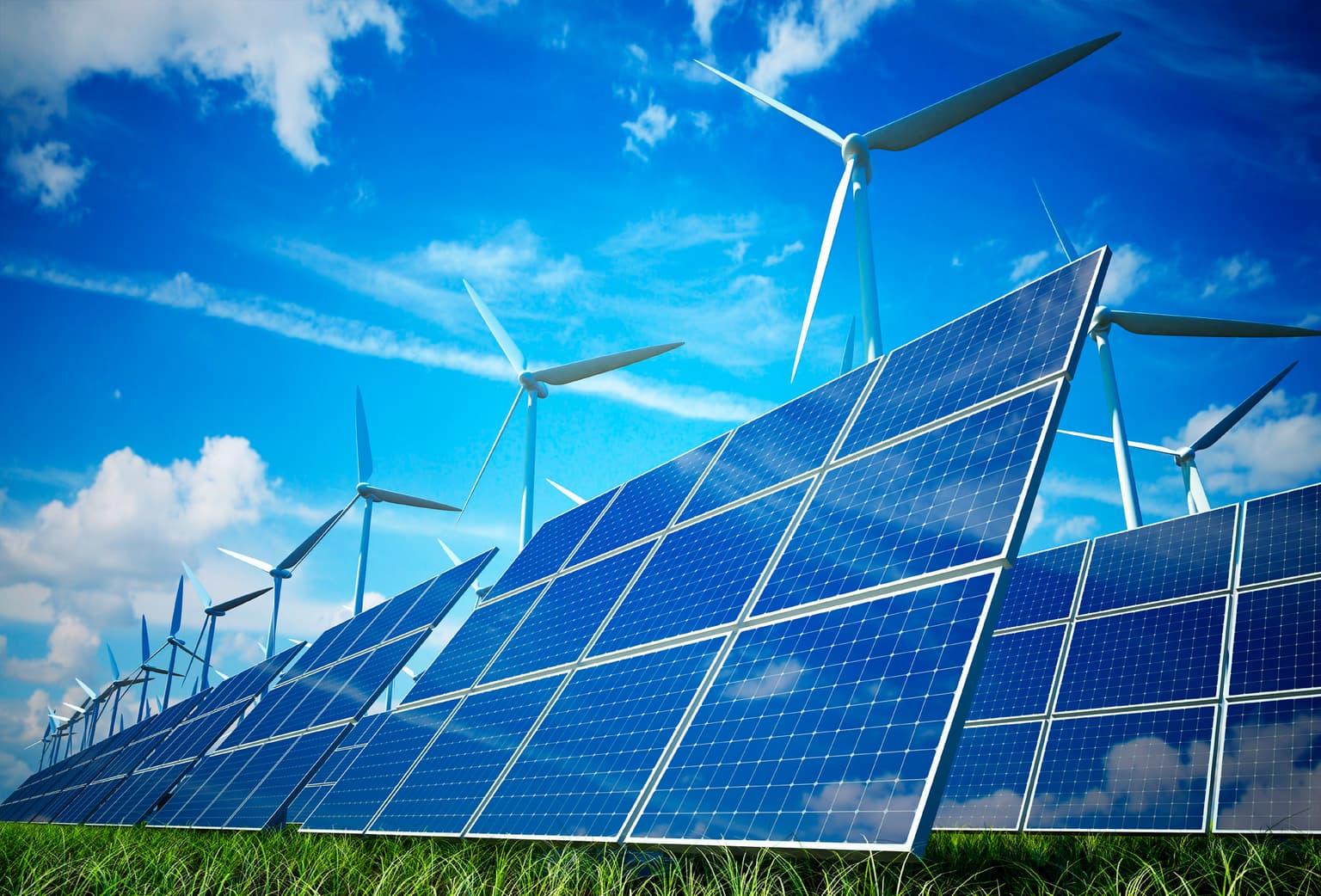
The U.S. state of California ranks among the leaders in renewable energy development, particularly solar power, not only among U.S. states but globally. However, further growth in installed capacity also has a downside: the amount of electricity these sources are unable to deliver to the grid is rising every year. Last year alone, the volume of curtailed generation rose by almost two-thirds, according to the local grid operator. Almost all of the curtailed output came from solar power plants.
Over the past five years in particular, California has seen an increase in the volume of curtailed generation that renewable sources could theoretically have supplied to the grid. According to the U.S. government agency the U.S. Energy Information Administration (EIA), generation is curtailed either because wholesale prices fall or at the direction of the local grid operator.
6. Danish hydrogen production auction offers clues about what to expect from the first EU auction

The results of Denmark’s first auction to support the production of renewable hydrogen and its derivatives indicate what bids might look like in the first EU-wide auction, to be held by the European Hydrogen Bank (EHB) at the end of November this year. A total of 6 projects, with combined electrolyser capacity of 280 MW, secured support in the Danish auction. The news was reported by international outlet Argus.
International outlet Argus noted that the terms of the Danish auction to support renewable hydrogen production are very similar to those announced by the European Commission at the end of August for the pilot EU-wide auction.
7. Poland’s first nuclear power plant receives location permit in Pomerania
The project for Poland’s first nuclear power plant has received a location decision from the Pomeranian Voivodeship. The plant will be located at Lubiatowo-Kopalino on the Baltic Sea coast. Poland’s first nuclear facility is planned to have three AP1000 reactors supplied by U.S. company Westinghouse, with total installed capacity of 3 750 MW.
Polskie Elektrownie Jądrowe (PEJ) announced that it had received a location decision for the first nuclear power plant project from the Pomeranian Voivodeship authorities. According to PEJ, this is one of the most important administrative decisions required to begin construction at Lubiatowo-Kopalino.
8. Germany should abandon 2030 coal phase-out target, finance minister says

Germany should abandon its target of shutting down coal-fired power plants by 2030 if it cannot guarantee a sufficient supply of affordable electricity. German Finance Minister and leader of one of the governing coalition parties Christian Lindner said this today in an interview published by Kölner Stadt-Anzeiger. The liberal politician said investment in renewable energy and gas production in Germany should be increased.
In the interview, Lindner indirectly criticised the subsidies his government colleague, Economy Minister and leading Green Party politician Robert Habeck, is preparing for industrial companies. The subsidies are intended to help businesses cope with the effects of the transition to a low-emission economy. Lindner said that, ultimately, companies or citizens would have to pay for the subsidies anyway.
9. Netherlands begins building hydrogen pipeline, first section due to enter service in 2025
The Netherlands officially began construction at the end of October on a planned 1 200 km hydrogen pipeline. The first 30-kilometre section will be built in Rotterdam and is due to enter service in 2025. The wider network is intended to connect the Netherlands’ main industrial clusters and, from 2030, hubs in Germany and Belgium, according to S&P Global.
“One of the prerequisites for developing the hydrogen market is infrastructure for transportation and storage,” Gasunie, which is developing the network, said in a statement in early October. “By being the first European country to have hydrogen infrastructure, the Netherlands can become an important hub for renewable energy.”
10. Germany has record gas stocks, but supply risks remain
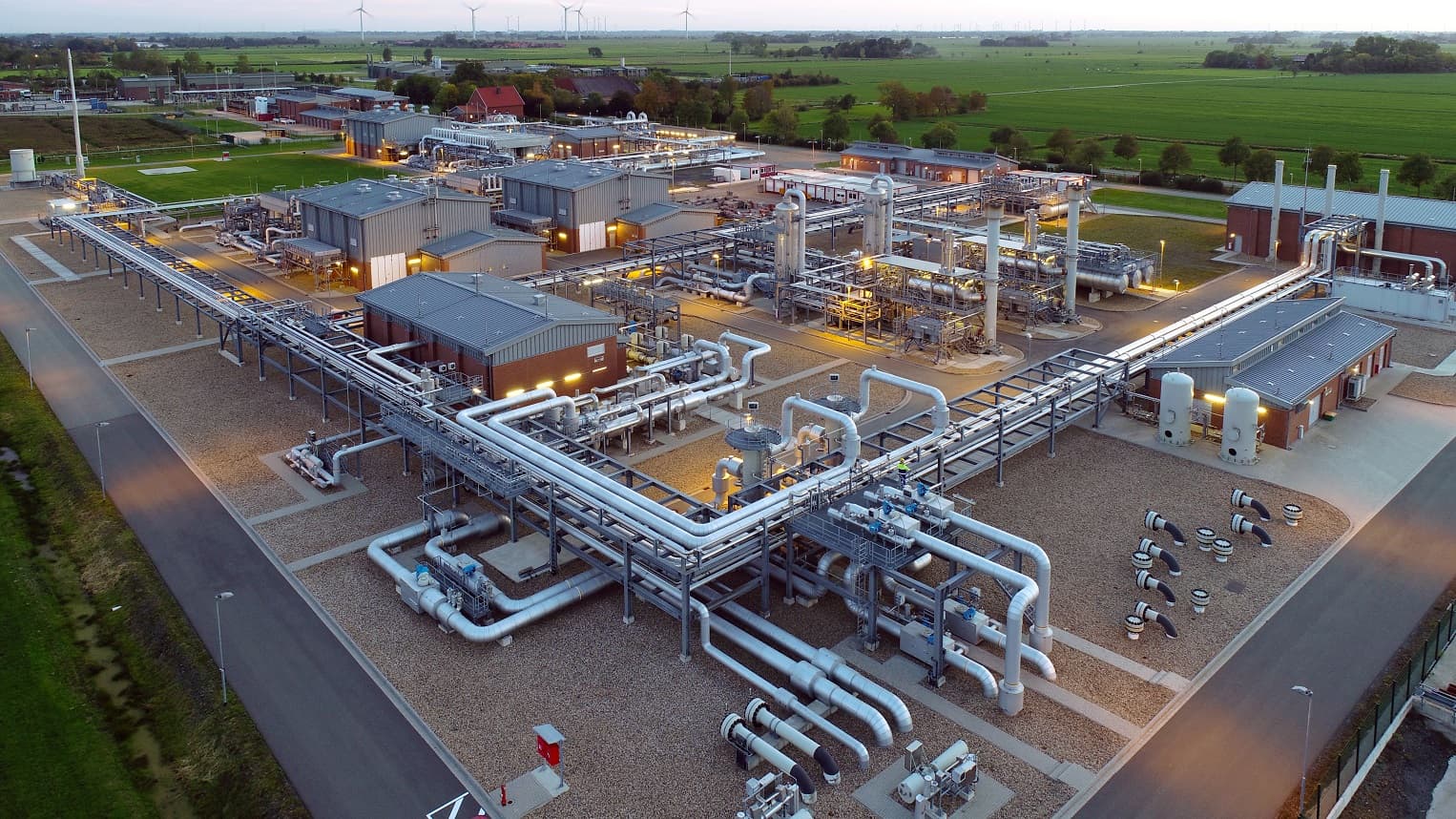
Germany has more gas in storage than ever before, according to data from Gas Infrastructure Europe (GIE), the association of European gas infrastructure operators, and network regulator BNetzA. German gas storage facilities have continued filling even after the heating season began in October. However, BNetzA says risks to gas supplies remain in the event of a very cold winter.
As of 1 November, German gas storage facilities were 99,8 % full, above the legally required level of 95 % for the same date. At the same time, increased storage capacity means the volume of gas in storage is at an all-time high.
Topic
Energy regulator proposal: regulated electricity charges for households to rise 71% year on year

Households will pay thousands of crowns more next year for the regulated component of energy prices. Under a proposal by the Energy Regulatory Office (ERÚ), the regulated component of household electricity prices will rise by 71 percent compared with this year, adding an average of about 1408 Kč per megawatt-hour (MWh), including VAT. The regulated component of electricity prices for large consumers will rise even more sharply. The increase in the regulated component of gas prices will be more modest. This is according to the regulator’s proposal, published on its website. The final decision will be issued by the regulator at the end of November. According to energy company data, an average household consumes around three MWh a year, so next year it will pay about 4200 Kč more for the regulated component of electricity prices.
While the increase for households is set to be 71 percent compared with this year, it will reach 113 percent at the high-voltage level and 206 percent at the very-high-voltage level.
ERÚ head: Regulator has no discretion in setting prices and had to reflect higher costs

The Energy Regulatory Office (ERÚ) had to factor higher costs for energy system services, including support for renewable energy sources, into the increase in the regulated component of energy prices for next year. These costs are closely linked to market energy prices. ERÚ Council Chairman Stanislav Trávníček said this at a meeting of the Chamber of Deputies’ Economic Affairs Committee today, adding that the regulator has no discretion when setting regulated prices. He noted that the state subsidised the higher costs this year. In 2024, however, state support will be lower than in the years before the crisis.
For households, the regulator proposes a year-on-year increase of 71 percent in the regulated component of electricity prices and around 39 percent for gas, with an even sharper increase expected for large consumers. Business organisations have criticised the proposal, while the opposition says the situation is a government failure. Prime Minister Petr Fiala (ODS), however, said final energy prices would rise by no more than a few percent next year compared with this year.
Energostat: electricity generation in Czechia
Energostat: electricity generation in Germany
Translation disclaimer
This article is a machine translation of the Czech original and has not yet been fully reviewed. In case of any doubt, please refer to the Czech version.
Sdílejte článek prostřednictvím:
Topics:Energy Weekly
You might also like

1 November 2026, 16:09
1 November 2026, 07:59

31 October 2026, 12:55

31 October 2026, 08:21