10 August 2026, 15:50
ČEZ scales back its renewable energy development plans; similar trend expected across the Czech market
Daniel Grecman
15 June 2025, 07:40
This article is a machine translation of the Czech original and has not yet been fully reviewed. In case of any doubt, please refer to the Czech version.
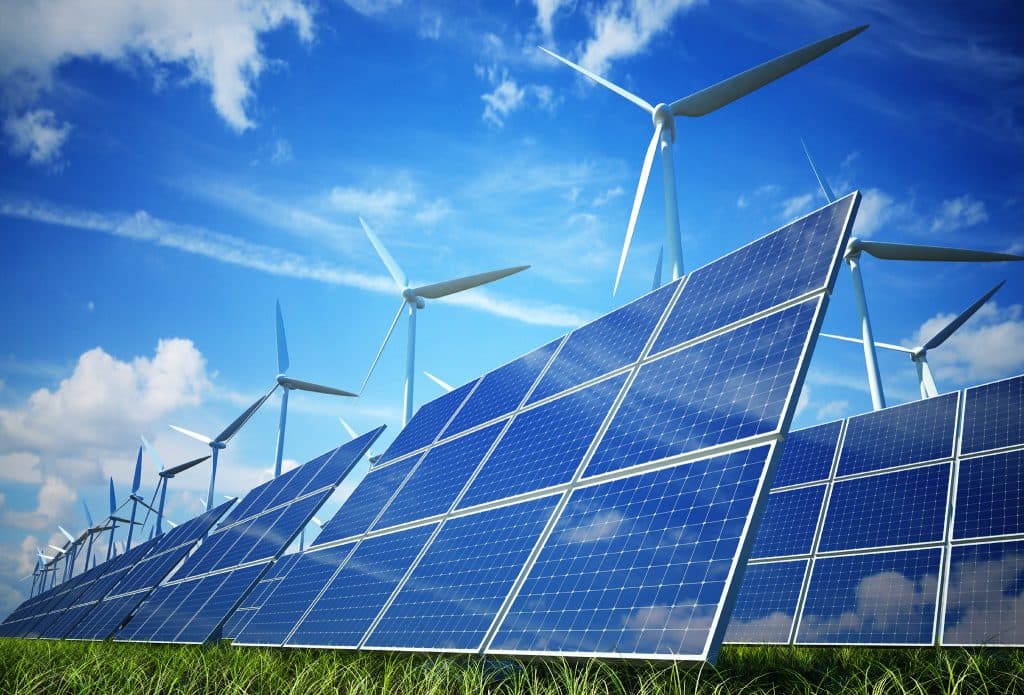
ČEZ's investor presentations from this year show that the domestic energy giant is scaling back its ambitions for renewable energy sources (RES) development by 2030. And this is not merely a cosmetic adjustment. The reason? The Czech Republic's legislative and regulatory conditions are not conducive to development. Could money allocated from the Modernisation Fund for RES development therefore go to waste?
In 2021, ČEZ presented investors with a vision through to 2030, whose target the company still maintained in November 2024. The target was to increase installed solar PV and wind capacity by a total of 6 GW by 2030 compared with 2020. Given the length of permitting processes for wind power plants, it could be, and still can be, assumed that the bulk of new capacity was and is expected to come from solar PV. The starting level of installed RES capacity in 2020 was 2.2 GW (including 2 GW in hydropower plants).
However, the latest presentation from May 2025 expects RES capacity to reach 4.1 GW in 2030, i.e. an increase of only 1.9 GW. The presentation further states that the company is prepared to invest up to 40 mld. Kč in RES, provided that legislative and regulatory conditions in the Czech Republic are favourable. And that is where the problem lies.
Operating support only for wind, solar economics at risk
This is nothing new: there is interest in investing in wind power in the Czech Republic, helped by the established operating support in the form of an auction premium. However, there are no projects with building permits in which investment could be made, due to lengthy permitting processes and local opposition.
The situation is different for solar PV. Over the past 2 years, installed capacity of these sources in the Czech Republic has grown by 2 GW (with few exceptions, these are small installations at family homes or smaller business premises), which has already affected spot electricity prices. On sunny days or weekends, during periods of peak solar PV generation, prices approach zero, if not falling negative. In other words, the economics of solar PV are questionable.
Lenders have naturally also taken note of the situation and are reluctant to finance large projects unless electricity sales at a predetermined price are secured. It should also be noted that financing costs remain fairly high given interest rates. This applies even when a project is financed in euros.
Investment subsidies are often insufficient
An improvement in solar PV economics can be expected with the development of energy storage. However, the rollout of battery storage has not yet materialised, although the foundation has been laid. A investment incentive worth 2 mld. CZK has already been launched by the Modernisation Fund, and the support auction should currently be under evaluation.
But back to solar PV, for which several rounds of competitive tenders for investment support have been held since 2021, totalling well over 10 mld. CZK. The problem is that many projects that have been promised investment subsidies will be abandoned. An investment subsidy will undoubtedly improve a project's economics, but it will not save it.
The solution is operating support in the form of an auction premium, which is used for the aforementioned wind power projects. Where investment and operating support are combined, operating support is reduced by the investment support awarded according to a predetermined formula, meaning excessive support cannot occur. However, if support through an auction premium is not introduced, unused funds from the Modernisation Fund may be transferred to the benefit of the European Innovation Fund. And the Czech Republic will lose an opportunity to develop RES.
Sdílejte článek prostřednictvím:
You might also like
10 August 2026, 09:33
9 August 2026, 14:38