Gas storage facilities filling at slowest pace in years, but ministry reassures: no shortage risk

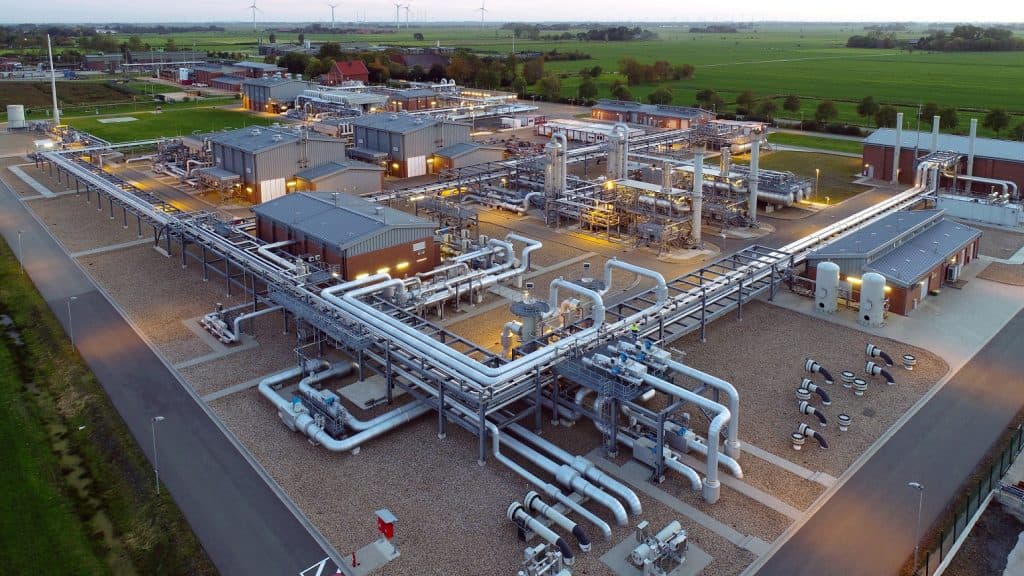
Gas stocks are being replenished more slowly this year than in previous years. As of 20 July, gas storage facilities held 1.7 billion cubic metres of gas, one-third less than a year earlier. This also represents around 49 percent of total storage capacity. The reasons are greater depletion of stocks during the past winter and traders holding off amid developments on the energy market. Tadeáš Provazník, spokesperson for the Ministry of Industry and Trade (MPO), told ČTK in response to a query. According to the ministry, traders have announced plans to fill storage facilities to around 80 percent, but this will happen later than in the past.
Developments on the gas market this year have been significantly affected by the situation in the Middle East and restrictions on shipping through the Strait of Hormuz.
"This winter led to greater withdrawals from stocks than during the previous exceptionally warm winters. At the same time, traders are replenishing stocks more slowly this year because the economic incentive for storage is weaker. The difference between summer and winter gas prices is small, so storage itself does not bring the same trading profit as in some previous years. Some traders are not using storage capacity and are securing supplies for customers through spot, forward and futures contracts," Provazník said about the current situation.
Recent talks held by Minister of Industry and Trade Karel Havlíček (ANO) with traders and storage operators showed that traders have had contracts for around 80 percent of capacity since spring, according to the MPO. "Traders have declared their interest in filling the capacity they have contracted, but most likely, given the above, at a later date than last year," Provazník noted.
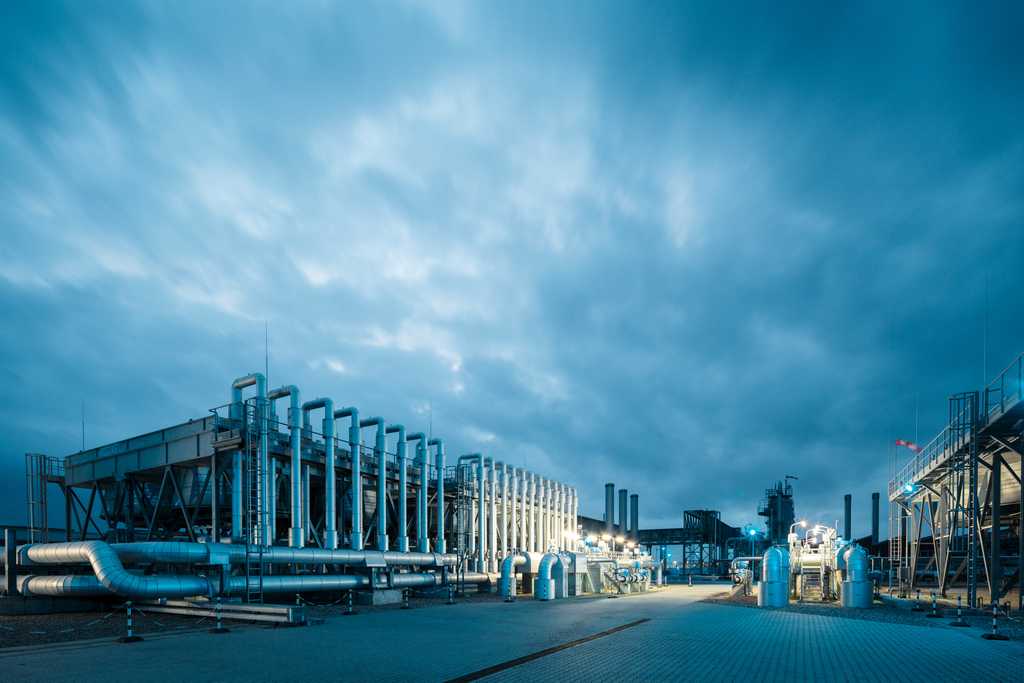
The current lower filling level of storage facilities therefore does not pose a threat to gas supplies, according to the ministry. "The Czech Republic currently uses several supply sources – primarily imports from Western Europe, Norwegian gas and LNG mainly from the United States. Storage facilities are an important safeguard, especially for covering high winter consumption and short-term fluctuations," the MPO spokesperson said. According to the ministry, there is therefore no risk of a gas shortage in the coming winter.
Weaker replenishment of gas storage facilities is evident across the EU. According to an analysis by ČSOB, European storage facilities are at their lowest filling level for at least 15 years. "Due to volatile price developments, traders postponed gas purchases in anticipation of possible price declines. However, the opposite happened. Gas for this winter is now trading above EUR 50 per MWh, which means only one thing: gas supplies for the coming heating season will probably become significantly more expensive," said Dominik Rusinko, chief economist at Patria Finance.
Rusinko also believes that Europe is not at risk of a gas shortage such as during the 2022 crisis. "However, this does not mean the risk is negligible. If wholesale gas prices remain elevated, they will gradually feed through into the price lists of domestic suppliers, making this an important pro-inflationary risk," he added.