Commission raises concerns over support for new Dukovany units

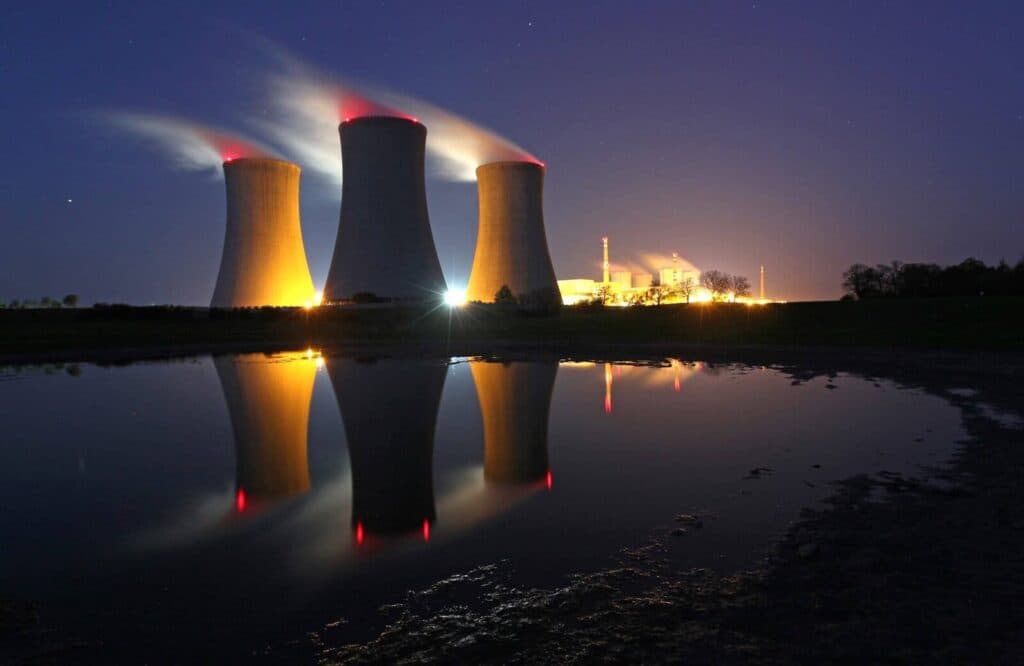
The European Commission has published details of its formal investigation into the Czech support model for the construction of two new nuclear units at Dukovany. Although the investigation was officially launched at the end of last year, more detailed information has only now been published. The Commission has several objections to the proposed support. In its view, the proposed support may be too generous. The Czech Republic has also failed to provide sufficient details to assess its impact on the market. This is the European Commission's initial position on the proposed support, and the final form of the state aid will be subject to further negotiations.
The European Commission published details of the proceedings concerning the Czech notification of support for two new units at Dukovany at the turn of the month. The Czech Republic notified the support on 2 October 2025; according to the decision, it is a broader model than the previously approved support for the standalone fifth unit. The assessment now covers two units, a changed investor model and a more extensive support "package".
The Commission explicitly states in its decision that, based on the information available so far, it cannot decide whether the support is compatible with the internal market. The main concerns relate to appropriateness, proportionality and effects on competition.
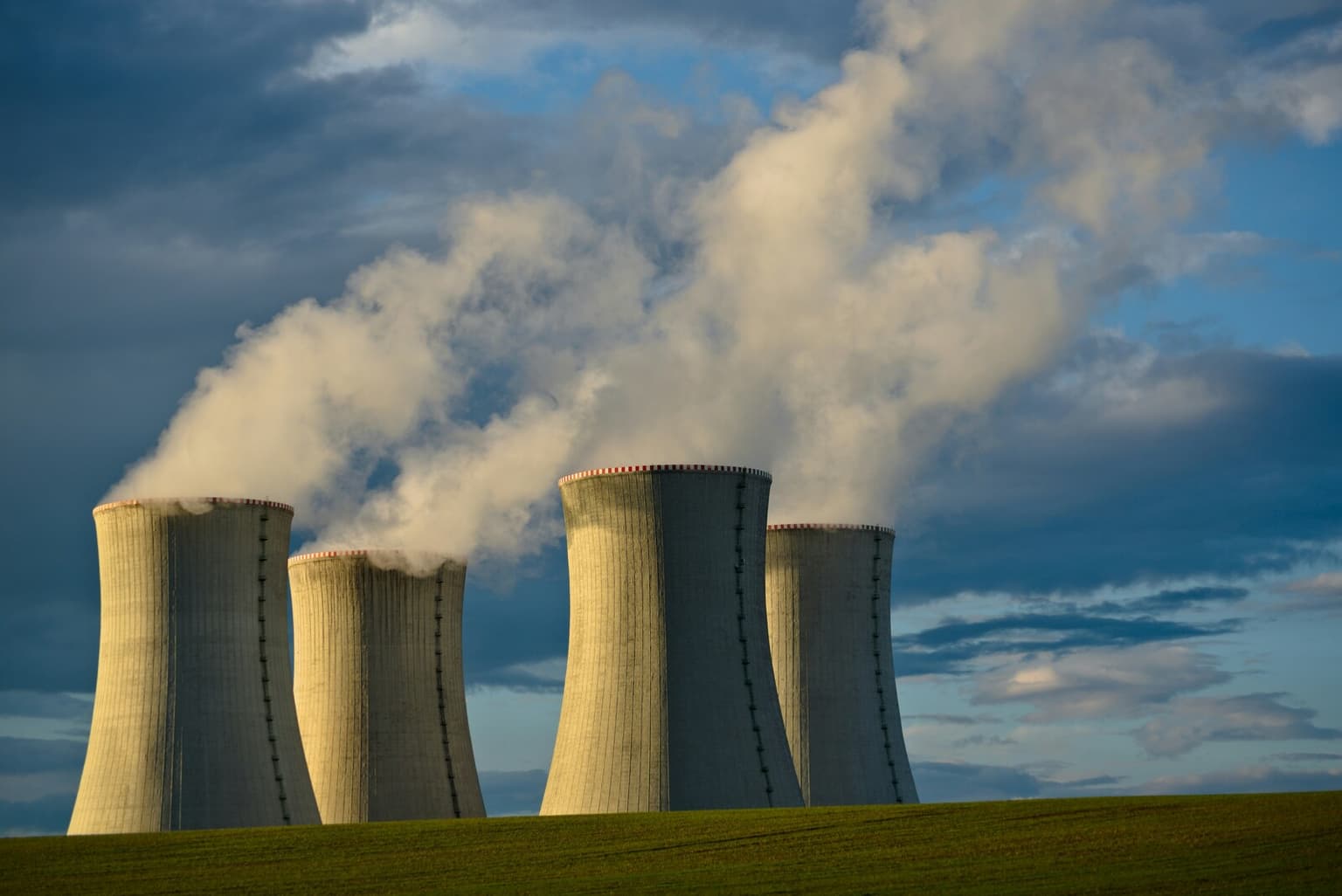
The proposed support package has three main components. The first is a state loan (referred to as repayable financial assistance), whose estimated volume for both units is between 23 and 30 billion euros. The second component is a contract for difference, intended to ensure stable revenues for the plant for 40 years. The third is protection against legislative and regulatory changes and other adverse impacts that could undermine the project's economics.
It is precisely the combination of these instruments that the Commission considers problematic. According to the decision, the Czech model could shift too much risk from the investor to the state. The Commission notes that the support must not bring the project closer to the risk profile of regulated infrastructure, such as a transmission or distribution system operator.
The new nuclear units will be generating assets in a competitive market, and the investor must therefore bear at least part of the construction, operational and market risks. The Commission fears that otherwise the investor may lack an incentive to successfully complete the project.
Some data remain unknown
The project envisages the construction of two APR1000 units supplied by South Korea's KHNP; according to the Commission's decision, each is to have capacity of up to 976 MWe. Annual generation from both units is expected to reach up to 15.4 TWh of electricity. According to the document, construction is to take approximately nine years, with construction work due to begin in April 2030 for the fifth unit and in April 2031 for the sixth unit (note: the Commission also inconsistently states that the first unit is to enter operation from 2036 and the second from 2037).
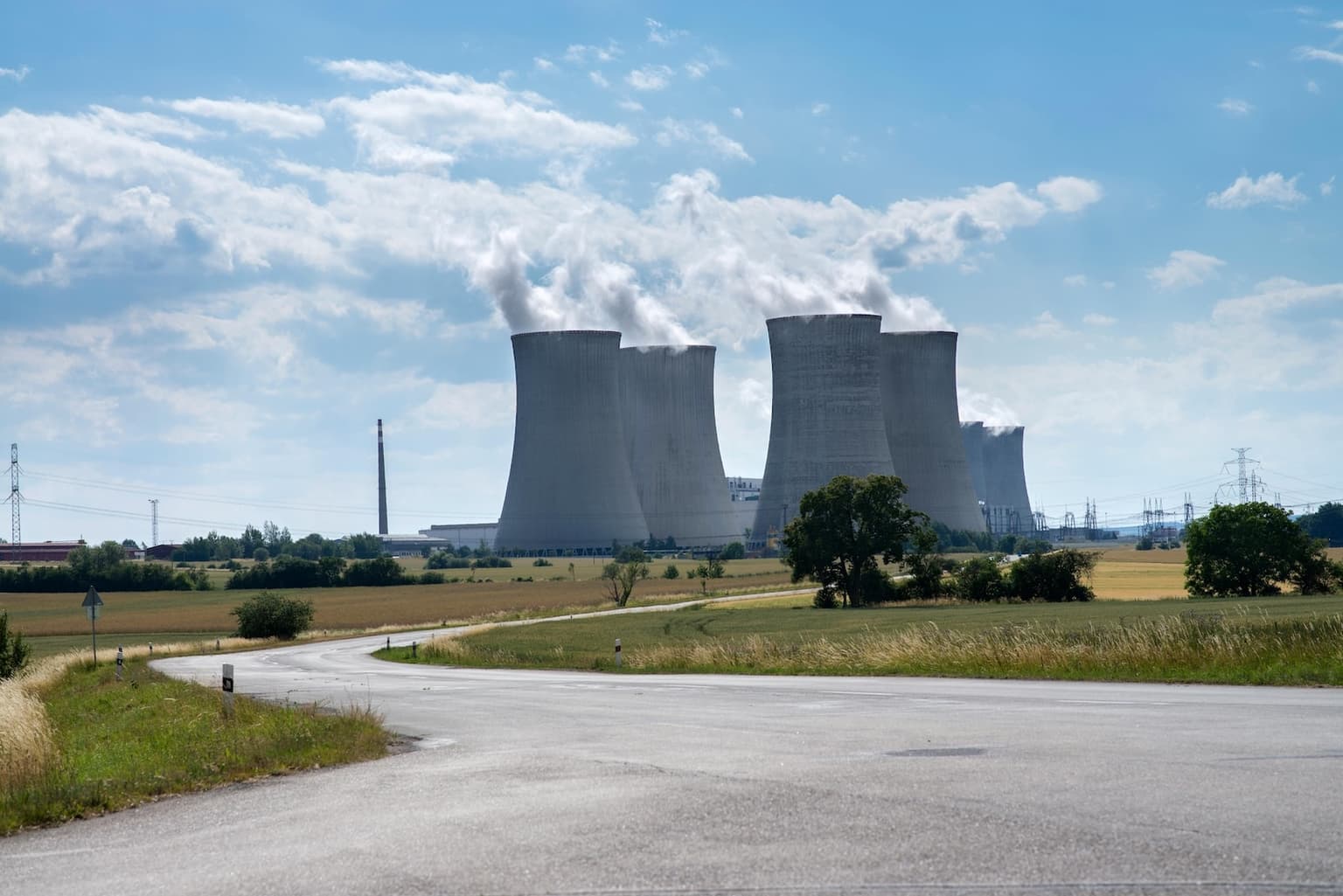
The Commission puts the estimated costs (so-called overnight costs) of the entire project (i.e. including partial fuel costs during commissioning, construction site preparation, licensing and permitting costs) at between EUR 20 and 25 billion for both units. These are costs excluding financing costs, and therefore not the total nominal project price after accounting for inflation, interest and the timing of expenditure.
The state will assume part of these costs through a state loan with preferential interest. The EPC contract with KHNP itself is stated in the document at between 15 and 20 billion euros, broadly corresponding to a price of approximately CZK 407 billion for both units.
The state loan is to be interest-free during construction. After the operating licence is obtained, it is to bear interest at the state's financing costs plus one percentage point, but no less than two percent per year. Repayment is to last 30 years. The Commission notes that the loan is intended to cover not only expected construction costs but also potential cost overruns during construction. The proposed loan ceiling is stated in the document as between 30 and 37.5 billion euros (for the most adverse scenario).
CfD is to be capacity-based, not production-based
The second key component of the support is a two-way contract for difference. Under the Czech proposal, it is to be structured as a "capability-based" CfD, meaning a contract based on the plant's ability to generate electricity rather than directly on the actual volume of electricity produced. This is an important distinction. A production-based CfD may incentivise a plant to generate even during hours when this is inefficient from the system's perspective, whereas a capacity-based model should better preserve responsiveness to market prices.
A capability-based CfD is a type of two-way contract for difference under which payments are not directly based on electricity actually generated, but on the plant's ability to generate electricity or on a predefined reference volume. Its aim is to preserve the operator's incentive to respond to market signals: to generate when electricity is valuable to the system and to reduce output when prices are low or negative. In its general methodology, the Commission describes this approach as one form of so-called "production-independent CfD", which can better limit market distortions than conventional production-based CfDs.
The Commission does not challenge this principle, but objects to the lack of detail. In its view, it is unclear exactly how the reference price will be set and how the plant will be incentivised to respond to low or negative prices. The Commission considers this issue crucial in a future system with a higher share of renewable energy sources.
The basic CfD strike price is estimated in the financial model at 85 to 105 EUR/MWh in 2024 prices. This price is to be indexed annually. Although a full comparison is not entirely straightforward, this price is significantly lower than, for example, the price for the new units at Hinkley Point C nuclear power plant. The key lies precisely in the low cost of financing provided by the state loan.
“The government's primary objective was to achieve the lowest possible electricity price from the new units,” Dukovany II director Petr Závodský previously told ČT24. “Thanks to zero-interest financing during construction, we are able to achieve one of the lowest electricity prices among nuclear projects being built in the region,” he said.
Zero-interest financing does not, however, mean that financing costs disappear. If the state provides the project with an interest-free or preferential loan, the public sector assumes these costs. The guaranteed CfD price may therefore appear lower than under commercial financing, but part of the project's actual costs is merely shifted to the state, and ultimately to taxpayers.