



28 October 2026, 15:10
Loading...
Top 10 energy stories from the past week
oEnergetice.cz
11 March 2024, 18:14
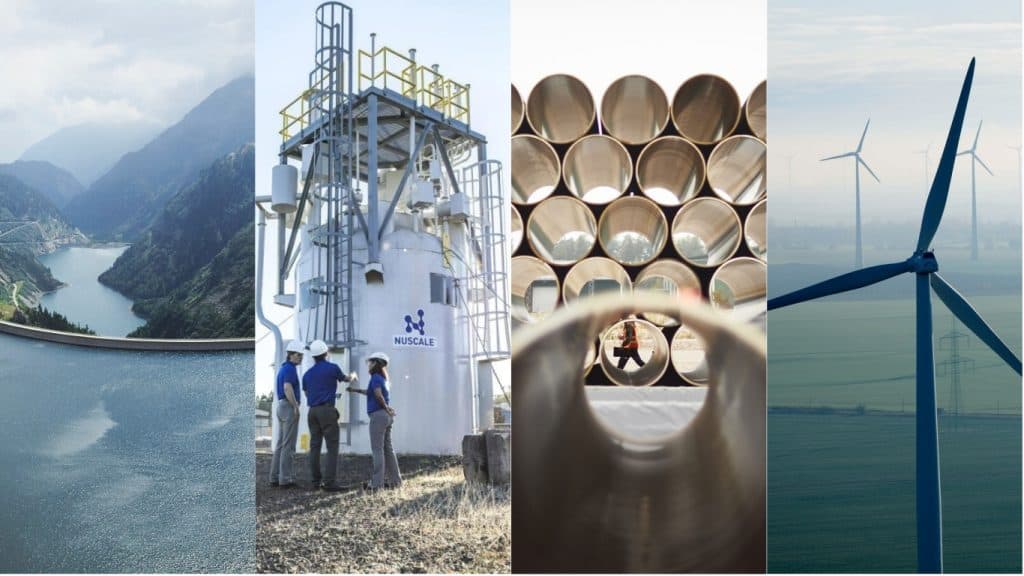
1. Vogtle 4 reactor reaches new milestone, connects to the grid
The American Vogtle nuclear power plant, located in Waynesboro, Georgia, recently achieved a major milestone. Unit 4, equipped with an AP-1000 reactor, was successfully connected to the electricity grid on 1 March 2024. The reactor first achieved criticality on 14 February 2024.
Synchronization and connection to the grid mark an important stage in the series of start-up tests. During these tests, operators will gradually increase the reactor's output and conduct checks at different power levels until it reaches full power. Once all tests have been completed successfully, the unit will be ready for commercial operation, which is scheduled for the second quarter of 2024.
2. UAE starts up fourth and final unit of new Barakah nuclear power plant
The fourth unit of the Barakah nuclear power plant has reached a significant milestone with its first reactor start-up. In the coming weeks, the unit will be connected to the electricity grid and begin testing at progressively higher power levels. The Arab world's first multi-unit nuclear power project consists of four APR-1400 units and aims to supply a quarter of the country's electricity consumption with low-emissions power.
Emirates Nuclear Energy Corporation (ENEC) announced the successful start-up of the fourth unit at the Barakah nuclear power plant in the United Arab Emirates. Reactor start-up marks the beginning of the nuclear fission reaction, which generates heat that is then used to produce steam and drive a turbine.
3. Siemens Energy faces criticism over disastrous results at its Spanish wind turbine maker
Siemens Energy shareholders voiced their dissatisfaction with the performance of subsidiary Siemens Gamesa at the company's annual general meeting. Siemens Energy took full control of the company in 2022. Siemens Gamesa is now threatening Siemens Energy's very existence.
Siemens Energy's board faced disgruntled shareholders at the annual general meeting, who were seeking answers about the subsidiary Siemens Gamesa's spiralling losses.
4. Polish farmers push for Green Deal exemptions as government talks to Commission
The Polish government is negotiating with European Commission President Ursula von der Leyen to exempt the country from some provisions of the European Green Deal. One government minister confirmed this to the media, according to Euractiv.
Polish farmers are continuing their protests against the European Green Deal and the liberalisation of trade with Ukraine, which has caused them huge losses. Their blockade of the border has provoked anger among Ukrainian officials, who have urged their Polish counterparts to take measures to maintain cross-border movement.
5. Ukraine has recently been exporting significant volumes of electricity to Eastern Europe
Ukraine has exported significant volumes of electricity to Eastern Europe in recent weeks, boosting its revenues at a time when the Ukrainian economy is struggling with the effects of Russia's military invasion. Reuters reports that, according to Ukraine's energy ministry, electricity exports from Ukraine are expected to reach their highest level since the start of the year today, thanks to relatively warm weather.
Ukraine began exporting electricity shortly before it was invaded by Russia in February 2022. It then temporarily suspended exports because of Russian attacks on energy infrastructure and the occupation of Ukraine's Zaporizhzhia nuclear power plant. Last April, however, Ukrainian Energy Minister Herman Halushchenko announced the resumption of surplus electricity exports to European countries.
6. Poland's new government is changing the country's energy policy
Poland's new government is paving the way to reduce the energy mix's dependence on coal and is seeking to align energy policy with the EU's climate goals. It is looking to achieve this through more intensive electrification and increased power generation from renewable sources, particularly wind, as well as nuclear energy, reports Euractiv.
After eight years in power, the far-right Law and Justice party (PiS) lost to the centrist opposition in 2023. The new government, which aims to move the country towards greater sustainability, faces considerable challenges.
7. Is Europe heading for a complete break with Russian energy commodities?
Following the death of Russian opposition politician Alexei Navalny, a group of around 60 members of the European Parliament decided to sign an initiative calling for a complete ban on imports of Russian energy commodities into Europe. The Austrian government has also recently approved 200 million euros in support for building a gas pipeline to import natural gas from Germany. Austria has faced a wave of criticism over the unprecedentedly high share of Russian gas in its imports.
A broad coalition of members of the European Parliament has written to the leaders of EU institutions, calling for a ban on imports of all Russian energy commodities into Europe, both by pipeline and by sea. MEPs say there is no longer any room for “half measures”. They are also calling for tougher action against the Kremlin and its energy exports.
8. Decarbonisation at risk: allowance price has fallen sharply over the past year
The price of emissions allowances under the EU Emissions Trading System (EU ETS) has fallen by almost half in one year, from 95 EUR/t in February 2023 to 52 EUR/t in February this year. The market is being affected by high energy prices and political uncertainty.
The low allowance price is a worrying signal for the decarbonisation of European industry, as reported by Euractiv. Carbon pricing was introduced precisely to support structural decarbonisation by providing businesses with a long-term incentive to move away from fossil fuels. EU countries are required to direct some of their revenues from emissions allowance sales towards supporting the green transition—money that has already been allocated, often years in advance. If carbon prices were to remain persistently below expected levels, public funds would have to make up the shortfall.
9. South Moravia's first biomethane plant starts operating in Rakvice
BPS Rakvice is set to start operating the first biogas plant in South Moravia to supply biomethane to the gas distribution network in Rakvice, in the Břeclav district. Biomethane is gas of the same quality as natural gas. It is a low-emissions energy source produced from purpose-grown biomass or plant and animal waste, and is particularly suitable for heating as well as for use as a fuel for trucks and buses. Company managing director Ondřej Frič and Environment Minister Petr Hladík (KDU-ČSL) told reporters this today at the plant's official opening.
There are around 570 biogas plants in Czechia, but only seven of them supply biomethane to the distribution network. “The business plan is based on producing energy with lower emissions and reducing emissions,” said Frič, who is also commercial director of AgriKomp Bohemia. The company supplied the technology.
10. Swedish government to explore possibility of lifting uranium mining ban
Sweden has launched an inquiry into the possibility of lifting the country's ban on uranium mining. The aim is to identify all the legislative and regulatory changes needed for mining to resume. Sweden holds around a quarter of Europe's known uranium reserves, which could help the EU achieve climate neutrality and energy independence.
Sweden's Minister for Climate and the Environment announced that the ministry would conduct an inquiry to analyse and propose the legislative changes needed to allow uranium mining to resume in the country. The Swedish parliament banned uranium exploration and mining in 2018.
Energostat: electricity generation in Czechia
Energostat: electricity generation in Germany
Translation disclaimer
This article is a machine translation of the Czech original and has not yet been fully reviewed. In case of any doubt, please refer to the Czech version.
Sdílejte článek prostřednictvím:
Topics:Energy Weekly
You might also like

28 October 2026, 13:08

28 October 2026, 11:10

28 October 2026, 09:08
