How Does Public Support for Dukovany Differ from That for Six EPR2 Reactors? Commission Publishes Details of France’s Plan

France has notified the European Commission of support for the construction of six new EPR2 nuclear reactors. In several respects, the support structure resembles the Czech model for new units at Dukovany: a concessional loan, a 40-year contract for difference and protection against selected risks. The differences lie primarily in the extent of the investment risk borne by the investor. In this respect, the French model appears riskier for the investor. As with the Czech notification, this is an initial step in the overall procedure, and the support scheme will be subject to further negotiations.
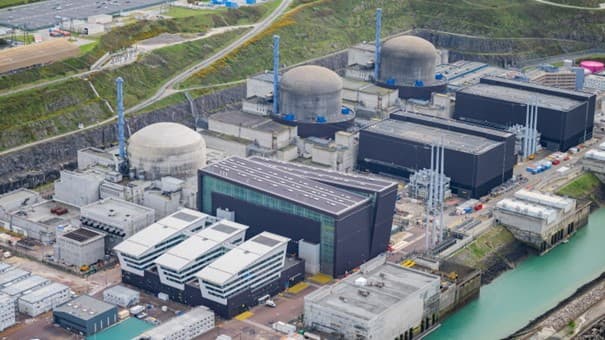
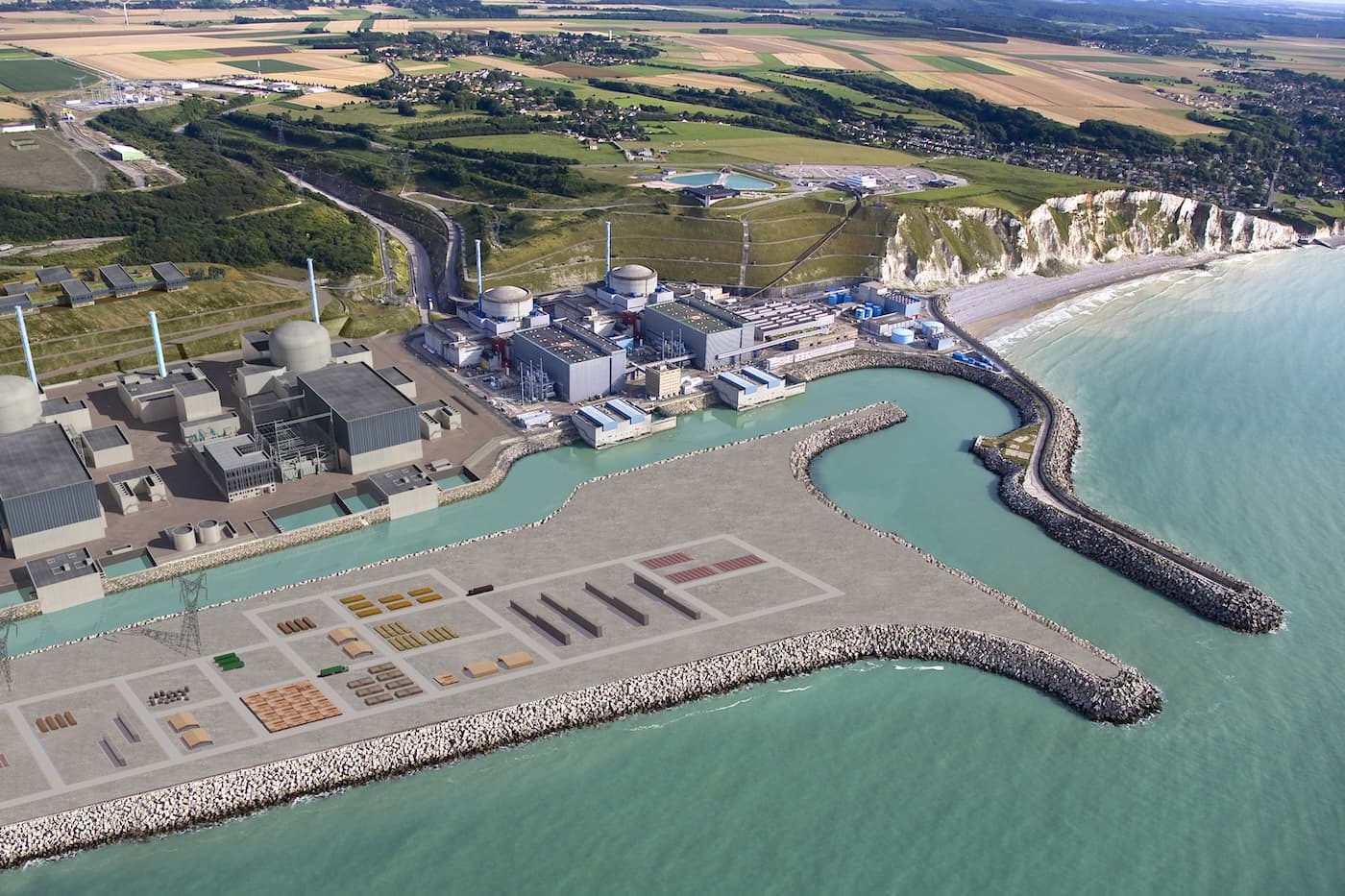
At the end of March, the European Commission launched a formal investigation into the French support model for the construction of six new nuclear units. These are EPR2 reactors to be built by EDF at the Penly, Gravelines and Bugey sites. The project’s total installed capacity is expected to reach nearly 10 GW, with the first units due to enter operation from 2038.
French support comes shortly after similar proceedings were launched concerning Czech support for two new units at Dukovany. In practice, the Commission is therefore assessing two major European nuclear models almost simultaneously. In both cases, it acknowledges that new nuclear capacity is unlikely to be built without public support. At the same time, however, it is examining whether the proposed mechanisms are overly generous and whether they shift an excessive share of the risks onto the state.
The parallel assessment of both models may be both an advantage and a disadvantage for Czechia. On the one hand, it is proceeding alongside France, a strong advocate of nuclear energy, which may strengthen the argument that new nuclear capacity requires long-term, predictable public support.
On the other hand, under state aid rules the Commission must limit state intervention to the minimum necessary to achieve the objective of the support—in this case, the construction of nuclear capacity. If France therefore adopts a model under which EDF bears a greater share of investment and construction risks, it will be more difficult for Czechia to defend significantly more generous terms for the investor. The French proceedings may thus become not only political backing but also a benchmark against which the Commission will compare the Czech model.
The French package: Loan, CfD and risk-sharing—and inspiration from Czech support
Like the Czech support model, the French model rests on three pillars. The first is a concessional loan intended to cover 60 % of the project’s estimated construction costs. According to the current estimate, this amounts to EUR 44 billion in 2020 prices. The loan is to be interest-free during construction; after the individual reactors enter operation, it is to carry a fixed annual interest rate of 3 %. Principal repayment will begin after a four-year grace period and will last 35 years.
The second instrument is a two-way contract for difference (CfD) lasting 40 years for each reactor. As in the Czech case, it is intended to be a so-called capability-based CfD, meaning support linked to reference generation capability rather than directly to actual output. France gives an indicative target price of 90 to 120 EUR/MWh in 2024 prices. After deducting the expected value of flexibility, capacity revenues and guarantees of origin, the indicative strike price comes to 85 to 115 EUR/MWh.
The third component is a risk-sharing mechanism. It is intended to compensate for the effects of selected events beyond EDF’s control, such as legislative changes, certain safety requirements, grid connection delays, permit revocation, natural disasters or geopolitical interventions. Compensation may take two forms—adjustments to the strike price under the contract for difference or direct state payments.
Key difference: What risk does the investor bear?
The biggest difference from the Czech model is the allocation of construction risks. In the French case, EDF is to finance 40 % of construction costs through a shareholder loan. It is also to bear the first portion of any cost overruns, up to EUR 15 billion. A further EUR 15 billion is to be financed 90 % by the state and 10 % by EDF. No rules have yet been set for overruns above EUR 30 billion.
The Czech model is therefore considerably more favourable from the investor’s perspective. The state loan for Dukovany is to cover virtually all construction financing as well as any cost overruns, up to a cap of EUR 30 to 37.5 billion. EDU II is also not required to provide additional capital. The Czech notification itself describes the project’s risk profile as close to that of regulated infrastructure, such as a transmission system operator. The Commission had certain reservations about this approach.
The Commission is also examining the market and the position of dominant players
Both proceedings raise the recurring question of whether the support will strengthen the dominant position of established players. In France, the situation is clear: EDF generates around 77 % of France’s electricity and owns the entire domestic nuclear fleet. The Commission is therefore examining whether the new project will further strengthen EDF’s market power, particularly if part of the electricity is not sold through organised markets.
In the Czech case, the structure is more complex. The direct beneficiary of the support is EDU II, in which the state holds an 80 % stake and ČEZ holds 20 %. However, the Commission does not rule out that EDU II and ČEZ may constitute a single economic unit for state aid purposes, among other things due to their capital, functional and technical links. Here too, it is therefore requesting clearer rules for electricity trading and safeguards to prevent support from being passed on to selected customers through preferential contracts.
Both the Czech and French notifications show that the Commission does not reject support for new nuclear capacity. However, the specific details of that support are important to it. The good news is that the Commission repeatedly acknowledges that the combination of high investment costs, long construction periods and uncertain market revenues poses a problem for nuclear projects. And public support may be one solution.