LNG imports to the EU fall for a fourth consecutive month, down nearly 40% from peak

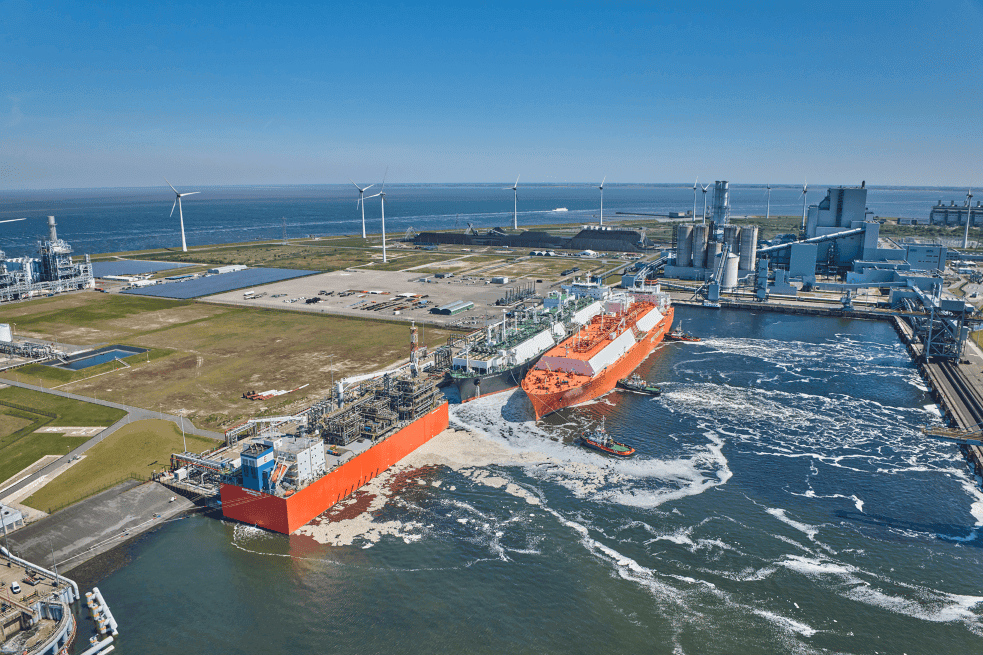
Imports of liquefied natural gas (LNG) into Europe are visibly weakening after a strong start to the year. Data show four consecutive months of decline, with import volumes down by nearly two-fifths from their March peak. The trend comes amid restricted supplies through the Strait of Hormuz, slow storage filling and ahead of the gradual EU ban on Russian LNG.
According to available data, European LNG imports reached 142,1 TWh in March, before falling to 130,4 TWh in April, 120,4 TWh in May, 105 TWh in June and 87,1 TWh in July. This represents a decline of nearly 40% between March and July. The July figure is also one-third lower than the 131,5 TWh recorded in January.
Tensions in the LNG market are affecting liquefied gas imports into Europe
The decline in imports cannot be explained by normal seasonality in the European market alone. As the Oxford Institute for Energy Studies (OIES) noted, LNG exports from Qatar and the United Arab Emirates have virtually come to a halt following the closure of the Strait of Hormuz. Together, these producers accounted for around 19,5% of global LNG trade in 2025. Qatar alone exported approximately 106 billion cubic metres (bcm) of gas in 2025, while the United Arab Emirates exported a further 6,5 bcm.
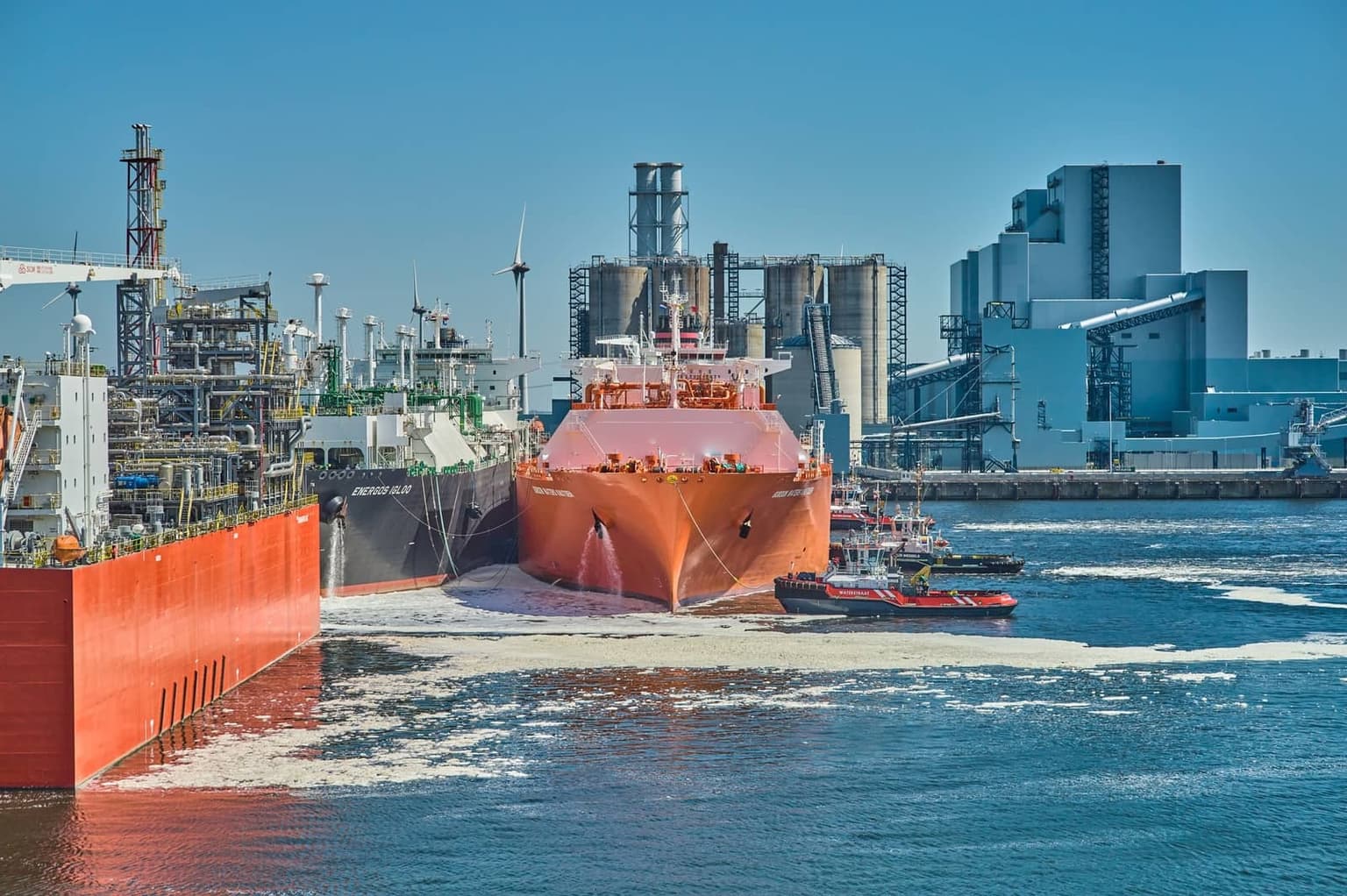
If production and exports from the region remain effectively constrained, the monthly loss of Qatari and Emirati LNG could reach around 8,6 bcm, according to OIES. Increased deliveries from other countries would only partly offset this shortfall, as new volumes from the United States, Canada, West Africa, Russia, Norway and Australia are expected to add around 4,3 bcm per month in total.
Europe entered 2026 with a markedly greater dependence on LNG than before the energy crisis. In 2025, the EU imported a total of 131 bcm of LNG, up 29% year on year, while pipeline imports fell 8% to 158 bcm. LNG therefore accounted for 45% of total EU gas imports in 2025.
The shift in the supplier mix is particularly significant. The United States covered approximately 58% of EU LNG imports in 2025, while Russia's share fell from around 20% in 2024 to 13%. In absolute terms, however, this still amounted to 18 bcm of Russian LNG, a volume that remains significant for Europe's gas balance.
Russian LNG faces a ban, but transitional exemptions remain
The European Union has already adopted a regulation on the gradual phase-out of imports of Russian pipeline gas and LNG. A full ban on Russian LNG imports is due to take effect from the beginning of 2027, while the ban on pipeline gas is to follow from autumn 2027.
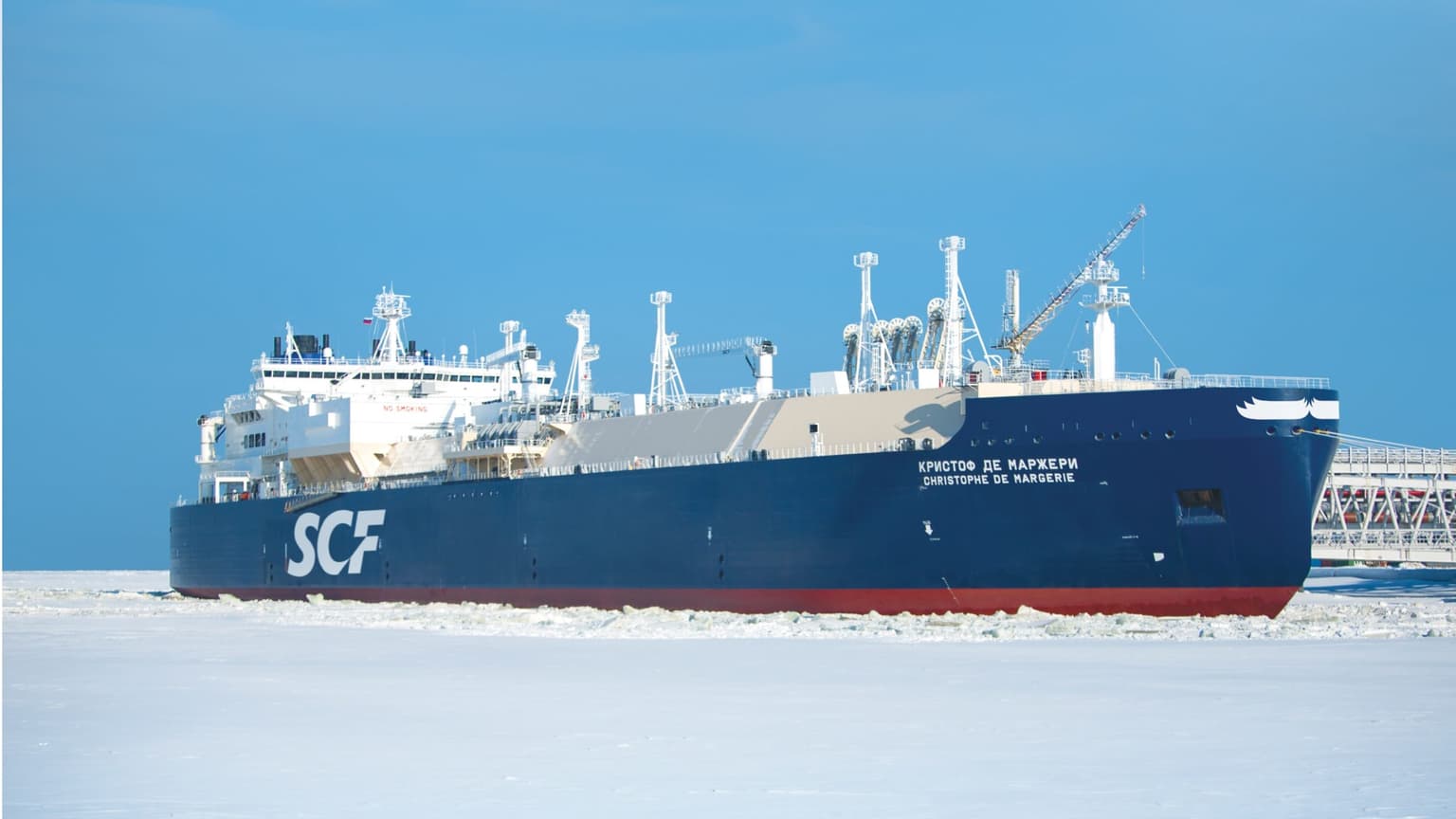
However, the ban is not entirely without exemptions. The EU's 21st sanctions package temporarily exempts from the general ban certain supplies of Russian LNG intended for third countries, provided they are made under long-term contracts concluded before 24 February 2022, until 25 July 2027.
The ban on Russian LNG will therefore differ in nature from the current disruption to Qatari supplies. The former is a predictable regulatory change with transition periods, while the latter is an immediate reduction in supply linked to geopolitics and the war in Iran.
Gas storage is filling more slowly than last year
LNG imports are particularly crucial for the summer injection season. EU gas inventories stood at approximately 29,4 bcm on 1 April 2026, 6,6 bcm less than at the same point a year earlier. By 22 July, European storage facilities held 57,7 bcm of gas, down 12 bcm year on year.
The economics of storage also remain problematic. According to OIES, the seasonal spread between the nearest-month gas contract price and winter contracts remains consistently negative in summer, reducing the commercial incentive to buy gas now and store it for winter. Higher spot prices and uncertainty over winter LNG supply mean that storage filling is increasingly dependent on regulatory measures by individual states.
In OIES's central scenario, with limited LNG availability, EU gas inventories could reach only 74,3 bcm by 1 November, equivalent to 69,6% of European storage capacity. A later July analysis by the institute even considers a scenario of 72 bcm, or 67% filling, if injection rates from the end of July resemble those of 2024.
The Czech Republic does not have its own LNG terminal and relies primarily on interconnection with Germany for gas imports. ČEZ has reserved capacity at Eemshaven in the Netherlands, but physical deliveries to the Czech Republic still depend on the availability of gas and transmission capacity in north-western Europe.
Czech storage facilities were filled to around 60% of their capacity at the beginning of August. The risk for the Czech Republic is not only the absolute level of domestic inventories. Storage facilities across Europe, particularly in Germany and the Netherlands, are similarly “empty”. Storage facilities across the EU are currently 57,3% full, approximately 12,3% less than last year.