Spain has seen the most negative electricity prices this year, but another country remains the long-term leader

Negative prices have occurred most frequently this year in Spain, which has experienced a literal “boom” in this phenomenon in recent years. Spain only saw its first negative price last year. In previous years, it had only ever recorded zero electricity prices. Germany, however, has had the highest number of negative-price hours over the long term, where they have been occurring for many years.
Negative prices are an increasingly common phenomenon in the European Union’s energy sector, although until recently they were an entirely unknown concept in some countries. Their number has risen sharply, particularly in recent years, mainly around midday during the summer, when solar power plants generate high volumes of electricity. However, these sources also bear the greatest cost of negative electricity prices. Their generation loses value because they generate primarily when there is insufficient demand for electricity.
Negative prices have occurred most frequently this year in Spain. Publicly available data show that prices have fallen below zero for 452 hours, meaning more than one in every ten hours so far this year. Including hours when the price was zero, the total comes to 594 hours (15 % of all hours this year).
The Czech Republic ranks tenth. This year, prices on the Czech day-ahead market fell into negative territory for a total of 207 hours (or 223 hours when zero prices are included). Compared with the same period last year, this represents an increase of roughly one-third.
The occurrence of negative electricity prices on the spot market is, however, rising in virtually all European Union countries. While the Netherlands had the most negative-price hours in the same period last year, with 200 in total, 11 European countries have exceeded 200 hours this year.
Germany is the long-term leader
Although negative prices have occurred most frequently in Spain this year, Germany is the long-term “leader”. The “boom” in negative prices in Spain is a relatively new phenomenon, as the country’s first negative price only occurred last year.
Germany, by contrast, has experienced negative prices over the long term, according to publicly available data at least since 2015.
Flexibility as the answer to negative prices
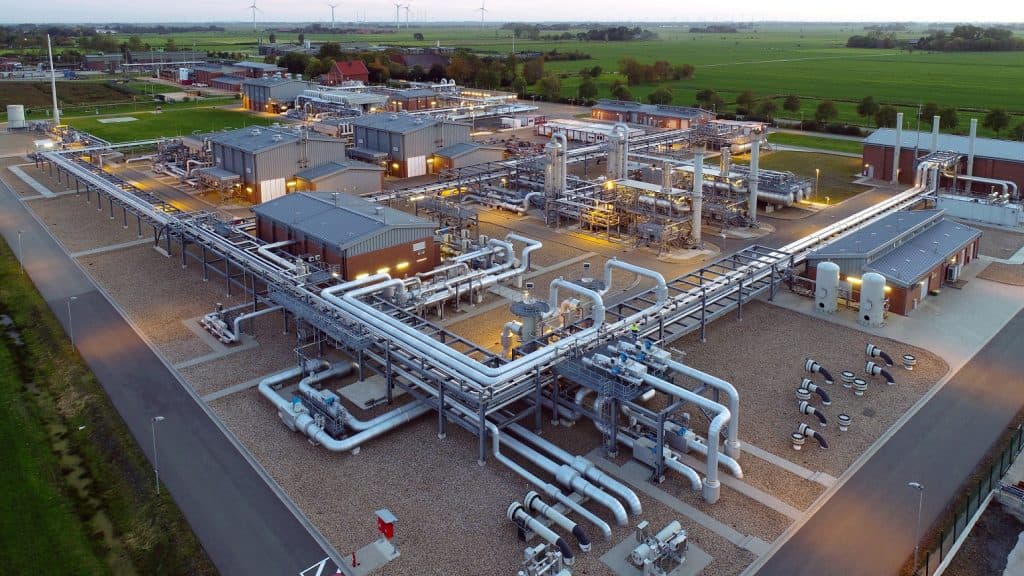
Negative and low prices are an adverse phenomenon that generally points to a lack of system flexibility. Energy storage facilities and flexible generating resources, especially gas-fired and combined-cycle gas turbine power plants, are expected to help increase flexibility.
Flexible generation assets with gas turbines are therefore currently in exceptionally high demand, and turbine manufacturers have production capacity booked years in advance. Most European countries have plans to build new gas-fired capacity. For example, Germany is set to build up to 20 GW of new gas-fired capacity to complement renewable sources and help replace ageing, high-CO2-emitting coal-fired power plants.
Several GW of gas-fired power plants are also expected to be built in the Czech Republic. According to Industry and Trade Minister Lukáš Vlček, the Czech Republic needs to build at least 2,5 GW of new gas-fired capacity.
“Given current generation and consumption, and in view of the analyses prepared by ČEPS, the Czech electricity transmission system operator, this is capacity of roughly 2500 to 3000 MW. So we are talking about approximately three or four gas-fired power plants,” the industry and trade minister said in an interview with iRozhlas.cz at the beginning of the year.
Plans to build such a volume of capacity in a relatively short period may, however, encounter obstacles. It is not only the already mentioned insufficient capacity of gas turbine manufacturers, but also lengthy permitting procedures. An amendment to the Energy Act known as Lex Plyn is intended to help address these procedures in the Czech Republic. Its legislative process has, however, been delayed in the Senate after senators returned the amendment to the Chamber of Deputies over individual inspections of solar power plants.