
23 October 2026, 14:38
Loading...
Top 10 energy stories from the past week
oEnergetice.cz
20 October 2024, 19:25
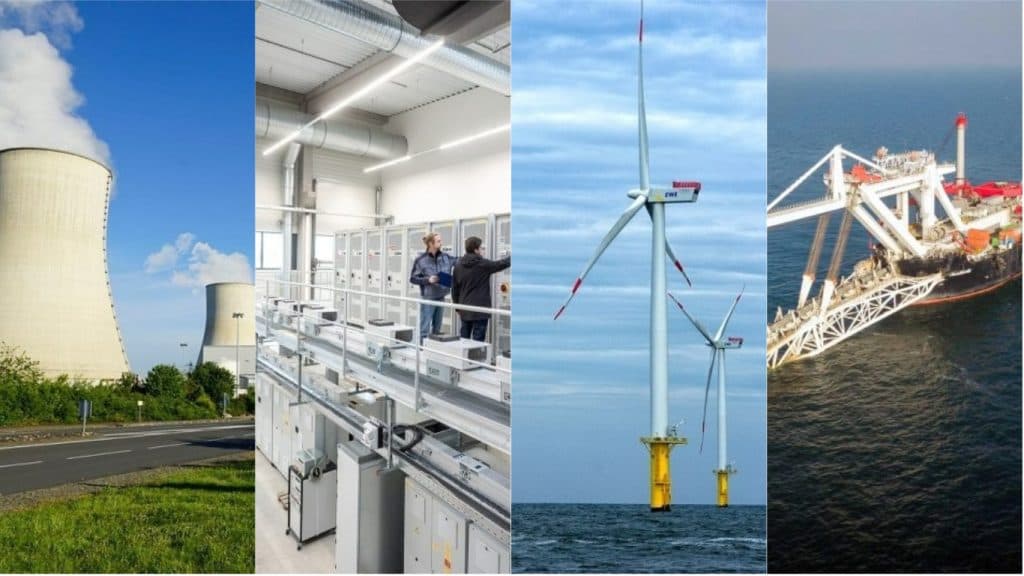
This week, we once again bring you a carefully selected list of the ten most important articles published on oEnergetice.cz. If you missed any of them, here is a selection of the articles that attracted the most interest from our readers. Have a great start to the new week!
1. Sustainable aviation fuel project scrapped as green hydrogen costs prove too high
The list of cancelled hydrogen projects in Europe has grown in recent weeks, most recently with the addition of a sustainable aviation fuel project. According to Uniper, the planned project in Sweden was halted because of unfavorable conditions and the market situation. The SkyFuelH2 project had aimed to meet up to a tenth of Sweden’s aviation fuel demand with sustainable fuel made from green hydrogen.
Last week, multinational energy company Uniper, based in Düsseldorf, Germany, announced that it was halting its SkyFuelH2 project in Sweden. According to international outlet S&P Global, the company cited unfavorable market conditions and high costs as the main reasons. Ongoing regulatory uncertainty also contributed to the decision to halt the project; without it being resolved, the project would not have been economically viable.
Read the full article HERE.
2. C-energy opens a 300 million Kč battery storage facility in Planá nad Lužnicí
C-energy, which supplies heat to municipalities in the Tábor region and generates electricity, has commissioned a second battery storage facility at its site in Planá nad Lužnicí. It has an output of 15 megawatts and a capacity of 22 megawatt-hours. The new battery could supply the equivalent of around 100,000 households’ electricity consumption for one hour. The lithium batteries have a lifespan of 6500 cycles. The investment in the new battery storage facility amounted to 300 million Kč. Company representatives told the Czech News Agency (ČTK) at the official launch today.
The company commissioned its first battery storage facility at the Planá nad Lužnicí site in 2019. The total capacity of the two facilities now stands at 26 MWh, making them the largest in the Czech Republic.
Read the full article HERE.
3. Germany should limit CO2 capture to “unavoidable” emissions, government advisers say
Germany should ensure that its planned reform to enable the use of carbon capture and storage (CCS) technologies applies only to cases where emissions are unavoidable. That is the recommendation of the German Advisory Council on the Environment (SRU), which objects to the fact that the only restriction in the draft legislation applies to coal-fired power plants.
In February this year, Economy Minister Robert Habeck announced Germany’s plans to amend the legal framework to allow CCS technologies in certain CO2-intensive sectors that are difficult to decarbonize using currently available technologies and fuels. According to Habeck, this should include allowing CO2 to be transported and stored beneath the seabed.
Read the full article HERE.
4. ENTSOG: EU gas storage facilities could end winter at 40% capacity
In its regular Winter Supply Outlook, the European Network of Transmission System Operators for Gas (ENTSOG) gives a positive assessment of the security of supply situation, even in the event of a possible interruption to Russian gas supplies. According to the report, Europe could end the winter season with storage facilities up to 40% full, which ENTSOG says confirms the independence of the EU gas system.
On 16 October, the European Network of Transmission System Operators for Gas (ENTSOG) presented its regular Winter Supply Outlook, confirming that the EU is well prepared for winter 2024–2025 and the following summer. It points to high levels of gas storage across the EU and an overall stable security of supply situation.
Read the full article HERE.
5. German biomethane auction ends in fiasco as sole bid is rejected

Germany held another round of auctions to support biomethane plants, but it fared just as poorly as the previous rounds. Although a bid was submitted, the regulator had to reject it. As a result, no new projects have been secured through auctions in several consecutive rounds.
While Germany is rapidly expanding renewable energy in the electricity sector, the gas sector is lagging behind. There are several ways to decarbonize it: alongside biomethane production, these include electrifying heating and producing green hydrogen for industrial or energy applications.
Read the full article HERE.
6. Kolín power plant quits coal, has been burning mostly biomass since September

Veolia Energie’s Kolín power plant has completely moved away from coal and has been burning mostly biomass since September. The boilers burned their last tonnes of lignite in April this year. Converting one of the boilers and making other modifications cost the company 260 million Kč, with 156 million covered by a grant from the Modernisation Fund. Veolia Energie Kolín CEO Jaroslav Rezek told journalists today.
The Kolín power plant operates nearly 25 kilometers of steam networks and supplies heat and electricity to more than 9000 households, a hospital, schools and industrial companies in Kolín.
Read the full article HERE.
7. Government approves decree enabling talks on a power purchase agreement for Dukovany

Today, the government approved a decree on energy security support, which establishes a power purchase agreement as a form of public support for the construction of new nuclear units at Dukovany. This is stated in the results of the meeting published online. The decree will enable the state to negotiate the terms of the agreement with energy company ČEZ, including the purchase price for electricity from the new units. The Czech Republic received European Commission approval for public support for the first reactor in the spring and is now seeking approval for the second planned unit at Dukovany.
“The form of support for the energy security of the Czech Republic, following the Ministry of Industry and Trade’s decision to grant state authorization for the construction of a low-carbon electricity generation facility at the Dukovany site under the Energy Act, is a power purchase agreement,” the decree states.
Read the full article HERE.
8. Energy contracts are ending for hundreds of thousands whose former suppliers went bankrupt

Energy contracts will end in the coming days and weeks for as many as hundreds of thousands of households whose previous suppliers ceased operations in 2021. The Energy Regulatory Office (ERÚ) informed the Czech News Agency (ČTK) of this today. It is advising customers to start negotiating contract extensions with their suppliers several weeks in advance. Most will pay more for electricity and gas than they do now. Although household prices have fallen significantly since the peak of the crisis, they remain higher than before Russia’s invasion of Ukraine in February 2022.
In autumn 2021, several companies announced that they were ceasing operations. The biggest was Bohemia Energy, with around 900.000 delivery points. Kolibřík, with 28.000 customers, and Františkovy energie, with 5000 customers, also went out of business. Around ten companies in total announced their closure between October and December, with more following in early 2022.
Read the full article HERE.
9. German renewables auction with storage attracts wind projects amid strong overall interest
In September, Germany held this year’s second and final auction round for renewable energy projects combined with storage. Investor interest was very strong, unlike in the previous round, and was similar to that seen in the second round last year. While previous auctions, with the exception of the very first one, attracted only solar projects with storage, several projects incorporating wind power were also submitted in this year’s second round.
Germany offers renewable energy developers a relatively broad range of auctions through which they can secure operating support for their projects. One option is the so-called innovation auctions, which are open only to projects incorporating storage components, most commonly batteries. Although various renewable energy sources can take part, photovoltaic projects have dominated these auctions from the outset.
Read the full article HERE.
10. Ukraine prepares to integrate its energy sector into the EU

Ukraine and the European Union have begun preparations for a meeting to discuss integrating Ukraine’s energy sector into the EU. The Ukrainian Ministry of Energy said so.
As reported by CEEnergyNews, Ukraine and the European Commission have already held preliminary talks on integration. The meeting was attended by representatives of the European Commission, the Office for Coordination of European and Euro-Atlantic Integration, Ukraine’s Ministry of Energy and several other Ukrainian government agencies. The session presented the implementation by Ukraine of the EU recommendations under the 2023 EU enlargement package. Further steps to assess the alignment of Ukrainian legislation with European law were also considered.
Read the full article HERE.
In focus
Pavel Tomek (SUAS GROUP): Moving away from coal is inevitable, but it is a complex process

Recently, the media have reported on an early phase-out of coal in the Czech Republic. The phase-out was originally expected around 2033, but 2028 is now being discussed. The main reason is simply that coal is no longer profitable for operators. This may raise concerns about the security of heat and electricity supplies.
At oenergetice.cz, we would like to present perspectives on this issue from across the spectrum of opinion. Over the coming weeks, we will publish a series of exclusive interviews in which representatives of different viewpoints will answer a similar set of questions about the end of coal in the Czech Republic.Read the full article HERE.
Czechs breathed cleaner air last year partly thanks to the shift away from coal. But Spolana and Tykač’s power plants remain the biggest polluters
audio id="audioArticle" controls="controls" data-mce-fragment="1">
Emissions of hazardous substances into the environment fell last year compared with the previous year, with a few exceptions, according to data from the Integrated Pollution Register (IRZ). Chemical plants and plastic production facilities contributed far more significantly to pollution. Coal-fired power plants nevertheless remain the biggest polluters.
Read the full article HERE.
Energostat: electricity generation in the Czech Republic
Data in this chart is also available in 15-minute resolution60min15min
Energostat: electricity generation in Germany
Data in this chart is also available in 15-minute resolution60min15min
Find more up-to-date charts and data on Energostat
Translation disclaimer
This article is a machine translation of the Czech original and has not yet been fully reviewed. In case of any doubt, please refer to the Czech version.
Sdílejte článek prostřednictvím:
Topics:Energy Weekly
You might also like


23 October 2026, 11:01


23 October 2026, 06:34