10 August 2026, 15:50
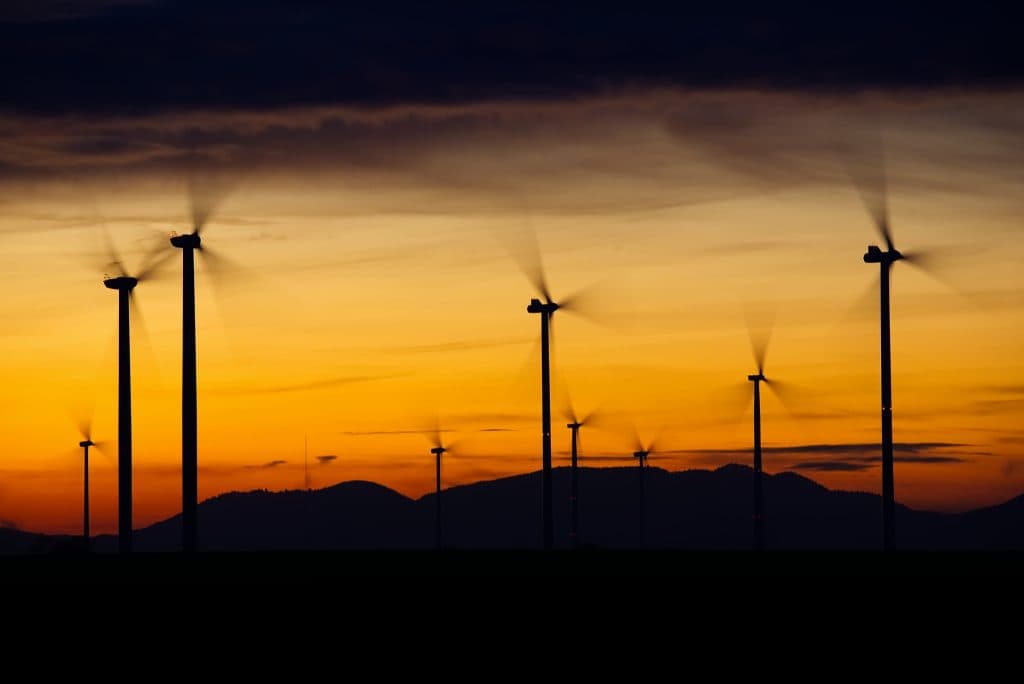
Wind power development in the Czech Republic is accelerating. However, the pace remains slow due to uncertainties
Daniel Grecman
28 November 2024, 09:44

This article is a machine translation of the Czech original and has not yet been fully reviewed. In case of any doubt, please refer to the Czech version.
Over the past month, the Czech Republic has announced the results of auctions for operational support for electricity from renewable energy sources (RES), in which hydro and wind power plants competed for support, as well as the results of an auction for operational support for electricity from high-efficiency combined heat and power (CHP). The transformation of the Czech energy sector is thus beginning to gather pace. But will this be enough to meet ambitious decarbonisation plans?
To describe the current situation and targets for 2030, we will use a document produced by ČEPS entitled MAF CZ 2023 (which assesses the Czech Republic's resource adequacy through 2040), published at the turn of October and November this year. It is important to note that this document does not set out the targets and vision of Czech energy policy; rather, it takes them into account, works with them and offers a view of the expected possible development of generation capacity in the Czech Republic. It is therefore entirely sufficient for providing context for this article. First, let us look at the current situation and the outlined possible future scenarios.
At the end of 2023, installed wind power capacity stood at 338 MW. ČEPS's forecast, which takes into account, among other things, the Czech Republic's strategic outlooks and plans, offers two possible wind power development scenarios for 2030: conservative and realistic. The conservative scenario puts installed wind power capacity at 1 381 MW, while the realistic scenario puts it as high as 1 515 MW. Installed wind power capacity is therefore expected to increase by more than 1000 MW over 5 years under the conservative scenario.
Virtually no new capacity over the past 5 years
A look at history shows that wind power has seen virtually no development over the past 5 years, with capacity additions amounting to only a few tens of MW. Over the past 10 years, installed capacity has not even increased by 100 MW. The reason? The absence of state support.
While wind power plants have low operating costs and can therefore supply electricity cheaply, their construction is not cheap, and historical wholesale electricity prices were not sufficiently attractive for investors to make an investment decision. Put differently, project economics did not stack up. Even now, when natural gas and emissions allowance prices have significantly raised electricity prices on wholesale markets, prices are still not high enough for investors to proceed with construction without some form of state support. This may take the form of investment or operational support, for example.
New operational support scheme has stimulated the market
A turning point in support for wind power came in recent years, when a new renewable energy support scheme was approved and the Act on Supported Energy Sources was amended to reflect it. Under the scheme, support may be provided in the form of an auction premium based on a two-way contract for difference (CfD), which gives investors price certainty for 20 years from the commissioning of a generating plant. Four wind power auctions have been held to date.
The first wind power auction took place at the end of 2022 and ended in failure, as not a single project entered due to incorrectly set parameters. The second auction awarded around 20 MW of capacity, while the third awarded 24,8 MW.
Over the past month, the Ministry of Industry and Trade (MPO) evaluated the fourth auction for operational support for wind power. It was record-breaking in terms of volume, awarding support for wind power plants with a capacity of 88,8 MW. Looking at the expected commissioning dates, December 2028 was cited most frequently, which was also the latest commissioning deadline under the auction conditions.
Many uncertainties remain
Assuming that all projects are implemented, capacity additions could reach approximately 134 MW. This is a far cry from achieving the target set for 2030. One problem is the permitting process. This normally takes 5 years or more, and the outcome is not certain in advance. The Ministry of the Environment would like to speed up permitting processes, including through the creation of so-called go-to zones, where permitting should take up to one year. However, time is passing quickly and go-to zones have not yet been introduced.
Nor is there an official MPO plan for holding wind power auctions, either in terms of volumes or timing; in other words, investors lack important information. The volumes of support historically announced were at least indicated by Government Regulation No. 189/2022 Coll., but this does not extend beyond this year.
To ensure that development targets do not remain merely on paper but become reality, concrete plans and results from the ministries' work will need to be presented soon – for example, in the area of go-to zones.
Even then, success may not be assured. Interest in building wind power plants is strong worldwide, which is reflected in technology delivery times that can run to several years for European suppliers. And if an investor does not want to take the risk, they only order wind turbines after receiving a construction permit.
Sdílejte článek prostřednictvím:
You might also like

10 August 2026, 09:33
9 August 2026, 14:38